The Academy for Spiritual and Consciousness Studies, Inc.
Consciousness, a long-debated concept, encompasses awareness, inner life, and mental processes, with evolving definitions.
Consciousness, a topic debated for millennia by philosophers, scientists, and theologians, refers to awareness of internal or external states. Its meaning has evolved from an "inner life" of introspection and private thought to encompassing various forms of cognition, experience, feeling, and perception, including awareness of awareness and self-awareness. There is no universal consensus on its definition or even if it is a scientific concept.
The term's etymology traces back to the 17th century, derived from Latin "conscius" meaning "knowing with." Early philosophical discussions, notably by John Locke, defined it as the mind's perception of its own operations. Over time, definitions have expanded to include a wide range of phenomena, from simple wakefulness and perception of the external world to complex mental states and the totality of an individual's awareness. Scholars continue to explore its nuances, distinguishing between different aspects like introspection and phenomenal experience.
Historical and Philosophical Perspectives
The understanding of consciousness has a long and complex history, with roots in ancient philosophical inquiry. While early thinkers like Aristotle may have touched upon related concepts, the modern discourse significantly advanced with John Locke's definition in the late 17th century, describing it as the mind's perception of its own internal activities. This perspective laid groundwork for subsequent analyses, influencing dictionaries and philosophical thought. The term itself entered English in the 17th century, evolving from Latin roots signifying "knowing with." Early philosophical explorations often viewed consciousness as an "inner world," distinct from external perception, with introspection serving as the primary method of examination. This focus on the internal landscape and self-awareness has been a recurring theme in the study of consciousness.
Evolving Definitions and Metaphors
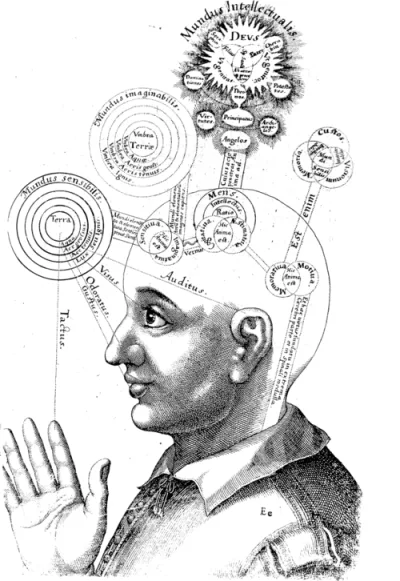
Over centuries, the definition of consciousness has broadened considerably, moving beyond a simple notion of "inner life." Contemporary understandings often include a wide spectrum of mental phenomena, such as cognition, sensation, emotion, volition, and perception. The concept has been explored through various metaphors, including the mind as a container, a stream of experience, or a layered structure akin to geological strata, reflecting an early 19th-century view that consciousness was only a part of a larger mental landscape. These evolving descriptions highlight the difficulty in pinning down a singular, universally accepted definition, with scholars continuing to debate its precise nature and scope.
The Problem of Definition and Modern Approaches
Despite extensive study, a definitive consensus on what constitutes consciousness remains elusive. Modern dictionary definitions reflect a diverse range of meanings, encompassing everything from wakefulness and responsiveness to surroundings to a deeper, intuitive awareness of one's inner self or the mind's awareness of itself. Philosophers further refine these concepts, distinguishing between introspective knowledge and "phenomenal experience"—the subjective quality of having an experience, often described as "what it is like" to feel or perceive something. This ongoing exploration acknowledges the multifaceted nature of consciousness and the challenges inherent in its scientific and philosophical investigation.
Key Ideas
- Consciousness as awareness of internal or external states.
- Evolution of the concept from "inner life" to broader mental phenomena.
- Debate over its scientific status and definition.
- Etymological roots in Latin "conscius" (knowing with).
- Distinction between introspection and phenomenal experience.
- Metaphors for the mind (stream, layers, container).
Notable Quotes
“Where two, or more men, know of one and the same fact, they are said to be Conscious of it one to another”
“consciênciâ, vel interno testimonio”
“the perception of what passes in a man's own mind”
“the opinion or internal feeling that we ourselves have from what we do”
“the state or activity that is characterized by sensation, emotion, volition, or thought; mind in the broadest possible sense; something in nature that is distinguished from the physical”
Books by The Academy for Spiritual and Consciousness Studies, Inc.
0 free public domain books · Read online or download