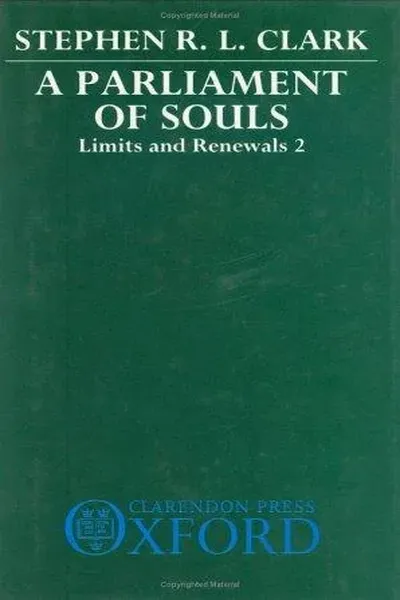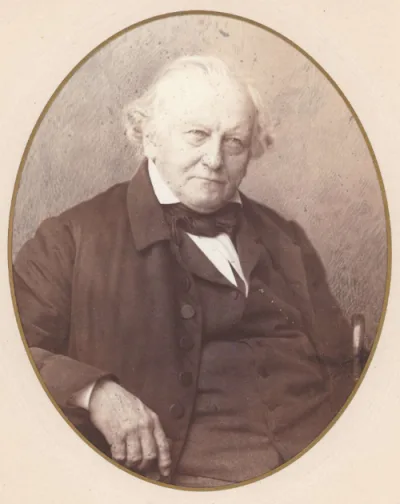
Stephen R. L. Clark
Stephen R. L. Clark is an English philosopher specializing in religion, animal rights, and Christian Platonism.
Stephen Richard Lyster Clark, born in 1945, is an English philosopher and professor emeritus at the University of Liverpool. His academic work, which he describes as "anarcho-conservative" and broadly Christian Platonist, centers on the philosophy of religion and animal rights. Clark has authored numerous books and scholarly articles throughout his career. He held significant academic positions, including professorships at the University of Glasgow and the University of Liverpool, where he retired in 2009. His early career was notably dedicated to animal ethics, serving on government committees and authoring influential texts on the subject. More recently, his research has increasingly focused on the ancient Greek philosopher Plotinus.
Clark's academic journey began with a classical education at Oxford, where he earned a doctorate and was influenced by philosophers like Arthur Prior and Sir Anthony Kenny. Following his time at Oxford, he lectured in moral philosophy before taking up his professorship in Liverpool. Beyond his primary academic roles, Clark has been a visiting professor and held fellowships at other institutions. He is also a Christian vegetarian and has been involved with organizations supporting this lifestyle. His prolific output includes significant contributions to the understanding of animal ethics, the nature of morality, and late antique philosophy, particularly the works of Plotinus.
Philosophical Stance and Research Areas
Stephen R. L. Clark's philosophical outlook is characterized as "anarcho-conservative" and can be broadly understood as Christian Platonist. His primary areas of specialization include the philosophy of religion, with a particular focus on theological concepts and the nature of faith, and the complex field of animal rights. Clark has explored the moral standing of animals extensively, examining the ethical implications of human interactions with other species. His work often bridges theological traditions with philosophical inquiry, seeking to understand the relationship between the divine, the natural world, and human consciousness. He has also engaged with the history of philosophy, particularly ancient Mediterranean thought and the writings of Plotinus, exploring how these ancient ideas can inform contemporary philosophical debates.
Academic Career and Influence
Clark's distinguished academic career includes professorial roles at the University of Glasgow and the University of Liverpool, where he is now professor emeritus. His education at Balliol College, Oxford, where he studied classics and was influenced by prominent philosophers, laid the foundation for his extensive scholarly work. He has authored over twenty books and a substantial number of articles and book chapters, contributing significantly to academic discourse. Clark has also been recognized through prestigious lecture series, such as the Gifford Lectures and the Wilde Lectures, indicating his standing within philosophical circles. His involvement in academic journals, including a tenure as editor-in-chief of the Journal of Applied Philosophy, further highlights his influence in shaping philosophical discussions.
Contributions to Animal Ethics
A significant portion of Stephen R. L. Clark's early work was dedicated to the ethics of animal rights. He authored seminal texts like "The Moral Status of Animals" (1977) and "The Nature of the Beast" (1982), which explored the philosophical arguments for granting moral consideration to animals. Clark argued that the liberal tradition's principle of avoiding unnecessary pain could lead to a moral obligation of vegetarianism. He also examined whether animals possess moral agency, concluding that while they may exhibit ethical behaviors, they lack the capacity for moral reasoning. Clark was also among the first scholars to address the philosophical "predation problem" within animal ethics, a complex issue concerning the natural order of predation and its ethical implications.
Later Work on Plotinus and Ancient Philosophy
In more recent years, Clark's scholarly focus has shifted towards the Neoplatonist philosopher Plotinus. He has produced several significant works dedicated to Plotinus's thought, including translations, commentaries, and analyses of his philosophical system. Books such as "Plotinus: Myth, Metaphor and Philosophical Practice" (2016) and "Plotinus Ennead VI.9: On the Good or the One" (2020) demonstrate a deep engagement with Plotinus's metaphysics, ethics, and mystical philosophy. His work in this area seeks to illuminate the enduring relevance of Plotinian ideas for understanding concepts of the One, emanation, and the human soul's journey towards the divine, connecting ancient philosophical traditions with contemporary thought.
Key Ideas
- Christian Platonism
- Anarcho-conservatism
- Animal rights and ethics
- The moral status of animals
- The predation problem in animal ethics
- Plotinian philosophy and practice
Books by Stephen R. L. Clark
0 free public domain books · Read online or download