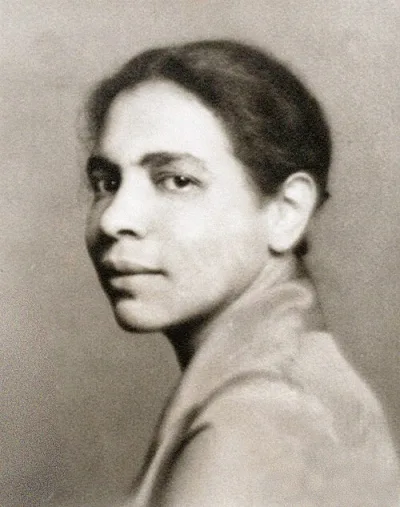
Nella Larsen, a key novelist of the Harlem Renaissance, explored themes of racial and sexual identity in her limited but acclaimed works.
Nellallitea "Nella" Larsen, born Nellie Walker in 1891, was an American novelist recognized for her contributions to the Harlem Renaissance. Despite a brief literary output, consisting of two novels, "Quicksand" (1928) and "Passing" (1929), and a few short stories, she gained significant contemporary recognition. Larsen's life was marked by a complex racial identity, being of mixed Danish and West Indian heritage, which influenced her experiences and writing. She worked as a nurse and later a librarian, opportunities that exposed her to different social circles and provided a backdrop for her literary career. Her work, focusing on themes of identity and belonging, has experienced a resurgence in interest since the late 20th century, leading to her current status as an important figure in American modernism.
Early Life and Identity Formation
Born Nellie Walker in Chicago in 1891, Nella Larsen's background was marked by a mixed racial heritage. Her mother was a Danish immigrant, and her father was from the Danish West Indies, described as "colored." He left the family shortly after her birth, and her mother later married a Danish immigrant, Peter Larsen, from whom Nella took her surname. This mixed parentage and upbringing within predominantly white immigrant communities, including periods spent in Denmark, created a unique and often isolating experience for Larsen. She navigated a complex social landscape, experiencing discrimination and struggling to find a sense of belonging, which would later inform her literary themes.
Nursing and Social Engagement
Larsen pursued a career in nursing, graduating from Lincoln Hospital and Nursing Home in New York City in 1915. She worked in various capacities, including as head nurse at Tuskegee Institute in Alabama. Her nursing career brought her into contact with different communities and social models, including Booker T. Washington's educational philosophy, which she found disillusioning. Returning to New York, she continued nursing and later worked for the city's Bureau of Public Health, notably during the 1918 flu pandemic. These experiences provided her with a broader perspective on American society and its racial dynamics.
Literary Career and the Harlem Renaissance
Transitioning to a literary career, Larsen became a librarian at the New York Public Library, distinguishing herself as the first black woman to graduate from its Library School. Her interest in the cultural milieu of Harlem led her to dedicate herself to writing. As a writer active in the Harlem Renaissance, she befriended prominent figures in the arts and literary scene. Her two novels, "Quicksand" (1928) and "Passing" (1929), explored the complexities of racial identity, social alienation, and the intricacies of passing for white, earning her critical acclaim and solidifying her place as a significant voice of her era.
Key Ideas
- Exploration of racial and sexual identity
- Complexities of belonging and alienation
- Critique of social stratification within racial groups
- Experiences of mixed-race individuals in early 20th-century America
Notable Quotes
“as a member of a white immigrant family, she [Larsen] had no entrée into the world of the blues or of the black church. If she could never be white like her mother and sister, neither could she ever be black in quite the same way that Langston Hughes and his characters were black. Hers was a netherworld, unrecognizable historically and too painful to dredge up.”
“No matter what situation Larsen found herself in, racial irony of one kind or another invariably wrapped itself around her.”
Books by
2 free public domain books · Read online or download