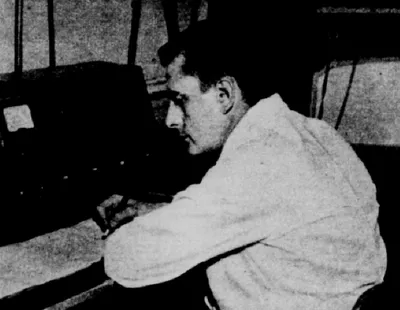
Adam J. Rock, Stanley Krippner
Stanley Krippner was a psychologist and parapsychologist known for his research into dreams, hypnosis, and altered states of consciousness.
Stanley Krippner was an American psychologist and parapsychologist with a long academic career. He held faculty positions at Saybrook University, the California Institute of Integral Studies, Akamai University, and the California Institute for Human Science. Krippner's research focused on a variety of topics including altered states of consciousness, dream telepathy, hypnosis, shamanism, dissociation, and parapsychological phenomena.
He was a significant figure in humanistic psychology, serving as President of Division 32 of the American Psychological Association. Krippner also led the Society for Psychological Hypnosis and was a Fellow of multiple APA divisions. His work included notable collaborations, such as experiments in dream telepathy with Montague Ullman at the Maimonides Medical Center and engagement with figures like Timothy Leary and the band Grateful Dead. His research, particularly on dream telepathy, has been subject to both support and criticism regarding its methodology and replicability.
Dream Telepathy Research
Krippner was centrally involved in dream telepathy studies conducted at the Maimonides Medical Center, beginning in 1964. These experiments, often in collaboration with Montague Ullman and Alan Vaughan, involved an 'agent' attempting to transmit an image to a sleeping 'target' whose dreams were then analyzed. The methodology typically involved art prints as targets. Krippner and colleagues reported statistically significant results in a majority of these studies, suggesting telepathic effects. However, the Maimonides experiments have faced significant criticism regarding methodological rigor, lack of independent replication, and potential for bias. Despite critiques from researchers like C. E. M. Hansel and Edward Belvedere, Krippner and later co-authors, including Adam J. Rock, published meta-analyses suggesting that dream mentation could indeed be used to identify target materials more often than chance would predict.
Interests in Consciousness and Psychedelics
Krippner's academic work extensively explored altered states of consciousness, a field influenced by his early encounters with psychedelic substances. In 1961, he attended a panel with Timothy Leary and others discussing psychoactive drugs. The following year, Krippner volunteered for Leary's Harvard Psilocybin Project, participating in a psilocybin session. He stated this experience fueled his lifelong research interest in psychedelics, contributing to works like a chapter in 'The Psychedelic Artist' (1968). Krippner maintained contact with Leary for decades and collaborated with figures like Alan Watts, who influenced his interest in Eastern philosophies such as Buddhism and Taoism. They also jointly advocated for marijuana decriminalization.
Collaborations and Professional Engagements
Beyond his academic roles, Krippner engaged in diverse collaborations. His association with the Grateful Dead began in 1967, leading to hypnosis sessions to improve drumming and joint "ESP Shows" where concertgoers participated in a telepathy experiment. He also collaborated with band member Mickey Hart on hypnosis techniques. Krippner was a prominent figure in humanistic psychology, leading Division 32 of the American Psychological Association. He also served as president of the Society for Psychological Hypnosis and received the APA Award for Distinguished Contributions to the International Advancement of Psychology in 2002. His work sometimes drew controversy, such as his interest in the psychic Nina Kulagina, which was questioned by critics like Martin Gardner.
Key Ideas
- Dream telepathy experiments aimed to demonstrate telepathic transmission of images during dreams.
- Research into altered states of consciousness, influenced by psychedelic experiences.
- Application of hypnosis for performance enhancement, notably with musicians.
- Exploration of shamanism and dissociation as states of consciousness.
Books by Adam J. Rock, Stanley Krippner
9 free public domain books · Read online or download