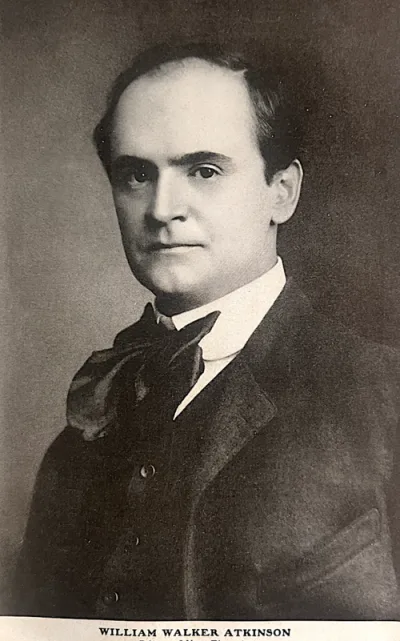
✍️ Author Biography
Sciens
🌍 Greek
📚 1 free book
Science is a systematic pursuit of knowledge, evolving from ancient observations to modern research, with roots in diverse cultures.
Science is defined as a structured method for acquiring and organizing knowledge through testable hypotheses and predictions about the universe. It is broadly categorized into natural sciences (studying the physical world) and social sciences (studying humans and societies), with formal sciences like logic and mathematics considered distinct due to their reliance on deductive reasoning. Applied sciences leverage scientific knowledge for practical applications.
The historical trajectory of science traces back to the Bronze Age in Egypt and Mesopotamia, where foundational contributions in mathematics, astronomy, and medicine emerged. These advancements significantly influenced Greek natural philosophy and later scholarship during the Golden Ages of India and the Islamic world. The Renaissance in Western Europe saw a revival of these ideas, leading to the Scientific Revolution, which emphasized the scientific method and transformed 'natural philosophy' into 'natural science' by the 19th century. Contemporary scientific progress is driven by curiosity and problem-solving, often through collaborative research in institutions, though individual contributions remain significant.
Ancient Foundations and Early Inquiry
The earliest precursors to modern scientific understanding can be traced to the Bronze Age civilizations of Egypt and Mesopotamia around 3000–1200 BCE. These cultures developed foundational knowledge in mathematics, astronomy, and medicine, which later informed Greek natural philosophy and medieval scholarship. For instance, ancient Egyptians created a decimal numbering system and utilized geometry for practical problems, while Mesopotamians explored natural chemicals for manufacturing and developed early medical practices. Their focus, however, was primarily on practical and religious applications rather than abstract curiosity. The concept of 'nature' as a distinct realm of inquiry began to emerge with early Greek philosophers who sought explanations for natural phenomena based on natural causes rather than supernatural ones.
Classical Philosophy and the Dawn of Systematic Study
Classical antiquity saw the beginnings of more systematic investigations into the natural world, though the modern concept of a 'scientist' did not exist. Early Greek philosophers, like those of the Milesian school, were among the first to attempt naturalistic explanations. The Pythagoreans contributed to mathematical science, and atomistic theories were developed by Leucippus and Democritus. Hippocrates established a systematic approach to medical science. Socrates, through his dialectical method, shifted philosophical focus towards human matters and emphasized self-criticism in inquiry. Aristotle developed a teleological philosophy, while Aristarchus of Samos proposed a heliocentric model, though it was not widely accepted. The development of positional notation in mathematics in India facilitated more efficient arithmetic operations.
Medieval Preservation and the Scientific Revolution
Following the decline of the Western Roman Empire, knowledge of classical Greek thought diminished in Western Europe, though figures like Isidore of Seville preserved some ancient learning. The Byzantine Empire, however, maintained and advanced existing knowledge, with scholars like John Philoponus beginning to question established Aristotelian physics. The Islamic Golden Age made significant advancements, particularly in mathematics and astronomy, contributing the Hindu-Arabic numeral system. The subsequent assimilation of Greek and Islamic works in Western Europe during the Renaissance revived natural philosophy. This intellectual environment eventually paved the way for the Scientific Revolution, starting in the 16th century, which saw new discoveries and a greater emphasis on the scientific method, fundamentally altering previous conceptions and leading to the formalization of 'natural science'.
Key Ideas
- Systematic discipline for organizing knowledge via testable hypotheses.
- Division into natural, social, and formal sciences.
- Historical development from ancient civilizations through the Scientific Revolution.
- The scientific method as a core methodology.
- Motivation for scientific research: curiosity and problem-solving.