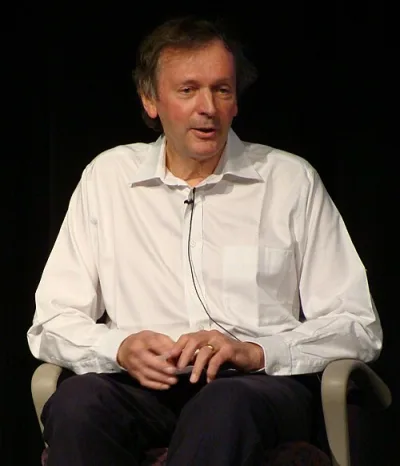
Rupert Sheldrake is an author and researcher known for proposing morphic resonance, a concept widely criticized by mainstream science.
Alfred Rupert Sheldrake, born in 1942, is an English author and researcher in parapsychology. He is recognized for introducing the concept of morphic resonance, a theory that posits collective memory inherent in nature and responsible for interconnections between organisms. This conjecture, however, lacks acceptance within the mainstream scientific community and has been frequently labeled as pseudoscience. Sheldrake's academic background includes biochemistry studies at Cambridge and a fellowship at Harvard. He has held positions as a biochemist, plant physiologist, and researcher at various institutions, including Cambridge University, the Royal Society, and ICRISAT in India. His work also delves into paranormal phenomena such as precognition and telepathy. Despite significant criticism regarding the lack of empirical evidence and inconsistencies with established scientific disciplines, Sheldrake continues to explore and advocate for his ideas, often engaging in public discourse and writing.
Morphic Resonance and its Reception
Sheldrake's central contribution is the hypothesis of morphic resonance, detailed in works like "A New Science of Life." This theory suggests that natural systems, including biological ones, possess a collective memory, inheriting patterns from all previous similar entities. This memory, he proposes, influences current development and behavior, and is also the basis for phenomena like telepathy. Sheldrake argues that this concept offers alternative explanations for fundamental biological processes such as inheritance, development, and memory. While some have found his ideas thought-provoking and far-reaching, the scientific establishment largely rejects morphic resonance due to a perceived lack of evidence, its incompatibility with genetics, embryology, and neuroscience, and its vague, unfalsifiable nature. Critics also express concern that its popularization may undermine public understanding of science.
Academic and Research Background
Born in 1942, Sheldrake's early life was influenced by his pharmacist father, an amateur naturalist. After a period of scientific atheism in his youth, he pursued biological studies at Clare College, Cambridge, and later biochemistry, earning his PhD for research on plant hormones. He also spent time as a Harvard scholar studying the philosophy and history of science. His early scientific career involved biochemistry and cell biology research, investigating plant hormones. He later shifted his focus to plant physiology in India, working with tropical crops. This period also saw him deepen his interest in Indian philosophy and meditation, influencing his subsequent work and intellectual trajectory.
Later Career and Engagement
Following his work in India, Sheldrake dedicated himself to writing and developing his theories, leading to the publication of "A New Science of Life." He continued to publish books expanding on morphic resonance and collaborated with various thinkers across disciplines, including mathematics, ethnobotany, and theology. He has been featured in documentaries and participated in public debates and discussions on consciousness, science, and spirituality. Sheldrake has also explored spiritual practices in his writing and held academic positions at institutions focusing on holistic learning and psychical research. His ongoing engagement includes dialogues with skeptics and participation in philosophical festivals, continuing to bridge scientific inquiry with broader considerations of existence and consciousness.
Key Ideas
- Morphic resonance: a conjecture that natural systems inherit a collective memory from all previous things of their kind, influencing current patterns and enabling telepathy-type interconnections.
- Morphic fields: proposed organizing fields that carry morphic resonance.
- Memory is inherent in nature: the idea that natural laws and phenomena are mutable habits shaped by collective memory.
Notable Quotes
“I went through the standard scientific atheist phase when I was about 14 ... I bought into that package deal of science equals atheism. I was the only boy at my high Anglican boarding school who refused to get confirmed.”
“The system is circular. It does not explain how [differentiation is] established to start with. After nine years of intensive study, it became clear to me that biochemistry would not solve the problem of why things have the basic shape they do.”
“The idea came to me in a moment of insight and was extremely exciting. It interested some of my colleagues at Clare College—philosophers, linguists, and classicists were quite open-minded. But the idea of mysterious telepathy-type interconnections between organisms and of collective memories within species didn't go down too well with my colleagues in the science labs. Not that they were aggressively hostile; they just made fun of it.”
Books by
5 free public domain books · Read online or download