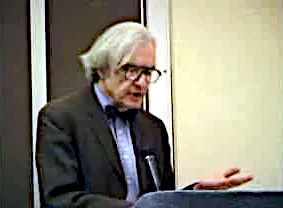
Robert Jay Lifton
Psychiatrist Robert Jay Lifton studied the psychological impact of war, political violence, and thought reform, developing the concept of the 'protean self'.
Robert Jay Lifton was an American psychiatrist and author recognized for his extensive research into the psychological effects of war, political violence, and coercive persuasion techniques, a process he termed 'thought reform'. Born in Brooklyn, New York, Lifton's early career included service as an Air Force psychiatrist in Japan and Korea, experiences that significantly shaped his subsequent academic interests. He held teaching and research positions at prominent institutions like Harvard University and the John Jay College of Criminal Justice, where he co-founded a center dedicated to studying human violence. Lifton also co-founded the Wellfleet Psychohistory Group, which applied psychological and psychoanalytic methods to the study of history, focusing on motivations behind conflict and atrocity.
His seminal work, 'Thought Reform and the Psychology of Totalism,' explored the mechanisms of 'brainwashing' based on interviews with individuals subjected to indoctrination. Lifton's studies extended to survivors of extreme wartime environments, including Hiroshima and Vietnam veterans, and perpetrators of genocide, such as Nazi doctors. He analyzed the psychological fragmentation and adaptations individuals undergo in such situations, proposing that these extreme pathologies often mirror underlying issues in modern societal life. Later, he introduced the concept of the 'protean self' to describe a fluid, adaptable personality that he saw as a positive development in contemporary societies, contrasting it with the rigid control sought by totalistic ideologies.
Psychohistory and the Study of Violence
Lifton was a key figure in the development of psychohistory, a field that applies psychological and psychoanalytic theories to understand historical events and figures. In the 1960s, he co-founded the Wellfleet Psychohistory Group with Erik Erikson and Bruce Mazlish. This group met to examine the psychological motivations behind war, terrorism, and genocide, receiving sponsorship to establish psychohistory as a distinct area of study. Influenced by Erikson's work on political leaders and Freud's theories on mass psychology, Lifton's research in this area explored deep-seated drives and their impact on societal violence. His work contributed to understanding how individuals and groups engage in extreme behaviors, often under specific environmental or ideological pressures.
Thought Reform and Totalism
A significant portion of Lifton's research focused on 'thought reform,' a term he used to describe coercive processes of indoctrination and psychological manipulation. Based on interviews with prisoners of war from the Korean War and individuals subjected to ideological pressures in China, his 1961 book 'Thought Reform and the Psychology of Totalism' detailed these techniques. He introduced concepts like the 'thought-terminating cliché' and analyzed how totalistic environments sought to control individual thought and behavior. Lifton's work challenged the popular notion of irreversible 'brainwashing,' noting that many subjects eventually returned to their previous modes of thinking. His theory of totalism applies to any group seeking absolute control, regardless of governmental power.
War, Atrocity, and the Protean Self
Lifton extensively studied the psychological adaptations of individuals in extreme wartime conditions, including survivors of Hiroshima and Vietnam veterans, as well as perpetrators of atrocities like the Nazi doctors. He posited that the psychic fragmentation experienced in such situations reflected a more generalized pathology in modern society. Lifton concluded that while human beings are not inherently cruel, 'atrocity-producing situations' can lead to participation in mass violence. He also explored the potential for post-traumatic resilience, but cautioned that without support, survivors might remain trapped by guilt and unreality. In later work, he defined the 'protean self' as a healthy, fluid personality adaptable to modern change, contrasting it with the rigid control of totalistic ideologies.
Key Ideas
- Thought Reform: Coercive techniques used to change beliefs and behaviors.
- Totalism: Ideological movements seeking total control over thought and behavior.
- Protean Self: A fluid, adaptable personality suited to modern societal change.
- Atrocity-producing situations: Conditions that facilitate participation in mass violence.
Notable Quotes
“What's happening there [in Bosnia] merits the use of the word genocide. There is an effort to systematically destroy an entire group. It's even been conceptualized by Serbian nationalists as so-called "ethnic cleansing." That term signifies mass killing, mass relocation, and that does constitute genocide.”
Books by Robert Jay Lifton
2 free public domain books · Read online or download