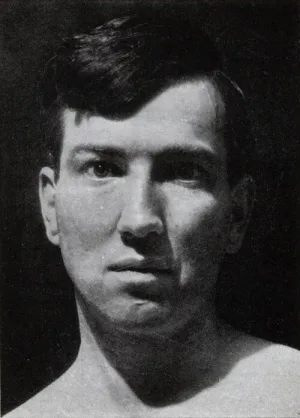
Robert Graves was an English poet and novelist known for his historical fiction and scholarly works on mythology.
Robert Ranke Graves (1895-1985) was an English poet, novelist, and critic whose prolific career spanned over 140 works. His father, Alfred Perceval Graves, was also an Irish poet involved in the Celtic revival, and both shared an interest in Irish mythology. Graves's literary output included poetry, translations, analyses of Greek myths, a memoir of his WWI experiences, and historical novels.
His influential works, such as "Good-Bye to All That" and "The White Goddess," have remained in print. He also gained recognition for popular historical novels like "I, Claudius" and "King Jesus," as well as his clear and engaging translations of classical texts. Despite a challenging early life marked by illness and the trauma of World War I, Graves established himself as a significant literary figure, earning accolades like the James Tait Black Memorial Prize.
Early Life and Education
Born in Wimbledon, Robert Graves came from an educated, upper-middle-class family. His father, Alfred Perceval Graves, was an Irish schools inspector and Gaelic scholar, and his mother, Amalie Elisabeth Sophie von Ranke, was related to the historian Leopold von Ranke. Graves endured significant childhood illnesses, including double pneumonia and later Spanish influenza, which nearly claimed his life on multiple occasions. He attended various preparatory schools before earning a scholarship to Charterhouse School. There, he developed his writing and boxing skills, and experienced intense friendships, including one with G. H. "Peter" Johnstone, which he described as "chaste and sentimental." His education was further influenced by masters like George Mallory, who introduced him to contemporary literature and outdoor pursuits. Graves won a scholarship to St John's College, Oxford, but deferred his studies until after the war.
World War I Experiences
At the outset of World War I, Graves enlisted and served as an officer in the Royal Welch Fusiliers, quickly rising through the ranks. He became known as a war poet, producing realistic accounts of frontline conflict, though he later excluded many of these from his collections. During the Battle of the Somme, he was severely wounded by a shell fragment, suffering a lung injury that nearly proved fatal. This trauma, along with his experiences in the war, led to psychological distress, including a persistent fear of gas and an aversion to loud noises. He developed a close friendship with fellow poet Siegfried Sassoon, also serving in his regiment. Graves intervened with military authorities to ensure Sassoon received treatment for shell shock rather than facing a court martial. His army service concluded with an incident involving Spanish influenza, where he left his post without authorization but managed to secure his demobilization papers.
Post-War Literary Career and Scholarship
Following the war, Graves faced physical and mental recovery, dealing with anxieties and disabilities stemming from his wartime experiences. He was financially insecure but determined to make a living through writing, vowing never to be under anyone's orders again. He eventually attended Oxford University, studying English Language and Literature. Graves's literary output was vast, encompassing poetry, novels, and critical works. He gained significant popularity for historical novels such as "I, Claudius" and "King Jesus." His speculative study, "The White Goddess," explored the nature of poetic inspiration and ancient matriarchal religion, becoming a foundational text in some esoteric circles. He also produced acclaimed translations of classical Latin and Ancient Greek texts, valued for their clarity and engaging style.
Key Ideas
- Speculative study of poetic inspiration and ancient religion in 'The White Goddess'
- Realistic portrayal of World War I experiences in poetry and memoir
- Historical fiction focusing on Roman emperors and ancient figures
- Translations of classical texts known for clarity and style
Notable Quotes
“chaste and sentimental”
“proto-homosexual”
“part of the war poetry boom”
“How unlike you to crib my idea of going to the Ladies' College at Oxford”
“I enjoyed my stay at Somerville. The sun shone, and the discipline was easy.”
Books by
2 free public domain books · Read online or download