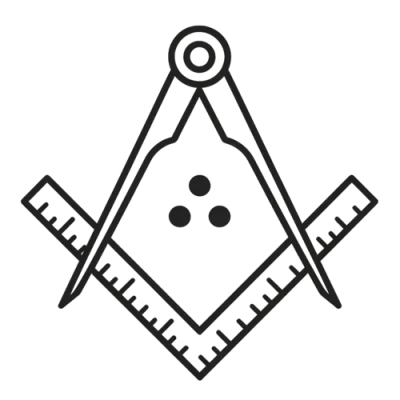
Observant Freemasonry emphasizes the traditional, esoteric, and philosophical aspects of the fraternity, seeking a return to its original transformative intent.
Observant Freemasonry, also known as Observant Masonry or Traditional Observance, is a movement within Freemasonry that prioritizes its traditional, esoteric, and philosophical dimensions. It represents a conscious effort to re-establish a more disciplined, intellectually rigorous, and ceremonially rich Masonic experience, contrasting with practices that may have become more focused on social fellowship or exoteric charity at the expense of deeper initiatory and educational purposes. The term "Observant" is preferred by proponents to distinguish it from "Traditional Observance," as it emphasizes diligent adherence to the original intent of speculative Masonry's founders—to create a transformative environment for moral, intellectual, and spiritual development through allegory, symbolism, and self-examination.
This approach is not a separate ritual or type of Masonry but rather a method of practice, without central authority, adaptable across different Masonic traditions. Its roots can be traced back to the Enlightenment ideals of early Freemasonry, with later influences from figures like Chevalier Ramsay and movements such as the Rite of Strict Observance and the Rectified Scottish Rite, which introduced more esoteric and historical narratives. Concerns about a decline in Masonic depth, particularly in the early to mid-20th century, voiced in publications like "The Builder" and critiques like Dwight L. Smith's "Whither Are We Travelling?", fueled the desire for a return to core principles. The modern Observant movement gained momentum in the early 2000s, partly inspired by new academic research illuminating the philosophical richness of early Masonry and a perceived need for a more authentic, profound Masonic journey.
Historical Roots and Influences
The philosophical underpinnings of Observant Freemasonry echo the Enlightenment's emphasis on reason and self-improvement, which characterized the origins of modern speculative Masonry after 1717. Early lodges were conceived as spaces for personal transformation through esoteric wisdom. Chevalier Andrew Michael Ramsay's 1737 oration, linking Masonry to a Crusader lineage, contributed to a richer historical and esoteric narrative. Later, Baron von Hund's Rite of Strict Observance in mid-18th century Germany claimed Templar descent and emphasized strict adherence to tradition, albeit with a fabricated mythology. Jean-Baptiste Willermoz's Rectified Scottish Rite (1778) further deepened the esoteric focus, integrating Christian mysticism and spiritual restoration. In contrast, Friedrich Ludwig Schröder's rite sought to return to the "essential core" of the Craft degrees, emphasizing reason and ethical betterment while retaining ritual's transformative power. The 18th-century schism between "Antients" and "Moderns" in English Freemasonry also highlighted an early concern for preserving traditional ritual integrity, a precursor to observant philosophies.
Concerns Over Masonic Practice and Revival
The 19th century saw a broader esoteric revival, influencing Masonic thought and leading some to view the fraternity as a repository of ancient wisdom. The founding of the Quatuor Coronati Lodge in 1884 promoted rigorous historical research into Masonic practices, providing an intellectual foundation for authentic observance. In the early to mid-20th century, publications like "The Builder" magazine voiced concerns that American Freemasonry was becoming too superficial, criticizing its rapid growth and "degree mill" reputation. Joseph Fort Newton, a key editor, advocated for a return to authentic Masonry, emphasizing its historical, symbolic, and philosophical dimensions. Later, Dwight L. Smith's 1960s booklet "Whither Are We Travelling?" offered a sharp critique of declining standards, superficial fellowship, and inadequate education in North American Freemasonry, calling for a focus on fundamental tenets and meaningful ritual.
The Modern Observant Movement
The modern Observant Masonry movement emerged in the early 2000s, driven by a perceived decline in the depth of Masonic practice and an identity crisis within Anglo-American Freemasonry. This coincided with falling membership numbers, especially when contrasted with the growth of more observant Masonic traditions in continental Europe and Latin America. New academic research by scholars like Margaret Jacob and Andreas Önnerfors shed light on the philosophical richness of early Masonry, which had been overlooked. This scholarly work provided a historical and intellectual basis for Masons seeking a more rigorous and transformative experience. Consequently, a group of American Masons began to question why their experiences often seemed superficial compared to the profound historical accounts of the Craft, leading to the re-emphasis on the esoteric, philosophical, and ritualistic dimensions central to Observant Freemasonry.
Key Ideas
- Emphasis on traditional, esoteric, and philosophical dimensions of Freemasonry.
- Return to the original intent of speculative Masonry for personal transformation.
- Focus on disciplined self-examination, allegory, and symbolism.
- Critique of superficiality in modern Masonic practices.
- Distinction from "Traditional Observance" by focusing on diligent observance rather than specific historical practices.
Books by
2 free public domain books · Read online or download