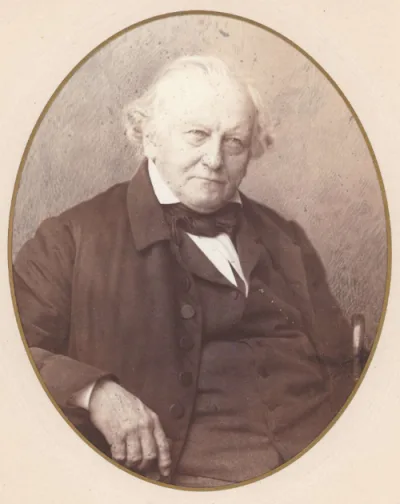
Richard T. Kaser
The Beauregard-Keyes House in New Orleans' French Quarter is a historic museum focusing on its past residents, including author Frances Parkinson Keyes.
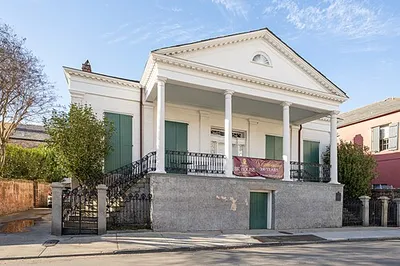
The Beauregard-Keyes House, situated at 1113 Chartres Street in the French Quarter of New Orleans, Louisiana, functions today as a museum known as the BK Historic House and Gardens. Its exhibits delve into the lives of individuals associated with the property, notably Confederate general P. G. T. Beauregard and American author Frances Parkinson Keyes. The house's history began with its construction in 1826, designed by François Correjolles and built by James Lambert, incorporating a blend of Creole cottage and Greek Revival architectural styles. Over the years, it has been home to various inhabitants, including wealthy Creole families, enslaved individuals, Italian immigrants, and tenants, before its preservation efforts led to its current status as a historic site.
Frances Parkinson Keyes, a significant figure in the house's modern history, purchased the property and resided there for a period. During her time at the house, she authored numerous books, with at least one novel, "Madame Castel's Lodger," featuring Beauregard as a character and set within the house itself. This novel explored the Civil War veteran's post-war struggles. Keyes also initiated restoration work on the house and its gardens, working with architects and local clubs to bring the property back to its earlier appearance. Today, the restored house displays artifacts from its past residents, including items from Beauregard's family and Keyes's personal collections, and is open for public tours.
Architectural History and Early Occupants
The site of the Beauregard-Keyes House was initially owned by Ursuline nuns before parcels of land were sold off in 1825. The house itself was designed by François Correjolles and constructed by James Lambert in 1826 for auctioneer Joseph LeCarpentier. Correjolles's design masterfully fused elements of the Creole cottage style with Greek Revival features, notably including a Palladian façade. While the exterior showcased American traditions with a central hall, the interior and rear elevation incorporated Creole forms, a cabinet gallery, and detached outbuildings. Ownership later passed to John A. Merle, the Swiss Consul, in 1833, whose wife, Anais Philippon, was responsible for adding the adjacent garden.
Association with P. G. T. Beauregard
By 1865, the property was acquired by Dominique Lanata, a local grocer, who leased it out. Among his tenants were Pierre Gustave Toutant Beauregard and his second wife, Caroline Deslonde, who briefly honeymooned in the house in 1860. Following his wife's death in 1864, Beauregard returned to 1113 Chartres Street after the American Civil War and resided there from 1866 to 1868. He later relocated to another residence on Royal Street. In 1925, a threat to demolish the house for industrial development spurred the formation of the Beauregard Memorial Association by local women, successfully preserving the structure, though the garden could not be saved at that time.
Frances Parkinson Keyes and Preservation Efforts
American author Frances Parkinson Keyes became a significant owner and resident of the Beauregard-Keyes House. During her tenure, she penned numerous literary works, including "Madame Castel's Lodger," a novel set in the house that featured Beauregard as a character, exploring his post-war experiences. Keyes also authored "The Chess Players," inspired by chess champion Paul Morphy, who was a descendant of the house's original owner. Commencing in 1945, Keyes initiated the house's restoration, collaborating with architect Richard Koch and the Garden Study Club to reinstate the garden's historical appearance and rebuild its surrounding wall. The house now serves as a museum showcasing items from both Beauregard's family and Keyes's personal collections, including her studio, dolls, and porcelain veilleuses.
Books by Richard T. Kaser
0 free public domain books · Read online or download