I Ching in Ten Minutes
 61
61

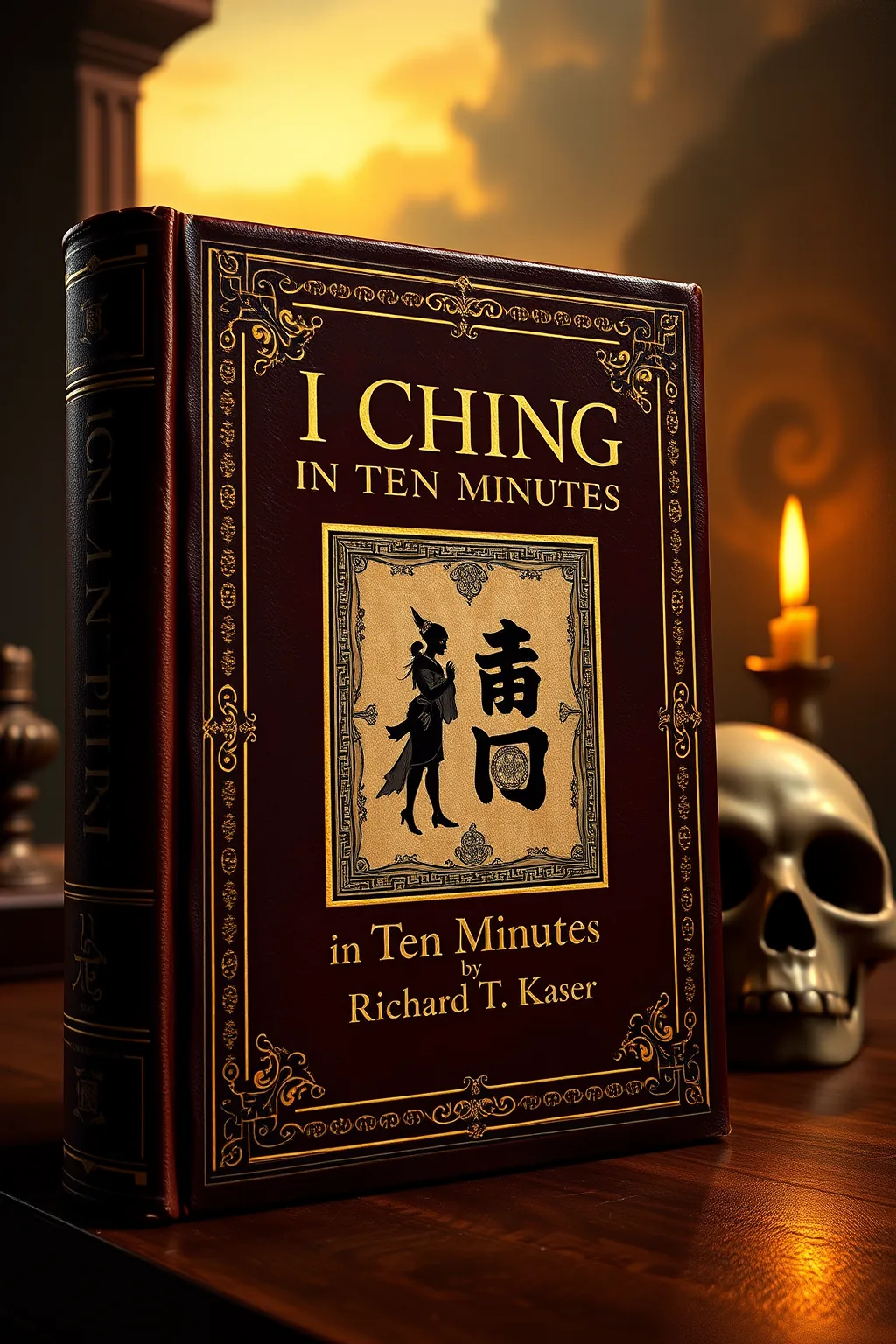
I Ching in Ten Minutes



Lorelei Sage (Contemplative Literature Editor) — Richard T. Kaser's 'I Ching in Ten Minutes' is a remarkable achievement in demystifying one of the world's most ancient and profound oracular systems. Kaser navigates the intricate symbolism of the hexagrams with clarity and reverence, making the esoteric accessible without sacrificing depth. This text doesn't merely explain the I Ching; it invites the reader into its contemplative embrace, offering practical tools for introspection and guidance. Its strength lies in its ability to bridge the gap between academic understanding and lived, intuitive experience, making it an invaluable resource for both neophytes embarking on their first journey into the 'Book of Changes' and seasoned practitioners seeking fresh perspectives.
📝 Description
61
Richard T. Kaser's 'I Ching in Ten Minutes' simplifies the ancient Chinese oracle for modern readers.
Richard T. Kaser's book aims to make the I Ching accessible, presenting its core concepts and methods for divination. It breaks down the complex philosophical ideas behind the *Book of Changes*, explaining how its symbolic language can be used for personal insight and decision-making. The author guides readers through the archetypal energies and cosmic order that the I Ching represents.
The text focuses on practical application, suggesting how individuals can connect with the system to understand shifting fortunes and human potential. It is written for those seeking a clearer understanding of this traditional practice and its role in guiding one's path. The book promises to illuminate the way toward better choices and deeper self-awareness through engagement with the I Ching.
The I Ching, or *Book of Changes*, is a foundational text within Chinese esoteric traditions, including Taoism and Confucianism. Its use as an oracle dates back thousands of years, connecting it to practices of divination and cosmology. The system employs hexagrams, formed by combinations of yin and yang lines, to interpret circumstances and provide guidance. This book places itself within that lineage, aiming to transmit the I Ching's principles to a contemporary audience interested in its mystical and philosophical dimensions.
💡 Why Read This Book?
Embark on a journey of profound self-discovery and gain access to ancient, transformative wisdom. 'I Ching in Ten Minutes' offers a clear and concise pathway to understanding the 'Book of Changes,' empowering you to consult this revered oracle for guidance. Ideal for spiritual seekers, students of divination, and anyone seeking to navigate life's complexities with greater insight and clarity. Unlock the secrets of cosmic balance and personal destiny.
⭐ Reader Reviews
Honest opinions from readers who have explored this book.
❓ Frequently Asked Questions
What is the I Ching?
The I Ching, or 'Book of Changes,' is an ancient Chinese divination text and philosophical classic, revered for its profound insights into the dynamics of the cosmos and human existence. It uses a system of 64 hexagrams to offer counsel and reveal patterns of change.
How can the I Ching be used for divination?
The I Ching is consulted by posing a question and then generating a hexagram, typically through the casting of coins or yarrow stalks. The resulting hexagram, with its changing lines, provides symbolic commentary and guidance relevant to the question.
Is this book suitable for complete beginners?
Absolutely. 'I Ching in Ten Minutes' is specifically designed to make the I Ching accessible to newcomers, breaking down its core concepts and practical application into digestible steps, demystifying its esoteric nature.
What philosophical insights does the I Ching offer?
The I Ching explores themes of balance, transformation, the interconnectedness of all things, the cyclical nature of life, and the importance of adapting to change. It emphasizes harmony with the Tao, the natural order of the universe.
Can the I Ching help with decision-making?
Yes, the I Ching is a powerful tool for decision-making. By offering a symbolic perspective on potential outcomes and underlying influences, it helps individuals approach choices with greater awareness and wisdom, fostering more aligned actions.
🔮 Key Themes & Symbolism
The Art of Subtle Divination
This book examines the subtle art of I Ching divination, presenting it not as mere fortune-telling, but as a profound dialogue with the universe. It illuminates how the oracle's symbolic language offers nuanced perspectives on life's challenges and opportunities. Readers will learn to interpret the hexagrams as archetypal patterns reflecting the dynamic interplay of forces, guiding them towards more conscious and aligned decisions. The emphasis is on cultivating intuition and understanding the flow of cosmic energies, transforming the act of consultation into a practice of self-awareness and spiritual growth.
Cosmic Harmony and the Tao
Fundamentally, the I Ching is a philosophy of cosmic harmony, deeply rooted in the concept of the Tao – the fundamental, ineffable principle that underlies all existence. Kaser guides readers to understand how the hexagrams represent the perpetual dance of Yin and Yang, the forces of creation and dissolution, and the constant state of flux that defines reality. This section explores how aligning oneself with the natural rhythms of the Tao fosters balance, resilience, and a sense of interconnectedness, offering a framework for living a more integrated and meaningful life.
Symbolism and Archetypal Resonance
The power of the I Ching lies in its collection of symbolism, where each trigram and hexagram evokes potent archetypal imagery. This theme explores the visual and conceptual language of the 'Book of Changes,' revealing how these ancient symbols resonate with universal human experiences and psychological truths. Kaser unpacks the layered meanings, from the elemental forces of heaven and earth to the complexities of human relationships and societal dynamics, empowering readers to perceive the profound wisdom embedded within the visual structures of the hexagrams.
💬 Memorable Quotes
Direct passages from the work, attributed to the author.
“Change is the only constant; wisdom is adapting.”
— This captures a fundamental teaching of the I Ching: embracing the inevitable nature of change and cultivating the wisdom to navigate it effectively.
“Seek not answers, but understanding.”
— This profound advice shifts the focus from seeking definitive solutions to a deeper exploration of underlying patterns and influences, fostering true insight.
“Within the hexagram lies the echo of your destiny.”
— This evocative statement suggests that the I Ching's readings are not external pronouncements but rather reflections of one's own inner landscape and potential future.
“The oracle whispers, the wise listen.”
— This emphasizes the importance of receptivity and active listening when consulting the I Ching, highlighting the role of the individual's awareness in receiving guidance.
💡 Key Ideas
Editorial paraphrase of the work's core concepts — not direct quotes.
The universe speaks in symbols; the I Ching translates.
This quote highlights the core function of the I Ching as a conduit for cosmic communication, suggesting that the universe's subtle messages can be understood through its symbolic language.
🌙 Esoteric Significance
Tradition
The I Ching is a foundational text within the Taoist and Confucian traditions, but its esoteric appeal transcends strict sectarian boundaries. It is deeply intertwined with Chinese cosmology, alchemy, and Yijing studies, often seen as a key to understanding the fundamental principles of the universe. Its symbolic language and divinatory methods are also recognized in Western occultism and metaphysical circles as a sophisticated system for accessing hidden knowledge, understanding archetypal patterns, and achieving spiritual enlightenment through attunement with natural cycles.
Symbolism
The primary symbolism of the I Ching revolves around its 64 hexagrams, each composed of six lines that are either solid (Yang) or broken (Yin). These lines combine to form trigrams, representing fundamental elements like Heaven, Earth, Water, Fire, etc. The hexagrams themselves symbolize archetypal situations, forces, and stages of transformation. They offer a visual and conceptual map of cosmic processes and human experiences, from the initial spark of creation to the culmination of events. Understanding these symbols allows for a profound interpretation of life's flow and the underlying energies at play.
Modern Relevance
In the modern era, the I Ching's relevance endures as a powerful tool for navigating complexity and uncertainty. It offers a counterpoint to a world often perceived as chaotic, providing a framework for understanding interconnectedness and the cyclical nature of events. For contemporary seekers, it serves as a guide for personal growth, ethical decision-making, and developing a deeper intuition. Its symbolic language continues to resonate, offering useful insights into the human psyche and the universal forces that shape our lives, making it an enduring source of wisdom for those seeking balance and clarity.
👥 Who Should Read This Book
This guide is a treasure for a diverse range of readers. **Beginners** eager to explore the ancient wisdom of the I Ching will find a clear, accessible introduction that clarifies its core concepts. **Spiritual seekers** and **practitioners of esoteric arts** will discover a profound tool for introspection, divination, and aligning with cosmic energies. **Scholars** of comparative religion and philosophy will appreciate its concise yet insightful presentation of an important Eastern text. Ultimately, anyone yearning for deeper self-understanding, guidance through life's transitions, or a more profound connection to the universe will find immense value within its pages.
📜 Historical Context
The I Ching, or 'Book of Changes,' emerged from ancient Chinese shamanistic practices and philosophical inquiry, with its earliest layers dating back over 3,000 years. Its development spanned centuries, incorporating contributions from sage rulers, philosophers like Confucius and his disciples, and various schools of thought. During the Han Dynasty (206 BCE – 220 CE), it solidified its position as one of the Five Classics of Confucianism, a central to Chinese education and governance. Its influence extended far beyond China, impacting Korean, Japanese, and Vietnamese intellectual traditions. Throughout history, the I Ching has been a source of divination, ethical guidance, and philosophical contemplation, adapting its interpretations to changing societal needs while retaining its core essence as a guide to working through the ever-present forces of change.
📔 Journal Prompts
What aspect of change am I currently resisting, and how can the I Ching illuminate this resistance?
Reflect on a recent decision: what hexagram might have represented the situation, and what wisdom does it offer in retrospect?
How does the interplay of Yin and Yang manifest in my daily life, and what does this reveal about my inner balance?
Consider a persistent challenge: what archetypal pattern from the I Ching speaks to this struggle, and what is its message?
In what ways can I cultivate greater harmony with the natural cycles of life, as suggested by the I Ching's philosophy?
🗂️ Glossary
Hexagram
A symbol composed of six stacked horizontal lines, each either solid (Yang) or broken (Yin). There are 64 unique hexagrams in the I Ching, representing archetypal situations and cosmic patterns.
Trigram
A symbol composed of three stacked horizontal lines (Yang or Yin). There are eight basic trigrams (e.g., Heaven, Earth, Water), which form the building blocks of the hexagrams and represent fundamental forces or concepts.
Yang
In the I Ching, represented by a solid line (—). It symbolizes active, masculine, light, and assertive principles. It is associated with Heaven, day, and strength.
Yin
In the I Ching, represented by a broken line (--). It symbolizes passive, feminine, dark, and receptive principles. It is associated with Earth, night, and gentleness.
Tao
The fundamental, ineffable principle that underlies all existence in Chinese philosophy, particularly Taoism. It represents the natural order, the way of the universe, and the source of all things.
This book appears in 2 collections
🔮 Readers Also Liked
Browse all →









More by Richard T. Kaser
All books →
From the “I Ching” Collection
View all →








More Free Divination & Tarot Books
View all →