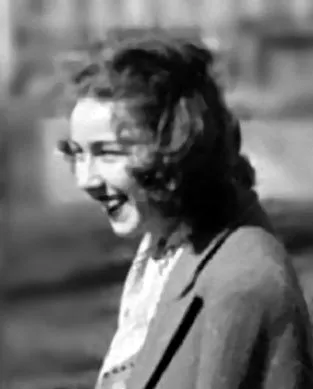
Richard Giannone
Flannery O'Connor was a Southern Gothic writer whose fiction explored faith, grace, and the human condition through grotesque characters and regional settings.
Mary Flannery O'Connor (1925–1964) was an American novelist, short story writer, and essayist known for her Southern Gothic style. Her work often featured regional settings, grotesque characters, and violent situations, exploring the impact of limitations, imperfections, and differences on individuals.
O'Connor's writing was deeply influenced by her Catholic faith, examining morality, ethics, and the action of divine grace on unwilling characters. She described her stories as reflecting "Christian realism," often perceived by readers as hard or brutal. Her posthumously published "Complete Stories" received the National Book Award for Fiction in 1972.
Born in Savannah, Georgia, O'Connor later moved to Milledgeville. She studied at Georgia State College for Women and the Iowa Writers' Workshop, where she developed her distinctive literary voice. Despite a secluded life due to illness, she was an active reviewer and lecturer, engaging with theological and ethical themes.
Literary Style and Themes
Flannery O'Connor's fiction is characterized by its Southern Gothic style, frequently employing regional settings and grotesque characters to explore profound themes. She often depicted characters facing limitations due to disability, race, crime, religion, or sanity, examining how these factors influenced their lives and interactions. O'Connor's writing was deeply infused with her Catholic faith, focusing on the action of divine grace upon characters who were often resistant to it. She aimed to portray a form of "Christian realism," where the inherent imperfections and struggles of humanity were presented unsentimentally. Her work often involved elements of pain, violence, and unusual behavior as catalysts for spiritual transformation, reflecting her belief that grace fundamentally alters individuals, a process she acknowledged could be painful.
Philosophical and Religious Underpinnings
O'Connor's literary philosophy was rooted in a sacramental worldview and Thomistic thought, viewing the created world as imbued with divine presence. She considered God an inherent aspect of experience rather than a mere abstract concept. Rejecting purely symbolic interpretations of religious tenets, such as the Eucharist, she insisted on their tangible reality. While her fiction often explored complex theological and ethical questions, she avoided didacticism, believing that meaning should emerge organically from the narrative. Her stories, often featuring fundamentalist Protestant characters in the rural South, depicted them undergoing profound character shifts, which she saw as movements toward a Catholic perspective, frequently achieved through challenging and even absurd experiences.
Social Commentary and Personal Views
Through her fiction, O'Connor addressed various contemporary issues, including the Holocaust, racial integration, and intersexuality, often from the perspectives of both her fundamentalist and liberal characters. She explored the complexities of race in the American South, a theme present in several of her most notable stories. Despite her often secluded existence, O'Connor engaged with social and political matters. She held progressive views in relation to her faith, supporting civil rights figures and voting for John F. Kennedy. However, her personal correspondence reveals a more complex and sometimes contradictory stance on race and integration, indicating a nuanced perspective that defies simple categorization.
Key Ideas
- The action of grace on reluctant characters
- Christian realism and unsentimental acceptance of human limitations
- The role of pain and violence in spiritual transformation
- Critique of secularism through the lens of Southern characters' struggles
Notable Quotes
“All my stories are about the action of grace on a character who is not very willing to support it, but most people think of these stories as hard, hopeless, brutal, etc.”
“Anything that comes out of the South is going to be called grotesque by the northern reader, unless it is grotesque, in which case, it is going to be called realistic.”
“I am mighty tired of reading reviews that call A Good Man brutal and sarcastic. The stories are hard, but they are hard, because there is nothing harder or less sentimental than Christian realism. When I see these stories described as horror stories, I am always amused, because the reviewer always has hold of the wrong horror.”
“Well, if it's a symbol, to hell with it”
“Grace changes us, and the change is painful.”
Books by Richard Giannone
3 free public domain books · Read online or download