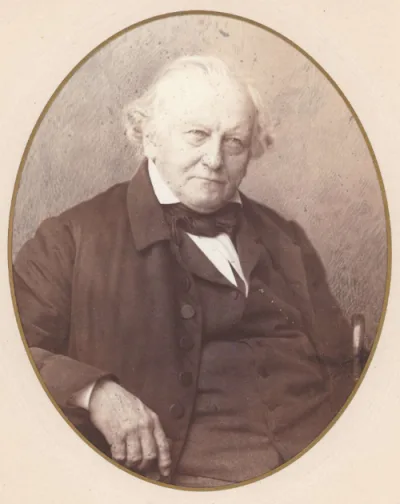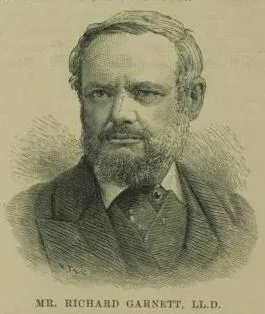
Richard Garnett
Richard Garnett was a scholar, librarian, poet, and astrologer who held a senior position at the British Museum.
Richard Garnett (1835-1906) was a multifaceted intellectual who served as the Keeper of Printed Books at the British Museum for nearly a decade. His career began as an assistant librarian at the museum in 1851, and he progressed through various roles, including superintendent of the Reading Room and editor of the General Catalogue of Printed Books. Garnett was also a prolific writer, contributing numerous translations, poetry collections, biographies of notable figures, literary criticism, and articles for major encyclopedias. He played a role in rediscovering and publishing works by other authors, such as Percy Bysshe Shelley.
Beyond his academic and literary pursuits, Garnett had a keen interest in astrology, publishing a monograph on the subject under a pseudonym. His personal beliefs, as described by Joseph McCabe, combined a spiritual inclination with skepticism towards dogma and an appreciation for astrology. Garnett's life concluded in 1906, leaving behind a legacy as a dedicated librarian and a versatile scholar with a unique blend of interests.
Scholarly and Literary Career
Richard Garnett's professional life was deeply intertwined with the British Museum, where he began as an assistant librarian in 1851 and eventually rose to the position of Keeper of Printed Books from 1890 to 1899. His tenure saw him oversee significant cataloging efforts and manage the museum's vast collection. Garnett was a prolific author and translator, contributing to a wide array of literary and scholarly fields. His published works include translations from several European languages and Greek, collections of his own poetry, and biographies of prominent figures like Thomas Carlyle, John Milton, and William Blake. He also authored critical works such as 'The Age of Dryden' and 'Essays of an Ex-Librarian', alongside broader literary histories and contributions to encyclopedic projects like the Encyclopædia Britannica and the Dictionary of National Biography.
Explorations in Esotericism and Literature
Garnett's intellectual curiosity extended beyond conventional scholarship into more esoteric realms, notably astrology. In 1880, he published an essay titled "The Soul and the Stars" under the pen name A. G. Trent, demonstrating a personal interest in astrological concepts, although ill health limited further exploration of this topic. This interest aligns with a description of him cherishing a belief that combined mystical spirituality with a rejection of rigid dogma and priestcraft. His literary output also included significant work in uncovering and promoting forgotten or unpublished literary works. He was instrumental in discovering and editing unpublished poems by Shelley, and he reissued a newly found poetry collection from Victor and Cazire. His own poem, "Where Corals Lie," was famously set to music by composer Edward Elgar.
Key Ideas
- A blend of mystical spirituality with skepticism towards religious dogma and institutions.
- Interest in astrology as a subject for study and reflection.
- Dedication to preserving and promoting literary heritage, including rediscovering lost works.
Notable Quotes
“cherished a genuine and somewhat mystical belief in religion, which combined hostility to priestcraft and dogma with a modified belief in astrology”
Books by Richard Garnett
2 free public domain books · Read online or download