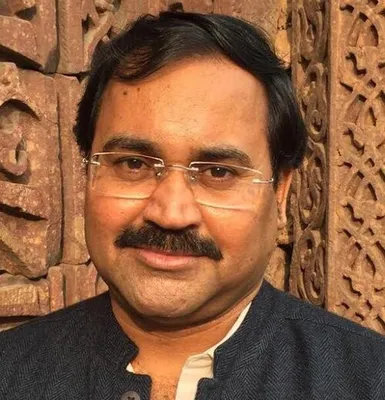
Raziuddin Aquil
Raziuddin Aquil is an Indian historian specializing in medieval and early modern Indian Islamic history and Sufism.
Raziuddin Aquil is an Indian historian and academic, currently serving as a professor in the Department of History at the University of Delhi. His academic pursuits focus on the religious practices, literary cultures, and historical traditions of medieval and early modern India, with a particular emphasis on Indian Islamic history and Sufism. Born on January 2, 1969, Aquil received his advanced education from Jamia Millia Islamia and Jawaharlal Nehru University. He has held fellowships and academic positions, including at the Centre for Studies in Social Sciences, Calcutta, before joining the faculty at Delhi University. Aquil's extensive publications explore the sociological history of Islam in India, Sufism, and vernacular history, examining religious customs, literary traditions, and historical practices. His work often delves into the complexities of Islam's development in South Asia, challenging conventional narratives and exploring the roles of Sufi saints and their influence on society and politics. He has also contributed to discussions on vernacular historiography, challenging the notion that India lacked historical writing before colonial times. Aquil is also an active writer for various publications and serves on the editorial boards of academic journals.
Contributions to Sufi Studies
Raziuddin Aquil has made significant contributions to the study of Sufism in India. His book 'Sufism, Culture, and Politics: Afghans and Islam in Medieval North India' (2007) examines the political landscape of North India during the late 15th and early 16th centuries, including the impact of Sufis on politics and culture. In 'Sufism and Society in Medieval India' (2010), he compiles selected studies on the multifaceted roles of Sufis within medieval Indian society and culture, addressing topics like Islamicization and conversion. 'Lovers of God: Sufism and the Politics of Islam in Medieval India' (2017/2020) further explores the relationship between Sufism and the socio-political fabric of medieval India, highlighting the role of Sufis as spiritual figures. His collection 'Days in the Life of a Sufi' (2020) presents 101 stories offering insights into the lives of Sufi saints, their mystical practices, and their enduring influence on a pluralistic Indian society.
Understanding Islam and Indian History
Aquil's work critically engages with the history of Islam in India. His book, 'The Muslim Question: Understanding Islam and Indian History,' aims to move beyond simplistic dichotomies of liberal versus extremist interpretations of Islam. It investigates the development of Islam in South Asia from the 13th century onwards, questioning issues of violence, extremism, and fundamentalism. The book also acknowledges the constructive contributions of Sufi saints in spreading Islamic teachings across the Indian subcontinent. His research in this area contributes to a nuanced understanding of Islam's historical trajectory and its interactions within the Indian context.
Vernacular and Regional Histories
In addition to his work on Islam and Sufism, Aquil has contributed to the field of vernacular history. Co-editing 'History in the Vernacular' (2008) with Partha Chatterjee, he challenges the notion that historical writing in India only began with British colonial influence. This collection explores regional and vernacular traditions of historical production, revealing indigenous historical narratives embedded within various literary forms across languages like Assamese, Bengali, and Tamil. His co-edited volume 'Literary and Religious Practices in Medieval and Early Modern India' (2016) also examines historical traditions from the eighth to the eighteenth centuries, including literary practices and religious rituals.
Key Ideas
- Exploration of Sufi roles in medieval Indian society, culture, and politics.
- Analysis of Islam's historical development in South Asia, questioning extremism and highlighting constructive roles of Sufis.
- Challenging the colonial narrative of Indian historiography by examining vernacular traditions of history writing.
- Interconnections between religious practices, literary cultures, and historical traditions in medieval and early modern India.
Books by Raziuddin Aquil
2 free public domain books · Read online or download