Ray Grigg
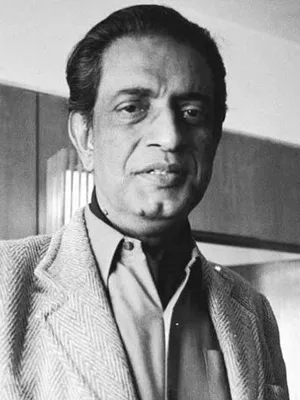
Satyajit Ray was a pioneering Indian filmmaker, author, and artist renowned for his masterful storytelling and profound humanism.
Satyajit Ray was a celebrated Indian filmmaker, author, screenwriter, lyricist, editor, illustrator, calligrapher, and composer, widely regarded as one of cinema's greatest and most influential figures. Born in Calcutta, he began his career as a commercial artist before being inspired to enter filmmaking after meeting Jean Renoir and seeing Vittorio De Sica's 'Bicycle Thieves'. Ray directed 36 films, including the acclaimed Apu Trilogy, 'The Music Room', and 'The Big City'. He was deeply involved in all aspects of his films, from scripting and casting to scoring and editing, and also designed his own promotional materials.
Beyond his cinematic achievements, Ray was a prolific author, primarily writing short stories and novels for young readers, creating popular characters like the detective Feluda and the scientist Professor Shonku. His illustrious career was recognized with numerous awards, including a record number of Indian National Film Awards, honorary degrees, and an Academy Honorary Award. Ray's family had a rich artistic and intellectual heritage, with his grandfather Upendrakishore Ray Chowdhury being a writer and publisher, and his father Sukumar Ray a notable writer of nonsense verse and children's literature.
Artistic and Literary Foundations
Ray's early life was steeped in art and literature, growing up in the household of his grandfather, Upendrakishore Ray Chowdhury, a writer, illustrator, and publisher who founded the printing press U. Ray and Sons. His father, Sukumar Ray, was a pioneering Bengali writer known for his nonsense rhymes and children's literature. Satyajit Ray himself began his professional life as a visual artist, working in advertising and as a book-jacket designer, demonstrating a keen eye for graphic design and typography. His early work included designing covers for notable books and illustrating a children's version of Bibhutibhushan Bandyopadhyay's 'Pather Panchali'. This deep engagement with visual arts and literature laid a strong foundation for his later cinematic endeavors, influencing his approach to storytelling and visual composition.
Transition to Filmmaking
Ray's path to filmmaking was significantly shaped by his experiences and encounters. After studying fine arts at Visva-Bharati University in Santiniketan, where he was influenced by Indian painters and ancient Indian art, he returned to Calcutta. His professional career began in advertising, but a pivotal trip to London in 1950 exposed him to Vittorio De Sica's neorealist masterpiece 'Bicycle Thieves'. This viewing profoundly impacted him, solidifying his desire to become a filmmaker. Prior to this, his meeting with French director Jean Renoir, who was filming 'The River' in India, and Renoir's encouragement, had already sparked his interest in adapting Bibhutibhushan Bandyopadhyay's novel 'Pather Panchali' for the screen. These experiences, combined with his background as a visual artist and his deep appreciation for cinema, propelled him into directing his first feature film.
Cinematic Vision and Legacy
Satyajit Ray is revered for his distinctive cinematic style, characterized by profound humanism, nuanced character development, and masterful visual storytelling. He directed 36 films, encompassing features, documentaries, and shorts, with 'The Apu Trilogy' (1955–1959) standing as his most iconic achievement. Ray meticulously controlled nearly every aspect of his filmmaking, including scripting, casting, music composition, and editing, often designing his own credit titles and publicity materials. His films, such as 'The Music Room' (1958) and 'The Big City' (1963), garnered international acclaim and numerous awards, including multiple prizes at major film festivals. Ray's influence extends beyond cinema; he also created beloved literary characters for young audiences, cementing his status as a versatile and enduring artistic force.
Key Ideas
- Neorealism in Indian cinema
- Humanistic storytelling
- Visual artistry in filmmaking
- Children's literature and character creation
Books by Ray Grigg
3 free public domain books · Read online or download