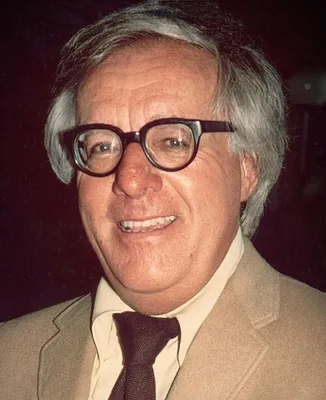
Ray Douglas
Ray Bradbury was a celebrated American author known for science fiction, fantasy, and horror, whose works explored human character and imagination.
Ray Douglas Bradbury (1920–2012) was a highly acclaimed American writer recognized for his contributions across various genres, including fantasy, science fiction, horror, mystery, and realistic fiction. He gained widespread recognition for his novel "Fahrenheit 451" and short story collections like "The Martian Chronicles." Bradbury's writing often drew inspiration from his childhood experiences in Waukegan, Illinois, which he fictionalized as Green Town, and from formative encounters, such as a carnival performance that profoundly impacted his desire to write. His career spanned decades, encompassing novels, short stories, screenplays, and poetry, with many of his works adapted for film and television.
Bradbury's unique style, characterized by imaginative storytelling and a deep understanding of human nature, was instrumental in bringing science fiction into the literary mainstream. He was influenced by early science fiction authors like H.G. Wells and Jules Verne, as well as Edgar Allan Poe and Edgar Rice Burroughs. His early life in Waukegan, his fascination with carnivals, and his encounters with Hollywood figures shaped his literary output. He began writing at a young age and became a full-time author by his mid-twenties, establishing a prolific career that left a significant mark on 20th-century literature.
Early Life and Influences
Born in Waukegan, Illinois, Ray Douglas Bradbury's early life was marked by a close-knit extended family and exposure to storytelling from his aunt. His childhood in Waukegan served as the inspiration for the fictional setting of Green Town in his later works. A pivotal experience occurred when he was twelve, encountering a carnival performer named Mr. Electrico, who declared he would "Live, forever!" This encounter deeply affected Bradbury, sparking his lifelong commitment to writing. His early reading included authors like H.G. Wells, Jules Verne, and Edgar Allan Poe, whose works influenced his initial foray into horror stories. He also drew inspiration from Edgar Rice Burroughs and developed an interest in comics, identifying with characters like Superman. These formative years, filled with imaginative experiences and literary discovery, laid the groundwork for his prolific writing career.
Literary Career and Impact
Bradbury became a full-time writer in his mid-twenties, publishing his first short story collection, "Dark Carnival," in 1947. His career was significantly boosted by the publication of "Homecoming" in Mademoiselle, which was recognized with an O. Henry Award. He is best known for "Fahrenheit 451," initially published as a short story titled "The Fireman" before being expanded into a novel. Bradbury's writing is celebrated for its imaginative scope, poetic prose, and insightful portrayal of human character. The New York Times recognized him as a key figure in bringing modern science fiction into mainstream literature, highlighting his ability to blend fantasy with profound human themes. His works, including "The Martian Chronicles" and "The Illustrated Man," have been widely adapted into various media, cementing his legacy as a major literary voice of the 20th century.
Key Ideas
- The transformative power of imagination
- The exploration of human nature through speculative fiction
- The fusion of science fiction and fantasy with literary merit
- The importance of memory and childhood experiences in shaping identity
Notable Quotes
“Live, forever!”
Books by Ray Douglas
5 free public domain books · Read online or download