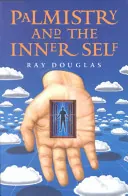
Palmistry and the inner self

 62
62

Palmistry and the inner self



Ophelia Vance, Mystical Literature Reviewer: Ray Douglas's "Palmistry and the Inner Self" is a seminal work in esoteric divination. Douglas masterfully deciphers the complex language of the hand, revealing its profound connection to the spiritual and psychological realms. He moves beyond superficial readings, offering insights into karmic patterns, soul evolution, and the hidden potential within each individual. This book is a treasure trove for serious students of palmistry and seekers of deeper self-knowledge. Its strength lies in its synthesis of practical interpretation with philosophical depth, making it an indispensable guide for those ready to explore the sacred landscape of their own palms.
📝 Description
62
Ray Douglas's "Palmistry and the Inner Self" connects hand markings to the soul's deeper currents.
Ray Douglas's "Palmistry and the Inner Self" examines the art of palm reading. It presents the lines, mounts, and shapes on the hand as symbols that reflect an individual's inner life. Douglas explains how these markings can be interpreted to understand a person's character, latent abilities, and spiritual path.
The book guides readers through the symbolic language of palmistry. It suggests that the hand acts as a map of one's life experiences and potential. The author encourages a connection with this system for self-understanding, aiming for more than simple predictions. The work seeks to bridge the material and spiritual aspects of existence, offering a way to view the self within a larger cosmic framework.
This book fits within the Western esoteric tradition, particularly the divinatory arts. Palmistry, alongside astrology and tarot, has been used for centuries to understand human character and potential. Douglas's work draws on this history, positioning the hand not just as a physical object but as a repository of personal energetic and spiritual information. It aligns with practices that seek to unveil hidden knowledge and facilitate personal growth through symbolic systems.
💡 Why Read This Book?
Embark on a transformative journey of self-discovery. "Palmistry and the Inner Self" offers a rare opportunity to decode the hidden language of your own hand, unlocking profound insights into your unique destiny, strengths, and challenges. Ideal for spiritual seekers, aspiring palmists, and anyone intrigued by the ancient wisdom of the cosmos etched within us.
⭐ Reader Reviews
Honest opinions from readers who have explored this book.
❓ Frequently Asked Questions
What is the primary focus of "Palmistry and the Inner Self"?
The book's primary focus is on palmistry as a tool for self-understanding, revealing one's inner self, karmic patterns, and spiritual potential, rather than solely for fortune-telling.
Is this book suitable for beginners in palmistry?
Yes, Ray Douglas presents complex concepts in an accessible manner, making it suitable for those new to palmistry, while offering depth for experienced practitioners.
What kind of symbolism is explored in the book?
The book explores rich symbolism found in palm lines, mounts, fingers, and hand shapes, linking them to psychological traits, life paths, and universal archetypes.
Does the book discuss the philosophical implications of palmistry?
Absolutely. It delves into the philosophical underpinnings, viewing the palm as a reflection of consciousness, destiny, and the interconnectedness of all things.
Can reading this book aid in personal growth?
Indeed. By understanding the messages within the palm, readers can gain clarity, embrace their potential, and navigate life's challenges with greater wisdom and self-awareness.
🔮 Key Themes & Symbolism
The Hand as a Cosmic Mirror
This theme explores the profound concept of the hand as a microcosm of the universe, a living canvas where the celestial energies and karmic imprints of an individual are visibly inscribed. Douglas posits that the lines, mounts, and contours of the palm are not random but are divinely orchestrated symbols, offering a unique blueprint of the soul's journey through lifetimes. It emphasizes the interconnectedness between the physical form and the ethereal plane, suggesting that by deciphering these markings, one can gain access to hidden knowledge about their purpose, challenges, and innate spiritual gifts.
Unlocking Latent Potential and Destiny
Central to the book is the idea that palmistry is a powerful tool for self-actualization. Ray Douglas argues that the palm reveals not only predispositions but also the vast reservoir of untapped potential residing within each individual. The text guides readers to identify these inherent strengths and talents, presenting them as keys to unlocking their destined path. It encourages a proactive approach to life, where understanding one's palm allows for conscious navigation of challenges and the deliberate cultivation of personal growth and fulfillment.
The Esoteric Language of Palmistry
This theme looks at the rich, symbolic language of palmistry, treating it as an ancient and sacred science. Douglas moves beyond a simplistic, predictive approach, instead focusing on the deeper metaphysical meanings embedded within each line, mound, and finger. The book illuminates how these elements communicate complex psychological states, spiritual lessons, and karmic cycles, offering a profound understanding of the self. It positions palmistry as a form of sacred geometry, a visual representation of the soul's intricate design and its ongoing evolution.
💬 Memorable Quotes
Direct passages from the work, attributed to the author.
“Lines are not fate, but reflections of choice.”
— This emphasizes free will within the framework of destiny, implying that palmistry reveals tendencies, not immutable outcomes.
“Each crease whispers a story of growth.”
— This highlights the dynamic nature of the palm, suggesting it evolves and reveals lessons learned and opportunities for personal development.
“The mounts ascend with the spirit's aspiration.”
— This connects the physical prominences of the hand to the spiritual ambitions and character traits of the individual.
“Know thyself through the lines that bind.”
— A direct call to introspection, urging readers to use palmistry as a means to profound self-awareness and understanding of their inner world.
💡 Key Ideas
Editorial paraphrase of the work's core concepts — not direct quotes.
The hand is a map of the soul's journey.
This quote expresses the core philosophy, suggesting the palm is not merely physical but a spiritual atlas guiding one's life path and inner evolution.
🌙 Esoteric Significance
Tradition
This work is deeply rooted in the Hermetic and Neoplatonic traditions, viewing the physical hand as a reflection of the macrocosm and the divine blueprint. It aligns with Renaissance philosophies that saw a divine order reflected in all aspects of existence, from the stars to the human body. The exploration of interconnectedness and the soul's journey places it within the broader spectrum of Western esotericism, emphasizing inner knowing and spiritual evolution.
Symbolism
The key symbolism lies in the lines (e.g., Heart Line, Head Line, Life Line) representing emotional states, intellect, and vital energy; the mounts (e.g., Mount of Venus, Mount of Jupiter) signifying core personality drives and potentials; and the shapes of fingers and palms, which further delineate character. Each element is interpreted as a sacred glyph, a visual language of the soul's archetypal patterns and its interaction with universal forces.
Modern Relevance
In an age often marked by disconnection and superficiality, "Palmistry and the Inner Self" offers a potent antidote. Its relevance lies in providing a tangible, personal, and ancient method for self-discovery and empowerment. By encouraging introspection through the palm, it fosters a deeper connection to one's authentic self, enhances intuition, and provides a framework for navigating life's complexities with greater wisdom and purpose.
👥 Who Should Read This Book
This book is a treasure for the dedicated seeker of esoteric wisdom. Beginners in palmistry will find a clear, insightful guide to understanding the fundamental language of the hand. Scholars of occultism and metaphysics will appreciate its depth and philosophical underpinnings. Practitioners looking to expand their divinatory toolkit will discover new layers of interpretation. Ultimately, anyone yearning for profound self-knowledge, spiritual insight, and a deeper connection to their inner world will find "Palmistry and the Inner Self" an indispensable companion on their journey.
📜 Historical Context
Published during a period of renewed interest in esoteric studies and the occult, "Palmistry and the Inner Self" emerges from a tradition that spans millennia, with roots in ancient India, China, and Greece. The late 19th and early 20th centuries saw a surge in spiritualism and a fascination with hidden knowledge, as individuals sought meaning beyond the material world. Authors like Eliphas Lévi and Arthur Edward Waite were redefining occultism, integrating Hermeticism, Kabbalah, and other mystical traditions. Ray Douglas's work, while perhaps from a later era, stands on the shoulders of these giants, offering a contemporary interpretation of an ancient practice, grounded in a desire to connect individuals with their inner spiritual landscape and the broader cosmic order.
📔 Journal Prompts
Reflect on the most prominent line on your dominant hand. What aspect of your inner self does it most strongly represent?
Examine the mounts on your palm. Which ones are most developed, and how do these correspond to your core aspirations and personality traits?
Consider a significant challenge you have faced. How might the markings on your palm offer insight into your approach and potential for overcoming it?
What 'hidden potential' does your palm suggest you possess? How can you begin to cultivate this aspect of yourself?
How does understanding your palm influence your perception of your own destiny and free will?
🗂️ Glossary
Mounts
The fleshy, raised areas on the palm, beneath the fingers, believed to correspond to different planetary influences and represent specific personality traits and potentials.
Major Lines
The primary horizontal and vertical lines on the palm (e.g., Life Line, Head Line, Heart Line) that are interpreted to reveal aspects of health, intellect, emotions, and life path.
Karmic Imprints
The concept that past actions and experiences, from this life or previous ones, leave subtle energetic traces on the palm, influencing present tendencies and life lessons.
Esoteric
Relating to or accessible only by a relatively small number of people with a specialized knowledge or interest; mystical or secret.
Metaphysical
Concerned with abstract thought or subjects that do not deal with the material world; relating to or based upon the nature of reality and knowledge.
This book appears in 1 collection
🔮 Readers Also Liked
Browse all →









More by Ray Douglas
All books →

From the “Palmistry” Collection
View all →









More Free Divination & Tarot Books
View all →