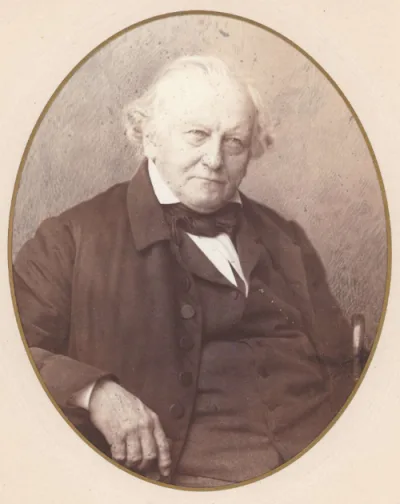
Philip 1897-1968 Merlan
Philip Merlan was a historian of philosophy whose work focused on ancient and medieval thought, particularly Neoplatonism and its influence.
Philip Merlan (1897-1968) was a historian of philosophy known for his extensive research into ancient and medieval intellectual traditions. His scholarly contributions primarily centered on the development and transmission of philosophical ideas from antiquity through the Middle Ages, with a particular emphasis on Neoplatonism and its impact on subsequent thought. Merlan's work sought to trace the complex lineage of philosophical concepts and their transformations across different historical periods and cultural contexts.
His academic career involved detailed examination of primary texts and scholarly interpretations, aiming to provide a nuanced understanding of the evolution of philosophical systems. Merlan's research often delved into the connections between different philosophical schools and the ways in which ideas were adapted and reinterpreted by thinkers throughout history. His legacy lies in his meticulous scholarship and his significant contributions to the study of the history of philosophy, particularly in the areas of ancient and medieval thought.
Focus on Neoplatonism and Ancient Philosophy
Philip Merlan's scholarly work was deeply rooted in the study of ancient philosophy, with a significant focus on Neoplatonism. He dedicated considerable effort to understanding the core tenets of Neoplatonic thought, its origins, and its development through key figures like Plotinus. Merlan explored how Neoplatonic ideas, such as emanation and the concept of the One, influenced subsequent philosophical and mystical traditions. His research aimed to illuminate the intricate philosophical systems that emerged from this tradition and their lasting impact on Western intellectual history.
Medieval Philosophy and Transmission of Ideas
Beyond antiquity, Merlan extensively investigated the trajectory of philosophical thought into the medieval period. He was particularly interested in how ancient philosophical concepts, especially those from Neoplatonism, were received, interpreted, and integrated by medieval thinkers. His work examined the processes through which these ideas were transmitted across different cultures and intellectual milieus, contributing to the rich tapestry of medieval scholasticism. Merlan's scholarship provided valuable insights into the continuity and transformation of philosophical doctrines over centuries.
Historiography of Philosophy
Merlan's approach to the history of philosophy was characterized by a rigorous and meticulous methodology. He emphasized the importance of careful textual analysis and a deep engagement with the historical context in which philosophical ideas were formulated. His work often involved reconstructing complex philosophical arguments and tracing the lineage of specific concepts through various texts and commentaries. This dedication to accurate historical representation and detailed scholarship positioned him as a significant figure in the field of the historiography of philosophy.
Key Ideas
- Detailed study of Neoplatonism and its influence
- Tracing the transmission of philosophical ideas from antiquity to the Middle Ages
- Rigorous historical and textual analysis in the study of philosophy
Books by Philip 1897-1968 Merlan
0 free public domain books · Read online or download