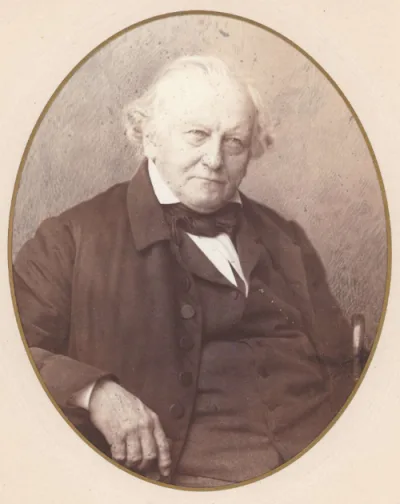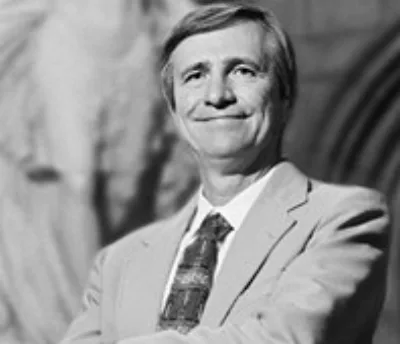
Peter Kreeft is a Catholic philosophy professor and prolific author known for his works on Christian apologetics and philosophy.
Peter Kreeft, born March 16, 1937, is an American philosopher and professor at Boston College and The King's College. He is a convert to Catholicism and has authored over eighty books exploring Christian philosophy, theology, and apologetics.
Kreeft's academic journey began with undergraduate studies at Calvin College and graduate degrees from Fordham University, followed by postgraduate work at Yale. He joined the philosophy faculty at Boston College in 1965. His work often engages with fundamental philosophical questions, including the existence of God, and he co-authored "Twenty Arguments for the Existence of God" with Ronald K. Tacelli.
His conversion to Catholicism, which occurred during his college years, was influenced by his investigation into the early Church's traditions and claims, as well as figures like C. S. Lewis and Thomas Aquinas. Despite his Catholic faith, Kreeft emphasizes unity between Catholics and Protestants.
Academic and Philosophical Contributions
Peter Kreeft has established a significant academic career, primarily at Boston College, where he has taught philosophy since 1965. His scholarly work delves into a wide range of philosophical and theological topics, with a particular focus on Christian apologetics. He is recognized for his ability to articulate complex ideas in an accessible manner, often employing Socratic dialogue in his numerous books. A notable collaboration with Ronald K. Tacelli resulted in "Twenty Arguments for the Existence of God," a key text in Christian apologetics. Kreeft's engagement with philosophical traditions, including those of Plato, Aristotle, and Aquinas, is evident throughout his extensive bibliography.
Conversion and Spiritual Journey
Kreeft's personal spiritual path led him from Calvinism to Catholicism during his university studies. This conversion was a result of his own research into the historical claims and practices of the Catholic Church, which he found reflected in the early Christian era. He identified elements such as the centrality of the Eucharist, the doctrine of the Real Presence, prayers to saints, Marian devotion, and the concept of apostolic succession as compelling. The Church's assertion of being founded by Christ served as a pivotal factor in his decision, drawing parallels to C.S. Lewis's trilemma regarding the nature of Jesus.
Literary Output and Thematic Focus
The prolific output of Peter Kreeft includes over eighty books covering diverse subjects within philosophy and theology. His writings often explore the intersection of faith and reason, addressing questions about the meaning of life, suffering, virtue, and the nature of God. He frequently uses literary and philosophical figures, such as C. S. Lewis, Socrates, and John F. Kennedy, in dialogues to examine these themes. Kreeft's bibliography also demonstrates a deep interest in comparative religion and interfaith dialogue, as seen in works that explore connections between Christianity and other traditions, and his advocacy for ecumenism.
Key Ideas
- Christian apologetics
- The existence of God
- Socratic dialogue in philosophy
- Catholicism and early Church history
- Interfaith dialogue and ecumenism
Notable Quotes
“I thought, just as Jesus made a claim about His identity that forces us into one of only two camps ... so the Catholic Church’s claim to be the one true Church, the Church Christ founded, forces us to say either that this is the most arrogant, blasphemous and wicked claim imaginable, if it is not true, or else that she is just what she claims to be.”
Books by
2 free public domain books · Read online or download