Patricia R. Spadaro
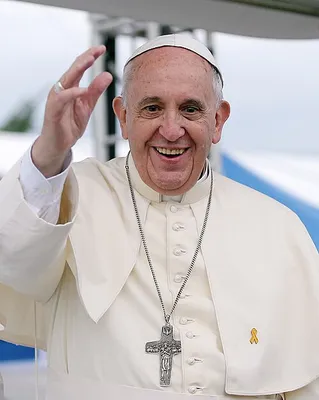
Pope Francis, born Jorge Mario Bergoglio, was the first Jesuit and Latin American pope, known for his focus on mercy, inclusivity, and global issues.
Jorge Mario Bergoglio, who became Pope Francis, was born in Buenos Aires, Argentina, to Italian immigrant parents. After a severe illness in his youth, he was inspired to join the Society of Jesus in 1958. He pursued theological studies and was ordained a priest in 1969. Bergoglio served in various leadership roles within the Jesuit order in Argentina, including provincial superior and rector of a theological faculty. He was later appointed Auxiliary Bishop of Buenos Aires in 1992 and became its metropolitan archbishop in 1998. During his tenure as archbishop, he focused on increasing the church's presence in impoverished areas and implemented stricter financial management.
In 2013, Bergoglio was elected pope, taking the name Francis. He was the first Jesuit pope, the first from Latin America, and the first from outside Europe since the 8th century. His papacy was characterized by a focus on humility, God's mercy, interreligious dialogue, and advocating for the poor, migrants, and refugees. He promoted greater inclusivity within the Church, including for LGBTQ individuals, and initiated significant reforms such as making women and laypeople full members of Roman Curia dicasteries. Pope Francis also addressed global issues, criticizing consumerism and overdevelopment, advocating for climate action, and calling for the abolition of capital punishment. He played a role in international diplomacy, including restoring relations between Cuba and the United States, and apologized for the Church's role in Canada's residential school system.
Early Life and Jesuit Vocation
Born Jorge Mario Bergoglio in Buenos Aires in 1936, he was the eldest of five children of Italian immigrants. His father, an accountant, left Italy to escape fascism. Bergoglio received a chemical technician's diploma and worked in a laboratory before experiencing a life-threatening illness at age 21, which resulted in the removal of part of a lung. This personal health crisis profoundly impacted him. While on his way to an event, a visit to a church for confession led to his spiritual calling. He entered the seminary and, after initial studies, joined the Society of Jesus as a novice in 1958. He made his initial religious vows in 1960 and later his final vows in 1973, including the special vow of obedience to the Pope's mission.
Priesthood and Academic Career
After becoming a Jesuit, Bergoglio pursued philosophy and theology. He earned a licentiate in philosophy and taught literature and psychology at Jesuit high schools in Argentina. He began his theological studies in 1967 and was ordained a priest in December 1969. Following his ordination, he served as master of novices and a professor of theology. He completed his final Jesuit spiritual training in Spain. After his term as provincial superior in Argentina ended in 1979, he returned to teach at the San Miguel faculty and later served as its rector. He also spent time in Ireland learning English and in Germany exploring potential doctoral research, focusing on theologian Romano Guardini.
Episcopal Ministry and Papacy
Returning to Argentina, Bergoglio served as a confessor and spiritual director. He was appointed Auxiliary Bishop of Buenos Aires in 1992 and became Archbishop of Buenos Aires in 1998. As archbishop, he focused on expanding the Church's outreach to the poor in Buenos Aires's slums, earning the moniker 'slum bishop'. He also implemented financial reforms to stabilize the archdiocese's finances. In 2001, he was made a cardinal. In 2013, he was elected Pope, choosing the name Francis. His papacy was marked by a less formal style, a focus on mercy, and advocacy for social justice, migrants, and the environment. He also initiated significant dialogues and reforms within the Church and on the global stage.
Key Ideas
- Emphasis on God's mercy
- Inclusivity within the Catholic Church
- Advocacy for the poor, migrants, and refugees
- Critique of consumerism and overdevelopment
- Action on climate change
- Opposition to capital punishment
- Support for decriminalizing homosexuality
Books by Patricia R. Spadaro
0 free public domain books · Read online or download