Natalia Bolívar Aróstegui
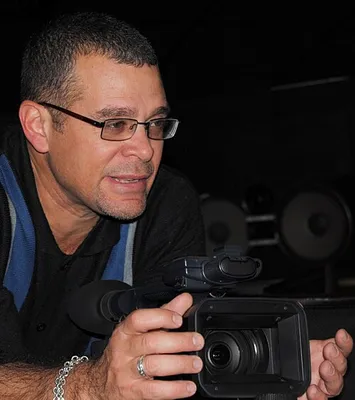
Ernesto Daranas Serrano is a Cuban filmmaker whose acclaimed films explore Cuban society and culture.
Ernesto Daranas Serrano, born in Havana in 1961, is a Cuban filmmaker with a notable career in cinema and television. His father, Manuel Ángel Daranas Valdés, was a recognized actor, teacher, and writer. Daranas began his storytelling career in radio while studying geography, later gaining recognition for his radio soap operas that depicted contemporary Cuban society during the Special Period. He transitioned to television directing with documentaries on Cuban ethnography and culture, and later directed films for television.
Daranas has achieved significant critical and popular success with his feature films, several of which have been submitted as Cuba's entry for the Academy Award for Best International Feature Film. His filmography includes "Los dioses rotos" (2008), which received critical acclaim and was a box-office success, and "Behavior" (2014), a film widely recognized internationally and considered by some to be a significant Cuban film of the 21st century. "Sergio & Sergei" (2017), a co-production with the United States, also garnered attention. Daranas has received awards such as the King of Spain Award and a Latin Grammy nomination for Best Long Form Music Video.
Early Career and Television Work
Ernesto Daranas Serrano's early forays into storytelling began in radio during his college years. After earning a Bachelor's degree in Geography, he gained recognition in the early 1990s for his radio soap operas, which addressed the realities of Cuban society during the challenging Special Period. His directorial debut in television occurred between 1999 and 2000 with "La tierra más hermosa," a series of 12 documentaries co-directed with Rolando Almirante. This series delved into various facets of Cuban ethnography, culture, nature, and history, establishing his interest in documenting the Cuban experience.
Documentary and Telefilm Achievements
Following his television series, Daranas continued to work on films for television. In 2004, he co-directed and wrote "Los últimos gaiteiros de La Habana," a documentary focusing on an elderly Galician bagpiper in Havana and his return to his native Spain. This work earned him the prestigious Premio Internacional de Periodismo Rey de España. In the same year, he wrote and directed the telefilm "¿La vida en rosa?," a comedy exploring the perceived divide between "pure" art and popular art, which won multiple awards at Cuba's First National Television Festival.
Feature Film Success and International Recognition
Daranas made his feature film directorial debut in 2008 with "Los dioses rotos," a film based on interviews about a university professor entangled in the sex trade. Supported by a low-budget film fund, the digital production achieved significant success, winning audience and critics' awards at the Havana Film Festival and being hailed by the press as a major audiovisual event. It was submitted as Cuba's entry for the Best Foreign Language Film Oscar. His 2014 film "Behavior" brought him widespread international acclaim, earning accolades including a Goya nomination and selection for the 87th Academy Awards. The film "Sergio & Sergei" (2017), a Cuba-US-Spain co-production, also received critical attention and was submitted for the Academy Awards.
Books by Natalia Bolívar Aróstegui
4 free public domain books · Read online or download