Naguib Kanawati, N. Kanawati, A. Hassan
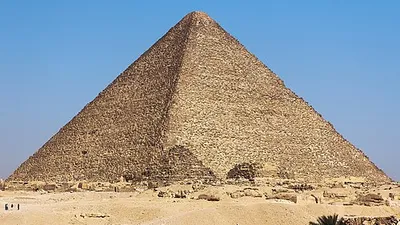
The Great Pyramid of Giza, built for Pharaoh Khufu, is the oldest and most intact of the Seven Wonders of the Ancient World.
The Great Pyramid of Giza, the largest and most renowned structure in the Giza complex, served as the tomb for Pharaoh Khufu of the Fourth Dynasty. Constructed around 2600 BC over approximately 26 years, it was initially the world's tallest man-made structure for over 3,700 years. Originally standing at 146.6 meters, its height has reduced to 138.5 meters after the removal of its smooth casing stones. The pyramid is composed of an estimated 2.3 million stone blocks, quarried and transported to the site, with some granite blocks weighing up to 80 tonnes brought from Aswan. It contains three chambers: one unfinished in the bedrock, and the 'Queen's' and 'King's' Chambers, the latter housing a granite sarcophagus. While Hemiunu is a potential architect, exact construction methods remain debated.
The pyramid complex included mortuary temples, a causeway, tombs for Khufu's family and court, smaller pyramids, and solar barques, forming part of the UNESCO World Heritage site 'Memphis and its Necropolis.' The pyramid's purpose was to house and protect the pharaoh's body, signify his status, maintain his societal position, and serve as a site for offerings. Unlike later tombs, its internal chambers are largely devoid of inscriptions, predating the practice of inscribing pyramids by over 200 years. Evidence from worker graffiti, tomb inscriptions, and recovered texts like the Diary of Merer strongly attribute its construction to Khufu, with his son Djedefre likely overseeing the burial rituals.
Construction and Dimensions
The Great Pyramid, built for Pharaoh Khufu around 2600 BC, is a monumental structure with a base length of approximately 230.3 meters and an original height of 146.6 meters, making it the tallest man-made structure for over three millennia. Its construction involved quarrying and assembling an estimated 2.3 million stone blocks, totaling six million tonnes. The majority of these blocks are roughly dressed and vary in size. Local limestone from the Giza Plateau formed the core, while finer white limestone from Tura was used for the casing, and heavy granite blocks from Aswan were imported for the King's Chamber. The pyramid's internal structure includes three chambers: one unfinished below ground, and the Queen's and King's Chambers above, the latter containing a granite sarcophagus. While precise construction techniques are debated, the pyramid's dimensions, including a slope of 51°50'40", were meticulously planned.
Purpose and Funerary Complex
As the tomb of Pharaoh Khufu, the Great Pyramid served multiple functions central to ancient Egyptian beliefs about the afterlife. It was designed to safeguard the deceased ruler's body, assert his elevated status and perpetual place in society, and facilitate the ongoing rituals of offerings. The monumental scale of the pyramid, regulated by royal decrees, symbolized the supreme social hierarchy where only kings and queens could possess such tombs during the Old Kingdom. The surrounding complex was extensive, featuring two mortuary temples, a causeway, tombs for Khufu's relatives and officials, smaller pyramids for his wives, and solar barques, all reflecting the importance of the pharaoh's eternal journey and presence.
Attribution and Historical Evidence
While classical authors like Herodotus historically attributed the Great Pyramid to Khufu, definitive evidence emerged from archaeological findings. Inscriptions discovered in the 20th century, including worker graffiti marking blocks with Khufu's name and titles, provide strong confirmation. Excavations of cemeteries adjacent to the pyramid revealed burials of Khufu's family and court, reinforcing the association. Texts such as the Diary of Merer, detailing the transport of limestone blocks to a structure named 'Akhet Khufu' (Horizon of Khufu), further solidify the attribution. The presence of Khufu's name and associated figures in inscriptions and seal impressions from the surrounding necropolis, extending through the 6th dynasty, firmly links the pyramid to his reign.
Key Ideas
- The Great Pyramid served as a tomb for Pharaoh Khufu.
- It symbolized the pharaoh's status and ensured his place in the afterlife.
- Construction involved millions of stone blocks, including imported granite.
- Its internal chambers lack inscriptions, predating later tomb decoration practices.
- Evidence from graffiti and texts confirms Khufu's association with the pyramid.
Books by Naguib Kanawati, N. Kanawati, A. Hassan
2 free public domain books · Read online or download