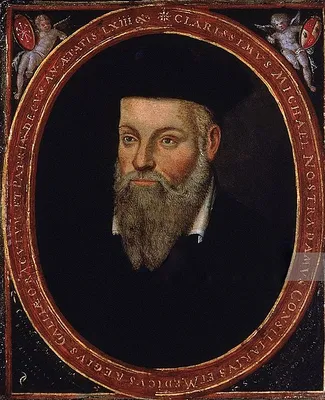
Michel de Nostredame, Henry Robert
Michel de Nostredame, known as Nostradamus, was a 16th-century French astrologer and physician famous for his book of prophecies.
Michel de Nostredame, later known as Nostradamus, was a 16th-century French figure recognized as an astrologer, physician, and apothecary. Born in 1503, his early life involved medical studies interrupted by plague outbreaks and expulsion from university for practicing apothecary work. After personal tragedy struck with the death of his first wife and children from plague, he remarried and had a larger family. He gained prominence through his successful almanacs, which led him to develop his famous collection of 942 poetic quatrains, Les Prophéties, published in 1555. This work, allegedly predicting future events, garnered him both admiration from influential figures like Catherine de' Medici and skepticism from academics who attribute its perceived accuracy to vague wording and misinterpretation. Nostradamus's later career shifted towards what is described as the 'occult,' marked by his annual almanacs and the compilation of his quatrains, which he deliberately obscured using complex language and multiple linguistic sources to avoid religious opposition. Despite facing minor legal issues, he gained favor with royalty, becoming a counselor to the French king. He suffered from gout and edema in his final years, dying in 1566. While popular legends surround his life, academic analysis dismisses his supernatural prophetic abilities, emphasizing the ambiguous nature of his writings.
Early Life and Medical Career
Born Michel de Nostredame in 1503, his family had converted from Judaism to Catholicism. He pursued studies at the University of Avignon but was forced to leave due to a plague. After working as an apothecary, he attempted to earn a medical doctorate at the University of Montpellier, but was expelled for engaging in the manual trade of an apothecary, which was forbidden by university statutes. He married in 1531, but his wife and two children perished from plague in 1534. He later remarried and had six children. His early career involved significant work combating plague outbreaks in various French cities.
The Astrologer and Prophet
Nostradamus began his turn towards astrology and prophecy around 1550, when he first published an almanac under the Latinized name Nostradamus. The success of these annual publications led to requests for horoscopes and astrological advice from nobility and prominent individuals. He then embarked on writing his collection of quatrains, Les Prophéties, published in 1555. To shield himself from potential religious criticism, he employed a complex style, blending languages and literary devices to obscure his meanings. Despite this, the work received a mixed reception, though he gained powerful patrons, notably Catherine de' Medici, who appointed him Counselor and Physician-in-Ordinary to her son, the king.
Later Years and Legacy
Nostradamus's later life was marked by chronic illness, including severe gout that progressed to edema. He died in July 1566. While popular culture often attributes prescient abilities to him, academic scholars generally reject the notion of genuine supernatural prophecy. They argue that the perceived accuracy of his predictions stems from their vague and ambiguous nature, allowing for flexible interpretations and mistranslations that can be retrospectively applied to historical events. His work, particularly Les Prophéties, remains a subject of fascination and debate regarding its origins and predictive power.
Key Ideas
- Collection of poetic quatrains allegedly predicting future events.
- Use of obscure language, mixed languages, and literary devices to conceal meaning.
- Academic skepticism regarding supernatural prophetic abilities, emphasizing vague wording and interpretation.
Books by Michel de Nostredame, Henry Robert
2 free public domain books · Read online or download