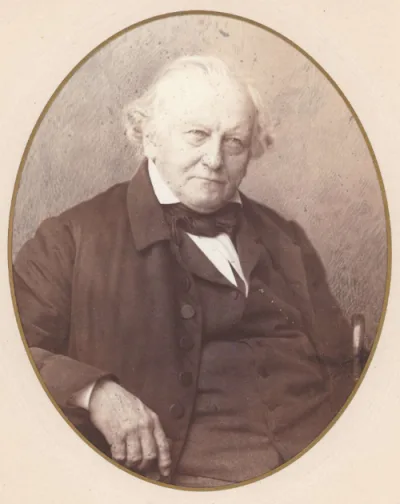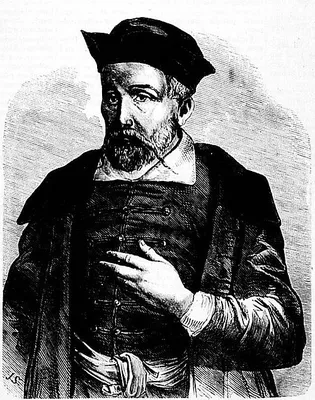
Michał Sędziwój
Michał Sędziwój was a pioneering Polish alchemist, physician, and philosopher known for his chemical discoveries and esoteric writings.
Michał Sędziwój, born in 1566, was a prominent Polish alchemist, philosopher, and physician who made significant contributions to early chemistry. He developed methods for purifying and creating various chemical substances, including acids and metals. Notably, he recognized that air contains a vital component, which he termed the "food of life," later understood to be oxygen. He identified this substance by observing its release from heated saltpetre, a concept that held a central place in his cosmological views. His intellectual pursuits led him to study at various European universities and engage with notable figures of his time, including John Dee and Edward Kelley, whom he assisted in securing royal patronage.
Sędziwój's career flourished at the court of Emperor Rudolf II in Prague and later at the court of King Sigismund III Vasa of Poland, who was also an enthusiast of alchemy. While his practical work involved designing mines and metal foundries, his alchemical theories and experiments brought him widespread fame. However, his encouragement of royal spending on such pursuits led to friction with more conservative nobles. In his later life, he spent time in Bohemia and Moravia, eventually settling in Prague. The onset of the Thirty Years' War shifted patronage away from alchemical speculation towards military funding, and Sędziwój died in relative obscurity around 1636.
Pioneering Chemical Discoveries
Michał Sędziwój was a trailblazer in the field of chemistry, developing innovative techniques for the purification and synthesis of a range of chemical compounds. His work extended to the creation of various acids, metals, and other essential chemical substances. A particularly significant discovery was his realization that air is not a homogeneous element but contains a crucial, life-sustaining component. He correctly deduced that this "food of life," which we now recognize as oxygen, was released when nitre (saltpetre) was heated. This insight, made approximately 170 years before the formal discovery of oxygen, placed this vital aerial substance at the core of his philosophical and cosmological framework, known as the "central nitre."
Alchemical Pursuits and Royal Patronage
Sędziwój's life was deeply intertwined with the practice of alchemy and his interactions with powerful rulers. After receiving a university education in Kraków, he pursued knowledge across Europe, studying at institutions in Vienna, Altdorf, Leipzig, and Cambridge. His connections led him to support figures like John Dee and Edward Kelley, facilitating their access to royal funding from King Stephen Báthory. He later found favor at the open-minded court of Emperor Rudolf II in Prague during the 1590s. Around 1600, he gained prominence in Poland with King Sigismund III Vasa, an avid alchemist himself, with whom Sędziwój conducted experiments. His practical contributions included designing mines and metal foundries, but his alchemical endeavors also led him to serve as a diplomat.
Later Life and Esoteric Influence
In his later years, Michał Sędziwój divided his time between Bohemia and Moravia, having received land grants from the Habsburg emperor. He eventually settled back in Prague, where his reputation as a skilled designer of mines and foundries continued to grow. However, the tumultuous period of the Thirty Years' War (1618-1648) dramatically altered the landscape for patrons of alchemy. Wealthy benefactors redirected their funds from speculative sciences to military efforts, leading to a decline in support for alchemical research. Consequently, Sędziwój died around 1636 in a state of relative obscurity, his later years marked by a shift in societal priorities away from the esoteric pursuits he championed.
Key Ideas
- Air contains a vital "food of life" (oxygen).
- The "central nitre" as a key element in his cosmic schema.
Books by Michał Sędziwój
2 free public domain books · Read online or download