Matt Groening
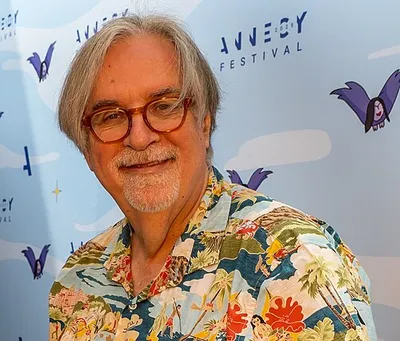
Matt Groening is an American cartoonist and animator, best known as the creator of The Simpsons, Futurama, and Disenchantment.
Matthew Abram Groening, born February 15, 1954, is an American cartoonist and animator recognized for creating several highly successful animated television series and a long-running comic strip. He is the visionary behind "The Simpsons," "Futurama," and "Disenchantment," as well as the comic strip "Life in Hell." Groening's career began with "Life in Hell," which gained significant attention and led to opportunities in television animation. His creations have achieved widespread critical acclaim and commercial success, earning him numerous awards throughout his career.
Groening's journey into animation started with "Life in Hell," which he initially self-published. The strip's unique style and content caught the eye of producer James L. Brooks, leading to the development of animated shorts for "The Tracey Ullman Show." This collaboration eventually evolved into "The Simpsons," which premiered in 1989 and became a cultural phenomenon, holding records for the longest-running American primetime television series and animated series. He later went on to create "Futurama" and "Disenchantment," further solidifying his reputation as a master of animated storytelling.
Early Life and Influences
Born in Portland, Oregon, Matt Groening's upbringing provided a unique backdrop for his creative endeavors. His father, Homer, was a filmmaker and cartoonist, while his mother, Margaret, was a teacher. Groening attended The Evergreen State College, a liberal arts institution he described as "a hippie college." During his time there, he served as editor of the campus newspaper, further honing his writing and drawing skills. His early interests were sparked by animated films like Disney's "One Hundred and One Dalmatians" and the satirical comedy of "Monty Python." He also credited cartoonist Lynda Barry as a significant inspiration, whom he befriended after discovering a shared appreciation for author Joseph Heller.
The Genesis of "Life in Hell"
Groening's professional cartooning career took flight with "Life in Hell," a comic strip he began in 1977. Initially self-published as a comic book, it was loosely inspired by a chapter in Walter Kaufmann's "Critique of Religion and Philosophy." The strip gained wider recognition when it was published in the avant-garde magazine "Wet" in 1978. Groening later developed "Life in Hell" into a syndicated comic strip for the "Los Angeles Reader." The strip's raw, often existential humor resonated with audiences, and it eventually found its way into 250 weekly newspapers at its peak. "Life in Hell" was later collected into several books, including "School Is Hell" and "Childhood Is Hell," and concluded its run in 2012.
Revolutionizing Animation: "The Simpsons" and Beyond
The success of "Life in Hell" attracted the attention of producer James L. Brooks, who invited Groening to develop animated shorts for "The Tracey Ullman Show." Fearing loss of ownership rights, Groening created a new set of characters, the Simpson family, for these shorts. The immense popularity of these shorts led to the spin-off series "The Simpsons," which premiered in 1989. The show quickly became a global phenomenon, earning Groening numerous accolades, including multiple Emmy Awards, and establishing itself as the longest-running American primetime television series. He later expanded his animated universe with "Futurama," a science fiction comedy set in the year 3000, and "Disenchantment," a fantasy series, both of which also garnered significant attention and critical praise.
Key Ideas
- Creation of iconic animated characters and families.
- Development of long-running, culturally significant television series.
- Satirical and humorous commentary on society and human nature through animation.
Notable Quotes
“a hippie college, with no grades or required classes, that drew every weirdo in the Northwest.”
“probably [his] biggest inspiration.”
“I'll never give up the comic strip. It's my foundation.”
Books by Matt Groening
2 free public domain books · Read online or download