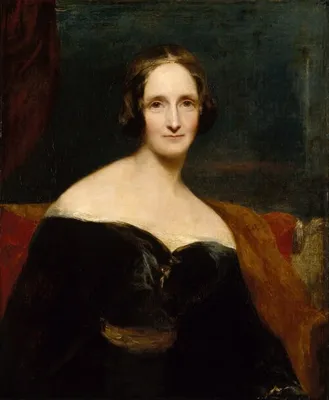
Mary Summer Rain
Mary Shelley, author of Frankenstein, was a writer and editor influenced by radical philosophical parents and a tumultuous life.
Mary Wollstonecraft Shelley, born in 1797, was the daughter of prominent philosophers William Godwin and Mary Wollstonecraft. Her mother died shortly after her birth, and she was raised by her father, who fostered her intellectual development despite his own financial troubles and a difficult relationship with her stepmother. Mary's early life was marked by significant personal upheaval, including financial instability, the death of her own children, and the tragic drowning of her husband, the poet Percy Bysshe Shelley.
She is best known for her Gothic novel *Frankenstein; or, The Modern Prometheus*, considered an early science fiction work. Beyond her own writing, Shelley dedicated herself to editing and promoting her husband's literary output. Her novels, including *Valperga*, *Perkin Warbeck*, and *The Last Man*, along with lesser-known works, suggest a lifelong adherence to radical political views, emphasizing cooperation and sympathy as means to societal reform. These ideas contrasted with the individualistic Romantic ethos and Enlightenment theories prevalent at the time.
Intellectual and Familial Influences
Born into a household of radical thinkers, Mary Shelley's upbringing was shaped by her parents: the philosopher William Godwin and the pioneering feminist Mary Wollstonecraft. Though her mother passed away soon after Mary's birth, her father ensured she received an extensive, though informal, education. He encouraged her to engage with his own anarchist political theories and provided access to his library and intellectual circle. Despite a strained relationship with her stepmother, Mary developed a keen intellect, absorbing the philosophical currents of her time. This environment, combined with her father's financial struggles and eventual reliance on philosophical devotees for support, provided a unique backdrop to her formative years.
Personal Life and Literary Genesis
Mary's romantic life began with Percy Bysshe Shelley, a married follower of her father's political ideas. Their elopement to France, accompanied by her stepsister, marked the beginning of a period of intense personal hardship. Facing ostracism, constant debt, and the tragic loss of their first child, they eventually married. The pivotal summer of 1816, spent near Geneva with Lord Byron and John William Polidori, proved to be the genesis of her most famous work, *Frankenstein*. This period, fraught with personal tragedy including the death of further children and her husband's untimely demise, profoundly influenced her literary output.
Literary Career and Enduring Themes
Initially recognized primarily for *Frankenstein* and her efforts to preserve her husband's legacy, Mary Shelley's broader literary contributions have gained more recent scholarly attention. Her novels, such as *Valperga*, *Perkin Warbeck*, *The Last Man*, *Lodore*, and *Falkner*, alongside works like *Rambles in Germany and Italy*, reveal a consistent engagement with political radicalism. Her writings often explore themes of cooperation and empathy, particularly as demonstrated within family structures, proposing these as pathways for civil society reform. This perspective offered a counterpoint to the prevailing individualistic Romantic ideals and Enlightenment philosophies of her era.
Key Ideas
- Cooperation and sympathy as means for societal reform
- Critique of individualistic Romantic ethos and Enlightenment political theories
Notable Quotes
“I wrote then—but in a common-place style. It was beneath the trees of the grounds belonging to our house, or on the bleak sides of the woodless mountains near, that my true compositions, the airy flights of my imagination, were born and fostered.”
Books by Mary Summer Rain
4 free public domain books · Read online or download