Mark Stengler
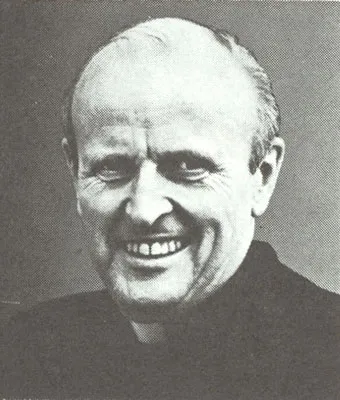
Robert Drinan was a Jesuit priest, lawyer, and U.S. Representative known for his activism and advocacy for human rights.
Robert Drinan was an American Jesuit priest, lawyer, and a Democratic Congressman representing Massachusetts from 1971 to 1981. He pursued extensive education, earning degrees in law and theology from Georgetown University and Gregorian University, and was ordained a priest in 1953. Drinan also served as the dean of Boston College Law School before entering politics.
During his time in Congress, Drinan was a notable figure, advocating against the Vietnam War and serving on the House Judiciary Committee. He famously introduced articles of impeachment against President Richard Nixon, not for Watergate, but for the secret bombing of Cambodia. His strong stance on abortion rights, despite personal opposition to the procedure, drew significant criticism from Church leaders. In 1981, he left Congress to comply with Pope John Paul II's directive for priests to withdraw from political office.
After leaving Congress, Drinan returned to academia, teaching at Georgetown University Law Center for 26 years, focusing on legal ethics and international human rights. He founded the Georgetown Journal of Legal Ethics and authored books on human rights. He continued to be an advocate for abortion rights and human dignity until his death in 2007.
Early Life and Education
Born in Massachusetts, Robert Drinan received a comprehensive education, earning bachelor's and master's degrees from Boston College. He joined the Society of Jesus in 1942 and was ordained a Catholic priest in 1953. His legal studies were completed at Georgetown University Law Center, where he obtained both an LL.B. and an LL.M. He furthered his theological studies with a doctorate from Gregorian University in Rome. After studying in Florence, he was admitted to the bar and began his legal career. Drinan also served as the dean of Boston College Law School from 1956 to 1970, during which time he also taught family law and church-state relations, and held visiting professorships at other institutions.
Congressional Career and Advocacy
Drinan entered politics in 1970, campaigning on an anti-Vietnam War platform and winning a seat in the House of Representatives, where he served four terms until 1981. He was one of the first Catholic priests to serve as a voting member of Congress. He held positions on various committees, including chairing the Subcommittee on Criminal Justice. A significant moment in his political career was his introduction of impeachment proceedings against President Richard Nixon in 1973, based on the belief that the secret bombing of Cambodia was illegal. Despite his personal opposition to abortion, Drinan was a vocal supporter of abortion rights, a stance that caused friction with Church leadership who had urged him not to hold political office. He ultimately left Congress in 1981 to adhere to Pope John Paul II's instruction for priests to step down from elected political positions.
Later Life and Academic Contributions
Following his departure from Congress, Drinan dedicated the remaining 26 years of his life to teaching at Georgetown University Law Center. His academic work there centered on legal ethics and international human rights. He established the Georgetown Journal of Legal Ethics in 1987 and authored several books, including "The Mobilization of Shame: A World View of Human Rights." He also led human rights missions to various countries. Drinan remained an active public figure, serving as president of Americans for Democratic Action and continuing to speak out on human rights and social justice issues until his death in 2007. His contributions to law and human rights were recognized with numerous awards and honorary degrees.
Notable Quotes
“It is just unthinkable. ... I am proud and honored to be a priest and a Jesuit. As a person of faith I must believe that there is work for me to do which somehow will be more important than the work I am required to leave.”
Books by Mark Stengler
2 free public domain books · Read online or download