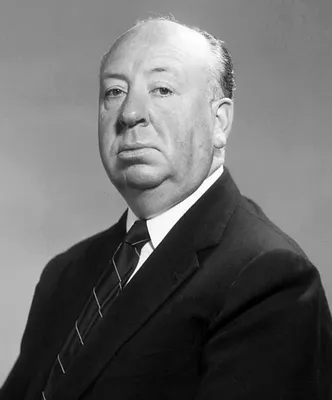
Mark Hitchcock
Alfred Hitchcock was a pioneering English filmmaker, celebrated as the 'Master of Suspense' for his influential thrillers.
Alfred Joseph Hitchcock (1899–1980) was an English filmmaker widely recognized as one of cinema's most significant and influential figures. His career, spanning six decades, produced over 50 feature films that remain popular and studied today. Known as the "Master of Suspense," Hitchcock achieved widespread recognition through interviews, frequent cameo appearances, and his television program, "Alfred Hitchcock Presents." His work earned numerous accolades, including 46 Academy Award nominations and six wins, though he never received the Best Director award despite five nominations.
Hitchcock began his film career in 1919 as a title card designer after training as a technical clerk and copywriter. His directorial debut was the silent film "The Pleasure Garden" (1926). He gained prominence with "The Lodger: A Story of the London Fog" (1927), which helped define the thriller genre, and "Blackmail" (1929), Britain's first talkie. His British thrillers "The 39 Steps" (1935) and "The Lady Vanishes" (1938) are considered among the greatest British films of the 20th century. By 1939, his international fame led him to Hollywood, where he directed successful films like "Rebecca" (1940), "Suspicion" (1941), and "Notorious" (1946).
Early Life and Influences
Born in Leytonstone, London, Alfred Joseph Hitchcock's early life was marked by a disciplined household and a Catholic upbringing. His father was a greengrocer. Hitchcock described himself as a well-behaved child and recounted an early experience where a policeman briefly locked him in a cell, an event that reportedly instilled a lifelong apprehension towards law enforcement and the legal system. The family moved several times, and Hitchcock attended various schools, including Jesuit institutions like St Ignatius College. Here, he experienced corporal punishment, which he later stated contributed to his development of a sense of fear. His academic performance was noted as average to above-average, with strengths in subjects like Latin, English, and French. He developed a keen interest in geography, maps, and public transportation schedules, particularly London trams. This fascination with timetables and routes, such as the Orient Express, would later manifest in his films.
Entry into the Film Industry
Hitchcock initially pursued engineering studies through night classes after leaving grammar school. However, following his father's death in 1914, he took a position as a technical clerk at the Henley Telegraph and Cable Company to support his mother. He continued his education with night classes in subjects like art history and economics. During World War I, he served in a cadet regiment of the Royal Engineers, engaging in theoretical training and drills. After the war, Hitchcock became interested in creative writing and, in 1919, co-founded and edited Henley's in-house publication, "The Henley Telegraph," to which he contributed short stories. Henley's subsequently moved him to their advertising department, where he wrote copy and created graphics for electric cable advertisements. He found this work engaging, often staying late to review proofs, which he considered his initial pathway into the film industry. He was an avid film viewer, particularly drawn to American cinema, and studied trade papers from a young age.
Early Directorial Career and Hollywood Transition
Hitchcock's transition into filmmaking began when he learned that Famous Players–Lasky, a production arm of Paramount Pictures, was establishing a studio in London. He submitted drawings for title cards for their planned film "The Sorrows of Satan," leading to his hiring by the studio. This marked his formal entry into the film industry. His directorial debut was the British-German silent film "The Pleasure Garden" in 1926. His first significant success came with "The Lodger: A Story of the London Fog" (1927), a film that played a crucial role in shaping the thriller genre. "Blackmail" (1929) followed, notable as the first British "talkie." By 1939, Hitchcock had achieved international recognition for his work, including acclaimed British films like "The 39 Steps" (1935) and "The Lady Vanishes" (1938). This acclaim prompted producer David O. Selznick to invite him to move to Hollywood, initiating a highly successful period in American cinema.
Key Ideas
- Master of Suspense
- Influence on the thriller genre
- Use of cameo appearances
- Psychological thrillers
- Filmmaking techniques and narrative structure
Books by Mark Hitchcock
2 free public domain books · Read online or download