Marie-Louise von Franz
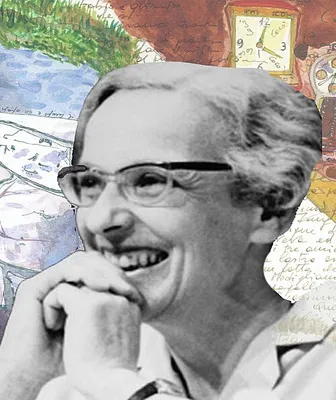
Marie-Louise von Franz was a Swiss Jungian analyst who explored fairy tales, alchemy, and synchronicity.
Marie-Louise von Franz (1915-1998) was a Swiss Jungian analyst and scholar renowned for her analyses of fairy tales and alchemical texts. She began collaborating with Carl Jung in 1933, a relationship that lasted until his death in 1961. Von Franz studied classical philology and languages at the University of Zurich, supporting herself through private tutoring due to her family's financial difficulties. She also attended Jung's lectures and seminars, commencing her analytical training with him in 1934.
Her work delved deeply into the psychological interpretations of myths, fairy tales, and alchemical manuscripts, viewing them as expressions of the collective unconscious. Von Franz also explored the concepts of synchronicity, the unity of the psyche and matter (unus mundus), and the compensatory role of fairy tales and alchemy in relation to religious symbolism. She practiced as an analyst for many years and authored numerous books on these subjects.
Collaboration with Carl Jung and Early Work
Marie-Louise von Franz first met Carl Jung in 1933, marking a pivotal moment in her life and career. She began her analytical training with him in 1934 and collaborated closely until his passing in 1961. To finance her training, she translated Greek and Latin texts for Jung, including significant alchemical manuscripts like Aurora Consurgens and Musaeum Hermeticum. Her academic background in classical philology, with a focus on Latin and Greek, proved invaluable for these translations. This period solidified her understanding of the 'objective Psyche' or 'collective unconscious,' a concept that profoundly influenced her subsequent work.
Exploration of Fairy Tales and Alchemy
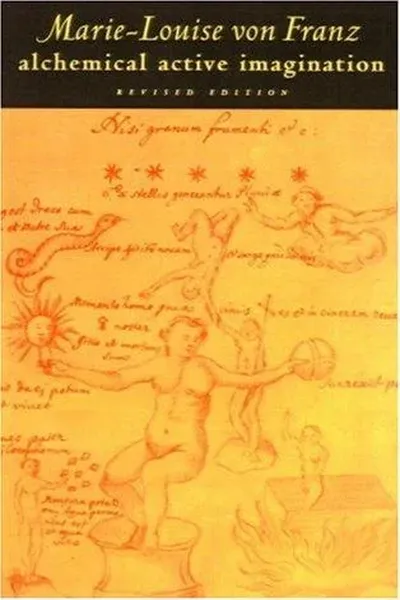
A central focus of von Franz's scholarly work was the psychological interpretation of fairy tales. She viewed these narratives as rich sources of insight into the archetypal patterns of the human psyche and the collective unconscious. Her analyses often explored themes such as the problem of evil and evolving archetypes of femininity. Alongside fairy tales, alchemy was another significant area of her research. She approached alchemical texts from a Jungian psychological perspective, translating and commenting on works like Aurora Consurgens, exploring the symbolism of opposites within alchemy. She also examined the concept of 'imaginatio vera' in alchemy, relating it to Jung's discovery of active imagination.
Synchronicity, Psyche, and Matter
Von Franz also dedicated considerable research to the concepts of synchronicity and the relationship between the psyche and matter, a field initiated by Jung's hypotheses about the unity of these realms (unus mundus). She proposed that synchronistic events involve an acausal correspondence between an individual's inner state and an external event, which must be perceived as personally meaningful to qualify as synchronicity. Von Franz suggested that number could serve as a formal representation of the connection between internal psychological experiences and external material processes. Her books 'Number and Time' and 'Psyche and Matter' delve into these intricate connections, exploring how numbers in dreams can reflect the structural characteristics of the Self and how life's sequences might possess a numerical quality.
Compensatory Function of Symbolism
A recurring theme in von Franz's writings was the compensatory role of fairy tales and alchemy in relation to the perceived one-sidedness of Christian symbolism and its dominant image of God. She analyzed visions, such as those of Saint Perpetua, to understand the unconscious spiritual landscape of historical periods and the transitions between belief systems, like the shift from Paganism to Christianity. Von Franz saw martyrs as victims of profound collective psychic transformations. She also explored the symbolism of the Holy Grail and the visions of Saint Nikolaus von Flüe, examining how these narratives and visions reveal the collective unconscious's drive to develop Christian symbolism further, addressing the problem of opposites and fostering a deeper understanding of the divine.
Key Ideas
- Psychological interpretation of fairy tales as expressions of the collective unconscious.
- Alchemy as a symbolic representation of psychological transformation.
- Synchronicity as acausal meaningful connections between inner and outer realities.
- The concept of the unus mundus, the underlying unity of psyche and matter.
- The compensatory function of myths and symbols in relation to religious consciousness.
Notable Quotes
“Active imagination is a certain way of meditating imaginatively, by which one may deliberately enter into contact with the unconscious and make a conscious connection with psychic phenomena.”
Books by Marie-Louise von Franz
0 free public domain books · Read online or download