Majella Franzmann
The Nag Hammadi library is a collection of early Christian and Gnostic texts found in Egypt in 1945, primarily written in Coptic.
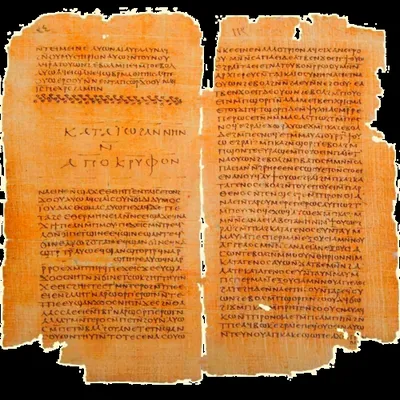
Discovered near Nag Hammadi in Upper Egypt in 1945, the Nag Hammadi library comprises a significant collection of early Christian and Gnostic writings. Twelve leather-bound codices, along with a fragment of a thirteenth, were unearthed by a local farmer. These texts, mostly Gnostic in nature, also include works from the Corpus Hermeticum and a version of Plato's Republic. Scholars hypothesize they may have belonged to a Pachomian monastery and were hidden following Saint Athanasius's condemnation of non-canonical texts in 367 AD. The codices are written in Coptic, and the library contains the only complete version of the Gospel of Thomas, with its sayings generally dated to the second century, though based on earlier sources. The manuscripts themselves date from the 3rd and 4th centuries and are now housed at the Coptic Museum in Cairo.
The discovery process involved intricate narratives, including a farmer's account of finding the texts in a jar while seeking fresh soil, complicated by superstitions and a blood feud story. Some accounts suggest potential grave robbing or the concoction of fanciful tales as a cover. The texts gradually made their way to the Coptic Museum, with one codex, known as the Jung Codex, eventually acquired by the Carl Gustav Jung Institute before being returned to Cairo. The subsequent translation and publication efforts were complex, culminating in a comprehensive bilingual edition in English and German, making these once-hidden texts accessible to a global audience.
Discovery and Provenance
The discovery of the Nag Hammadi library occurred in 1945 near Nag Hammadi in Upper Egypt, when a farmer unearthed twelve bound papyrus codices and a fragment of a thirteenth, buried in a jar. Initial accounts of the discovery are varied and complex, involving a local farmer named Muhammed al-Samman. Some narratives suggest the texts were found while digging for agricultural soil, intertwined with stories of blood feuds and superstitions. Later scholarship has questioned these accounts, proposing possibilities such as grave robbing or the deliberate burial of books as funerary prestige items. The codices were written in Coptic and contain primarily Gnostic texts, alongside works from the Corpus Hermeticum and a partial version of Plato's Republic. The prevailing theory suggests these manuscripts may have belonged to a nearby Pachomian monastery and were hidden around 367 AD after Saint Athanasius denounced the use of non-canonical writings.
Textual Contents and Significance
The Nag Hammadi library contains a substantial collection of early Christian and Gnostic writings, with the Gospel of Thomas being among the most well-known. The library holds the sole complete manuscript of this gospel, which scholars generally date to the second century, though it is believed to be based on earlier sources. The manuscripts themselves date from the 3rd and 4th centuries. While most of the texts are Gnostic treatises, the collection also includes three works from the Corpus Hermeticum, a philosophical and religious tradition known for its esoteric teachings, and a version of Plato's Republic. The presence of these diverse texts highlights the complex intellectual and religious landscape of early Christianity and the Hellenistic period.
Publication and Scholarly Access
Following their discovery, the Nag Hammadi codices were gradually brought together and housed at the Coptic Museum in Cairo. The process of translation and publication was lengthy and involved international collaboration. A significant step was the 1966 Messina Congress, which led to the formation of an editorial team tasked with producing a comprehensive bilingual edition of the codices. This effort, overseen by James M. Robinson, resulted in the publication of a facsimile edition between 1972 and 1977, making the texts available for scholarly study. The first English translation, "The Nag Hammadi Library in English," was published in 1977, with subsequent revised editions making the collection more widely accessible to the public. Other notable translations, such as Bentley Layton's "The Gnostic Scriptures," have also contributed to the dissemination of these important texts.
Key Ideas
- Gnosticism: A diverse set of religious ideas and systems, often characterized by a belief in a hidden knowledge (gnosis) that leads to salvation.
- Hermeticism: A philosophical and religious tradition based on writings attributed to Hermes Trismegistus, often dealing with cosmology, alchemy, and astrology.
- Non-canonical texts: Writings that were not accepted into the official canon of the Christian Bible.
Notable Quotes
“"The Nag Hammadi Library in English"”
“"The Facsimile Edition of the Nag Hammadi Codices"”
“"The Gnostic Scriptures: A New Translation with Annotations"”
“"The Nag Hammadi Library in English"”
Books by Majella Franzmann
2 free public domain books · Read online or download