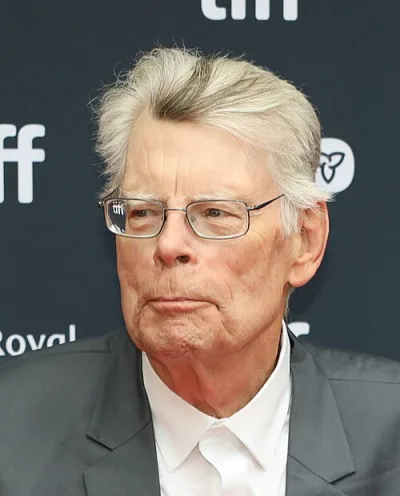
Lone Jensen
Danish director Lone Scherfig is known for her acclaimed romantic comedies and character-driven films, including 'Italian for Beginners' and 'An Education'.
Lone Scherfig is a Danish filmmaker, born in 1959, who has gained international recognition for her work in film direction and screenwriting. After graduating from the National Film School of Denmark, she began her career in advertising, winning awards before transitioning to filmmaking. Her early directorial work included television films and shorts, with 'Når mor kommer hjem' earning significant festival recognition.
Scherfig achieved international breakthrough with the Dogme 95-inspired film 'Italian for Beginners' (2000), celebrated for its hopeful themes and comedic tone. She continued with films like 'Wilbur Wants to Kill Himself' (2002) and 'Just Like Home' (2007), exploring character dynamics and human connection, often with a blend of humor and depth. Her most critically acclaimed film, 'An Education' (2009), received multiple award nominations, including an Academy Award for Best Picture.
Further success came with 'One Day' (2011), which reached a wider audience. Scherfig has also contributed to other projects as a writer and consultant. Her directorial style is noted for its attention to detail, experimentation with creative constraints, and ability to craft nuanced characters and engaging narratives, earning her numerous awards and nominations throughout her career.
Early Career and Creative Beginnings
Lone Scherfig graduated from Denmark's National Film School in 1984. Initially, she worked in advertising, earning accolades such as the Lion d'Argent at the Cannes International Advertising Film Festival. Her directorial career commenced with the television film 'Margrethes elsker' in 1985, followed by her feature film debut with 'Kaj's fodselsdag'. This early film garnered critical success, securing the Grand Jury prize and the Club Espace Award at the Rouen Nordic Film Festival. During this period, Scherfig also directed short films and engaged with radio and stage productions. Her 1998 film, 'Når mor kommer hjem', received the Grand Prix at the Montreal Film Festival and the Cinekid Award.
International Breakthrough and Dogme 95 Influence
Scherfig's international recognition surged with 'Italian for Beginners' in 2000. This film, created under the creative constraints of the Dogme 95 movement, was lauded for its feel-good narrative focusing on hope, happiness, and choice. Shot on video with limited locations and sound, it became the most profitable Scandinavian film to date and earned the Jury Grand Prix Silver Bear at the Berlin International Film Festival. Following this success, she directed the deadpan comedy 'Wilbur Wants to Kill Himself' (2002), a touching story about a suicidal man and his brother, praised for its lighthearted tone and deep character development. Though not officially part of the Dogme 95 canon, it showcased Scherfig's skill in crafting nuanced characters, often in collaboration with writer Anders Thomas Jensen.
Character-Driven Narratives and Later Success
In 2007, Scherfig directed 'Just Like Home', a comedic film exploring the interactions of town residents amidst nighttime disturbances, which she noted was written daily during shooting, reflecting themes of trust. This film served as a transition to her more prominent American successes. Her 2009 film, 'An Education', based on Lynn Barber's memoir and scripted by Nick Hornby, became her most critically acclaimed work. It garnered nominations for an Academy Award, BAFTA, and Golden Globe, focusing on a teenage girl's encounter with a charismatic older man in post-war Britain. Scherfig described her interest in exploring the American themes of innocence and freedom within the story. The film 'One Day' (2011) further expanded her audience, adapting David Nicholls' novel, and demonstrated her ability to bring freshness to dialogue and tone, even when working with another author's screenplay.
Key Ideas
- Exploration of hope, happiness, and choice in romantic comedies.
- Focus on nuanced character development and interpersonal dynamics.
- Experimentation with creative constraints in filmmaking, influenced by Dogme 95.
- Themes of trust and fundamental belief in human connection.
- Juxtaposition of innocence and freedom, particularly in adolescent experiences.
Notable Quotes
“my guess is about America is that it's this combination of innocence and freedom that attracts you. Here in Denmark, as well, it was more liberated than it is now, and was definitely more innocent and less dangerous. I mean, when I was a teenager, the world was a lot safer than it is now for my daughter as a teenager, which meant that I could have a lot more fun. It wasn't risky the way it is now.”
“about trust...the fundamental belief that people you hardly know will want the best for you.”
“the same piece that we [were] all working on, and that was really important to me as a director that everyone was making the same film, that everyone contributed to the package and tried to strengthen it and get as many facets as possible but not be over-inventive, [to] just tell the story as well as we possibly could.”
“It's so much easier to work with something you've written, because you can cut things or add things on the spot. You can be much more at home and at ease with what you do. You don't feel unfaithful to the writer because there is no writer. Most of the other films I've done I've co-written, and I prefer it. But having said that, when you work with someone else's characters, you get a lot of gifts. You get an entire world, you get to portray people that you couldn't have made up, and entire worlds that are fascinating because they are not yours. It's much harder, I really think it's much harder”
Books by Lone Jensen
2 free public domain books · Read online or download