Leszek Gardeła
Leszek Gardeła is an academic researcher focusing on Viking history, culture, and the etymology of the term 'Viking'.
Leszek Gardeła's work, as reflected in the provided text, centers on the historical and cultural aspects of the Vikings. This includes their seafaring activities, settlements across Europe and beyond, and their impact on early medieval history. The research also delves into the linguistic origins and evolution of the word 'Viking', examining various academic theories and its historical usage in different languages and contexts.
The Viking Age, a period from the late 8th to the late 11th centuries, saw Norse people from Scandinavia engage in raiding, trading, and settlement. Their influence extended from the British Isles and Normandy to Eastern Europe, the Mediterranean, and even North America. Gardeła's research touches upon the complex reality of Viking civilization, contrasting popular romanticized notions with archaeological and historical evidence. This includes their religion, laws, art, and the eventual transition to Christianity.
The Viking Phenomenon
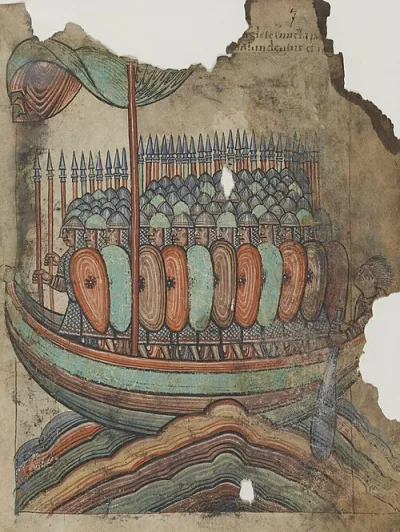
The Vikings were a Scandinavian people active from the late 8th to the late 11th centuries. Known for their seafaring prowess, they traveled extensively, raiding, trading, and establishing settlements throughout Europe, reaching as far as the Mediterranean, North Africa, the Middle East, and North America. Their activities significantly shaped the early medieval history of Northern and Eastern Europe, influencing the development of regions like England and the establishment of Kievan Rus'. These Norse voyagers navigated using their distinctive longships, creating settlements and governance in areas such as the British Isles, Iceland, Greenland, and along major Eastern European trade routes where they were known as Varangians.
Etymology and Terminology
The term 'Viking' itself has a debated etymology among academics. Theories suggest origins from Old English or Old Frisian words related to settlement, or from the Old Norse word 'vík' meaning creek. More recent scholarship proposes a connection to Old Norse 'vika' (sea mile), ultimately deriving from a Proto-Germanic root related to receding or turning, with nautical applications. Historically, 'viking' evolved from referring to Scandinavian pirates and raiders to encompassing the broader culture and people of the Norse homelands during the Viking Age. The modern usage, re-introduced in the late 18th century, often carries romanticized heroic connotations.
Viking Society and Legacy
During the Viking Age, the Scandinavian homelands consolidated into the kingdoms of Denmark, Norway, and Sweden. The Vikings spoke Old Norse, used runes for inscriptions, and primarily followed the Old Norse religion before gradually converting to Christianity. They possessed their own legal systems, art, and architecture. Contrary to popular, often romanticized, depictions, archaeological and historical evidence reveals a complex civilization comprising farmers, fishermen, craftsmen, and traders. The legacy of the Vikings includes the formation of new peoples and states, such as the Normans, Rus', and Icelanders, and their cultural and genetic influence on regions they settled and their homelands.
Books by Leszek Gardeła
0 free public domain books · Read online or download