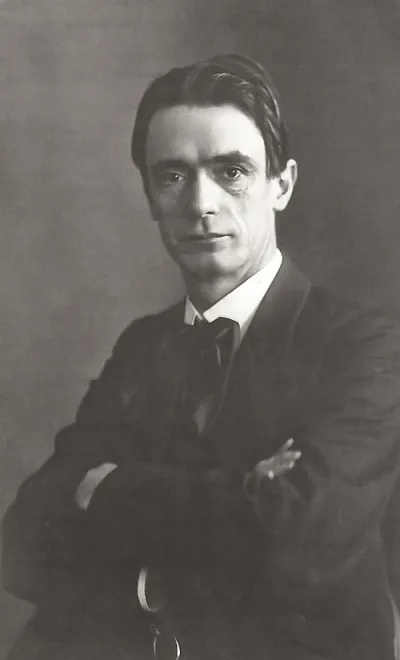
✍️ Author Biography
Lesley Livingston
📅 1909 – 2001
🌍 American
📚 2 free books
Lesley University, founded in 1909, evolved from a teacher's college to a comprehensive university with a focus on individual importance and liberal arts.
Lesley University began in 1909 as the Lesley School, established by Edith Lesley in Cambridge, Massachusetts, with the mission to train kindergarten teachers. Inspired by Friedrich Froebel's philosophy, the institution emphasized the uniqueness and importance of each individual, a principle that continues to guide the university. Initially a private women's college, it expanded its scope over the decades, gaining the authority to award baccalaureate and graduate degrees, eventually becoming Lesley College.
In 1912, the School of Practical Art, later known as The Art Institute of Boston (AIB), was founded, emphasizing the integration of art, head, and hand. AIB merged with Lesley College in 1998, paving the way for the establishment of Lesley University in 2001. The university continued to grow, acquiring new campuses and expanding its academic offerings in fields such as education, counseling, art therapy, and global studies. Lesley University became coeducational in 2005 and has since undergone further consolidation and development, including the construction of the Lunder Arts Center.
Founding Principles and Evolution
Founded in 1909 by Edith Lesley, the institution initially focused on training kindergarten teachers, drawing inspiration from Friedrich Froebel's educational philosophy. The core tenet was the recognition of individual importance and uniqueness, a guiding principle that persists in the university's ethos. Lesley School, originally a private women's college, began to offer elementary teacher training around 1913. By 1944, it was authorized to grant bachelor's degrees and became known as Lesley College. Graduate degree programs were introduced in 1954, broadening the academic scope to include fields like counseling and human services.
Integration of Art and Higher Education
The School of Practical Art, established in 1912 and later renamed The Art Institute of Boston (AIB), contributed a distinct artistic and design focus to the evolving educational landscape. Its philosophy, rooted in the idea that "in art that the heart, the head, and the hand of a man come together," fostered a curriculum that embraced fine arts, design, illustration, and photography. The formal merger of AIB with Lesley College in 1998 marked a significant step towards the formation of Lesley University in 2001. This integration allowed for a more comprehensive academic structure, combining liberal arts and professional art education.
University Development and Expansion
Lesley University officially formed in 2001, consolidating its undergraduate colleges and graduate schools. The university transitioned to a coeducational model in 2005. Subsequent years saw strategic expansion, including the acquisition of the former Episcopal Divinity School campus, which broadened its facilities and academic reach. Significant construction projects, such as the Lunder Arts Center, aimed to centralize operations and enhance campus resources. The university has continued to adapt, with recent developments including restructuring efforts and program adjustments in response to evolving educational and enrollment landscapes.
Key Ideas
- Emphasis on the individual's importance and uniqueness, inspired by Froebelian philosophy.
- The integration of heart, head, and hand in artistic and educational pursuits.
- Commitment to teacher training and liberal arts education.