Kocku von Stuckrad
Kocku von Stuckrad is a scholar of Western esotericism, tracing its roots and academic study.
Western esotericism encompasses a broad array of ideas and movements originating in Western society, distinct from mainstream Abrahamic religions and Enlightenment rationalism. Its influence extends across philosophy, mysticism, science, art, and music. The concept of grouping these traditions under the term 'esotericism' emerged in 17th-century Europe, with scholars debating its definition. Some view it as a hidden inner tradition, others as a response to secularization, or as 'rejected knowledge' outside scientific and religious orthodoxy.
The academic study of Western esotericism, a field pioneered by scholars like Frances Yates and Antoine Faivre, gained traction in the late 20th century. The term 'esoteric' itself has ancient Greek origins, signifying 'belonging to an inner circle.' Its philosophical usage, particularly in Ancient Greek philosophy, distinguished between teachings for an inner group and those disseminated publicly. This distinction, though not always involving secrecy, became foundational to understanding esoteric traditions.
Historical Development of Western Esotericism
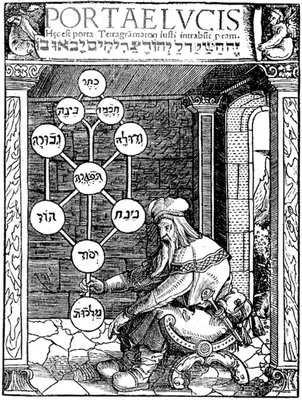
The roots of Western esotericism trace back to Late Antiquity in the Eastern Mediterranean, with the development of Hermeticism, Gnosticism, and Neoplatonism, separate from nascent Christianity. Renaissance Europe saw a resurgence of interest, blending pagan philosophies with Kabbalah and Christian thought, leading to movements like Christian Kabbalah. The 17th century witnessed the rise of initiatory societies such as Rosicrucianism and Freemasonry. The subsequent Age of Enlightenment spurred new esoteric thought, while the 19th century saw the emergence of 'occultism,' with significant groups like the Theosophical Society and the Hermetic Order of the Golden Dawn. Modern paganism and the New Age phenomenon in the 1970s also have roots in these currents. The academic classification of these diverse traditions as 'Western esotericism' solidified in the late 18th century, though academic inquiry into the subject is more recent.
Etymology and Philosophical Usage
The term 'esoteric' originates from the 2nd-century Greek adjective 'esôterikós,' meaning 'belonging to an inner circle.' In Ancient Greek philosophy, 'esoteric' and 'exoteric' were used to differentiate between teachings reserved for a select group ('esoteric') and those intended for public dissemination ('exoteric'). While not always implying secrecy, this distinction was applied to the internal versus public discourse of philosophical schools. Plato's philosophy, with its emphasis on orally transmitted teachings and hidden truths, is considered a significant influence on the Western perception of esotericism, particularly regarding concepts of 'esoteric ontology and anthropology.' The Neoplatonists further developed this by seeking hidden meanings in ancient texts and myths, employing allegorical exegesis.
Key Ideas
- Western esotericism as a category distinct from orthodox religion and rationalism.
- The concept of esotericism as a perennial inner tradition.
- Esotericism as a response to secularization and disenchantment.
- Esotericism encompassing 'rejected knowledge' outside mainstream acceptance.
- The philosophical distinction between esoteric (inner circle) and exoteric (public) teachings.
Notable Quotes
“esoteric ontology and anthropology would hardly exist without Platonic philosophy.”
“Can it be, then, that Protagoras was a very ingenious person who threw out this obscure utterance for the unwashed like us but reserved the truth as a secret doctrine (ἐν ἀπορρήτῳ τὴν ἀλήθειαν) to be revealed to his disciples?”
“To express an external object not much is required, but to communicate an idea a capacity must be present, and this always remains something esoteric, so that there has never been anything purely exoteric about what philosophers say.”
Books by Kocku von Stuckrad
5 free public domain books · Read online or download