Joseph Leeming
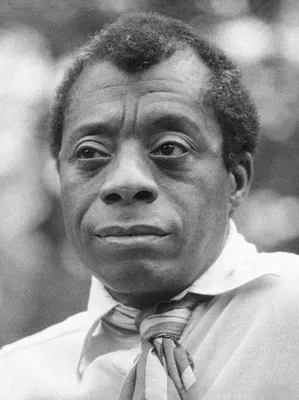
James Baldwin was a prominent American writer and activist known for his powerful essays, novels, and plays exploring race, sexuality, and social injustice.
James Arthur Baldwin (1924–1987) was a celebrated American author and civil rights activist whose prolific work spanned essays, novels, plays, and poems. His writings often delved into the complexities of race, sexuality, class, and identity, challenging societal norms and advocating for human equality. Baldwin's 1953 novel, 'Go Tell It on the Mountain,' and his 1955 essay collection, 'Notes of a Native Son,' were foundational to his reputation. His influential 1965 debate with William Buckley on race remains a significant historical event.
Baldwin's literary contributions profoundly impacted both the civil rights and gay liberation movements. His narratives frequently featured African-American protagonists and explored the experiences of gay and bisexual men, examining the internal and external struggles for self-acceptance and societal recognition. His work continues to resonate, with adaptations of his writings like the documentary 'I Am Not Your Negro' and the film 'If Beale Street Could Talk' achieving critical acclaim.
Early Life and Influences
Born James Arthur Jones in Harlem, New York, Baldwin's early life was shaped by his mother Emma Berdis Jones's experience fleeing racial segregation. Though his biological father remained unknown, his mother married David Baldwin, a Baptist preacher, who became his stepfather. Baldwin's upbringing was marked by family complexities, poverty, and the pervasive discrimination of the era. His relationship with his stepfather was notably strained, characterized by ideological clashes and David Baldwin's strict religious views, which contrasted with James's burgeoning artistic and intellectual interests. Despite these challenges, Baldwin found solace and inspiration in education and literature, with early encouragement from teachers and principals who recognized his exceptional talent.
Education and Artistic Development
Baldwin's intellectual curiosity was nurtured from a young age. Enrolled at Public School 24, he encountered educators like Gertrude E. Ayer, the school's first Black principal, who championed his writing. His early immersion in literature, including works by Dostoyevsky and Dickens, fueled his ambition. A pivotal encounter with his white schoolteacher, Orilla "Bill" Miller, broadened his horizons and influenced his perspective on race, while also sparking his desire to become a playwright after seeing an all-Black production of Macbeth. Later, at Frederick Douglass Junior High School, he was mentored by Herman W. Porter, who guided his early journalistic endeavors, and poet Countee Cullen, whose work and life inspired Baldwin's dream of living in France. His high school years at De Witt Clinton High School further honed his writing skills, with aspirations of becoming a novelist and playwright.
Exploration of Identity and Spirituality
During his high school years, Baldwin grappled with his emerging homosexual identity, finding a complex refuge in religion. He joined the Mount Calvary of the Pentecostal Faith Church in 1937, engaging deeply with religious discourse and practice. This period also saw him developing a critical perspective on faith, particularly through his relationship with his stepfather, David Baldwin, a preacher whose rigid religiosity and deep-seated hatred of white people significantly impacted James. Baldwin's spiritual journey and his reflections on faith, sin, and salvation would become recurring themes in his work, often intertwined with his exploration of racial and sexual identity, and his search for personal and societal acceptance.
Key Ideas
- Exploration of the intersection of race, sexuality, and class.
- Critique of societal prejudice and advocacy for human equality.
- The struggle for self-acceptance and identity in oppressive environments.
- The complex relationship between faith, sin, and personal liberation.
Notable Quotes
“in his outrageously demanding and protective way, he loved his children, who were black like him and menaced like him.”
Books by Joseph Leeming
2 free public domain books · Read online or download