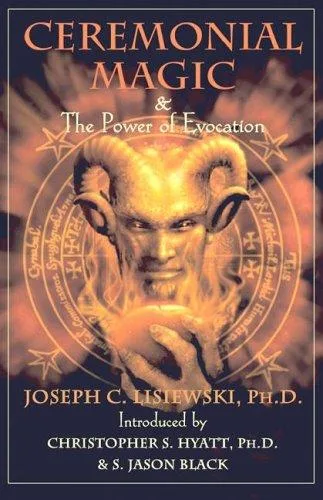
Joseph C. Lisiewski
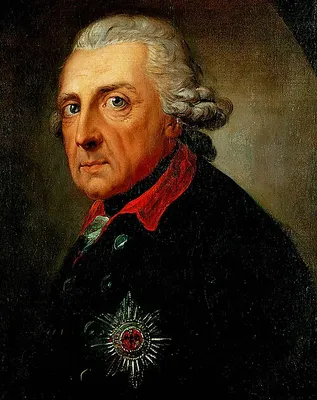
Frederick the Great's portraits were largely idealized and often did not reflect his true appearance, as noted by himself and contemporaries.
Numerous portraits of Frederick the Great were created during his lifetime, with many being idealized representations rather than accurate likenesses. The king himself gifted portraits, and others were produced commercially due to European court demand. Contemporary accounts, such as those by Johann Wilhelm Ludwig Gleim and Christoph Friedrich Nicolai, consistently noted the discrepancy between the portraits and Frederick's actual appearance. Art historians have also pointed out that surviving portraits make it difficult to ascertain his true features.
Artists like Antoine Pesne, Georg Wenzeslaus von Knobelsdorff, and Johann Georg Ziesenis created various depictions, often focusing on a refined or heroic image, which did not align with Frederick's own descriptions of his aging and frail state, particularly after the Seven Years' War. While some later portraits, like those by Johann Heinrich Christian Franke and Anton Graff, began to incorporate more individual characteristics or reflect the effects of stress, the emphasis in monarchical portraiture of the era was generally on conveying a desired public image rather than strict realism. Frederick himself expressed an aversion to sitting for portraits, believing himself to be unattractive, and stated that his likeness was not accurately captured in any painting.
Idealized Representations vs. Reality
Throughout Frederick the Great's reign, a significant number of portraits were produced, many of which were idealized and did not accurately represent his physical appearance. These works were created by various painters and engravers, including notable artists such as Antoine Pesne and Georg Wenzeslaus von Knobelsdorff. Frederick himself distributed some of these portraits as gifts, while many others were created for commercial purposes to meet the demand from European courts. However, contemporary observers and Frederick himself frequently commented on the lack of fidelity in these depictions. For instance, Johann Wilhelm Ludwig Gleim noted in 1761 that no painting truthfully showed the king's face, a sentiment echoed by Christoph Friedrich Nicolai. Art historians have also struggled to determine Frederick's true likeness from the surviving, often beautified, portraits.
Artistic Approaches and Frederick's Aversion to Portraiture
Artists like Antoine Pesne often portrayed Frederick with smooth features, sometimes accused of rendering all royal sitters with equal, idealized beauty, failing to capture sharper characterization. Georg Wenzeslaus von Knobelsdorff developed a profile formula that heavily influenced subsequent portraits. Later, Johann Georg Ziesenis painted a portrait claimed to be one for which Frederick sat, though doubts exist, especially given Frederick's descriptions of his own declining health post-war. Artists like Charles-Amédée-Philippe van Loo also produced portraits deemed unnatural. Frederick's aversion to sitting for portraits stemmed from his conviction that he was unattractive, leading him to avoid painters, stating he did not resemble figures like Apollo or Adonis. This personal reluctance, combined with the era's focus on conveying royal status over realism, contributed to the disconnect between Frederick's actual appearance and his painted image.
Shifting Portraiture and Contemporary Observations
Following the Seven Years' War, there appears to have been a subtle shift in the conception of Frederick portraits, with some artists beginning to allow for the depiction of individual shortcomings or the effects of stress. This coincided with the formation of legends around his military successes, leading to the emergence of an 'age type' in art. Artists like Johann Heinrich Christian Franke and Anton Graff produced portraits that, while still reflecting artistic styles, began to show a more 'bourgeois' or humanized king. However, even these were often created from memory or observation rather than direct sittings. Contemporary accounts, including that of Emperor Joseph II, reinforced the idea that no single painting truthfully captured Frederick's face, a sentiment supported by art historians who conclude that no realistic image accurately depicts his features.
Notable Quotes
“a royal face that not a single painting depicts truthfully”
“[...] no portrait is like him.”
“You have to be Apollo, Mars or Adonis to be painted, but since I do not have the honour of resembling one of these gentlemen, I have withdrawn my face from the painters' brush as much as it depended on me”
“There is so much talk about the fact that we terrestrial kings are made in the image of God. Then I look in the mirror and am obliged to say to myself: How unlucky for God!”
“In order not to dishonour her brush, she has adorned my contorted face with the grace of youth.”
Books by Joseph C. Lisiewski
0 free public domain books · Read online or download