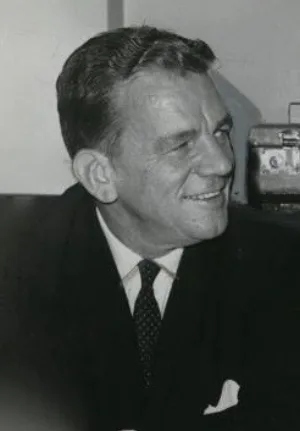
Joseph Anderson
Kenneth Anderson was a Scottish-Indian author and conservationist renowned for his jungle experiences and hunting of man-eaters in South India.
Kenneth Douglas Stewart Anderson, born in 1910 in British India, was a Scottish-Indian writer, naturalist, and conservationist. He gained recognition for his hunting exploits in the jungles of South India, particularly his ethical pursuit of man-eating leopards and tigers. This led to him being nicknamed the 'Corbett of the South,' drawing a parallel to the famed hunter Jim Corbett. Anderson was deeply concerned by the destruction of wildlife and advocated for conservation, becoming a pioneer in wildlife tourism in the Bangalore region. He authored popular books detailing his adventures in the Indian wilderness.
Anderson's early life in India, with a Scottish family, influenced his connection to the outdoors. After studying law briefly in Edinburgh, he returned to India and worked in the Posts & Telegraphs Department before managing a factory. His writing career took off in the 1950s, bringing him international acclaim and royalties. Despite his success as an author of non-fiction based on his experiences, he did not achieve similar success with fiction. He also engaged in wildlife tourism, guiding visitors on jungle safaris. Anderson passed away in 1974 in Bangalore after battling prostate cancer.
Early Life and Influences
Kenneth Anderson was born in 1910 in Secunderabad, British India, into a Scottish family with deep roots in the country. His father, Douglas Stuart Anderson, was an officer in the British Indian Army, and the family relocated to Bangalore during World War I. They resided in a house inherited from Lucy's maternal grandfather, John Taylor, who had received land near Cubbon Park for his services. His mother, Lucy Ann Taylor, was involved with the choir at St Mark's Cathedral. His father's interest in waterfowl hunting around Bangalore's lakes and tanks significantly influenced young Kenneth's early exposure to the outdoors and wildlife.
Education and Literary Career
Anderson received his education at Bishop Cotton Boys' School and St Joseph's European High School, passing his Senior Cambridge examinations in 1926. He briefly pursued law studies in Edinburgh but returned to India in 1928. Fluent in Kannada and Tamil, with knowledge of other local languages, he was an intelligent and avid reader throughout his life. He spent fifteen years with the Posts & Telegraphs Department before becoming a Factory Manager for Planning at the British Aircraft Factory (later HAL) in Bangalore, retiring in 1972 due to illness. His books, published from the 1950s onwards, brought him international renown and substantial royalties, though his attempts at fiction were less successful.
Hunting Prowess and Conservation Advocacy
Anderson was an accomplished hunter, known for his ethical approach and exceptional tracking skills, earning him the title 'Gentleman Shikari'. He specialized in hunting man-eating leopards and tigers that posed a threat to local populations, earning him the moniker 'Corbett of the South'. His efforts in eliminating dangerous predators were highly regarded, and he was often called upon by government officials for such tasks. Notable man-eaters he accounted for include the Leopard of Gummalapur and the Tigress of Jowlagiri. However, as he grew older and witnessed the destruction of wildlife, Anderson shifted his focus from hunting to conservation, becoming a vocal advocate for preserving India's flora and fauna and a pioneer in wildlife tourism.
Key Ideas
- Ethical hunting and the 'Gentleman Shikari' ideal
- The shift from hunting to wildlife conservation
- Pioneering wildlife tourism in South India
Notable Quotes
“For the sportsmen of the future I strongly recommend the camera, instead of the rifle. It can give you every bit as much fun...”
Books by Joseph Anderson
3 free public domain books · Read online or download