John Wyndham
John Wyndham, an English author, penned influential post-apocalyptic science fiction, often exploring societal collapse and human resilience.
John Wyndham Parkes Lucas Beynon Harris, known professionally as John Wyndham, was an English writer celebrated for his science fiction novels, many of which depicted post-apocalyptic worlds. Born in 1903, he adopted various pen names throughout his career, including John Beynon, before settling on John Wyndham for his most recognized works. His early life involved a period of parental separation and attendance at several boarding schools. After exploring various professions, Wyndham turned to writing, initially publishing short stories in science fiction magazines.
His literary career gained significant traction with the publication of 'The Day of the Triffids' in 1951, a novel that cemented his reputation. This success was followed by several other notable novels, including 'The Midwich Cuckoos,' which explored themes of genetic manipulation and societal control. Wyndham's writing often featured subtly English settings that contrasted with catastrophic events, creating a sense of uncanny realism. His work has been recognized as influential by numerous authors, including Margaret Atwood, and has been adapted into films and television series.
Early Life and Career Beginnings
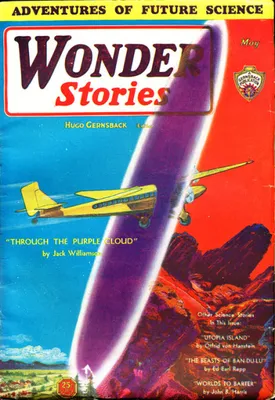
Born in 1903, John Wyndham Parkes Lucas Beynon Harris experienced a childhood marked by his parents' separation and subsequent legal disputes over custody. He attended various schools, including Bedales School, before embarking on a series of unsuccessful career attempts in fields such as farming, law, and advertising. Relying on family financial support, he eventually began writing in 1925. By the early 1930s, he was selling short stories and serial fiction, initially publishing under pen names like John B. Harris and John Beynon Harris, and later simply John Beynon. During this period, he lived at the Penn Club in London, an environment that exposed him to intellectual circles and may have influenced his views on social engineering and feminism.
Wartime Experiences and Post-War Success
Wyndham served during World War II, first as a censor and later as a corporal cipher operator in the Royal Corps of Signals, participating in the Normandy landings. His wartime experiences, including witnessing the London Blitz and his reflections on humanity and conflict, informed his later writing. Following the war, he adopted the pen name John Wyndham for his novel 'The Day of the Triffids' (1951), which achieved immense success and established him as a prominent science fiction author. This marked a shift in his career, with subsequent novels like 'The Kraken Wakes,' 'The Chrysalids,' and 'The Midwich Cuckoos' also published under this name, solidifying his literary identity.
Themes and Critical Reception
Wyndham's most acclaimed works, particularly 'The Day of the Triffids' and 'The Chrysalids,' are often set in post-apocalyptic landscapes and explore themes of societal collapse, genetic mutation, and the resilience of humanity. Critics have noted the unsettling juxtaposition of ordinary English settings with catastrophic events, suggesting that such disasters could occur anywhere, at any time. His novels have been praised for their thoughtful exploration of dystopia and their prescient ideas, with Margaret Atwood acknowledging Wyndham as a significant influence on her own work. While some early criticism labeled his work as 'cosy catastrophes,' later assessments have highlighted the genuine peril and profound themes present in his narratives.
Key Ideas
- Post-apocalyptic landscapes
- Societal collapse and reconstruction
- Genetic mutation and its consequences
- The uncanny nature of ordinary settings facing catastrophe
- Human resilience and adaptation
Books by John Wyndham
2 free public domain books · Read online or download