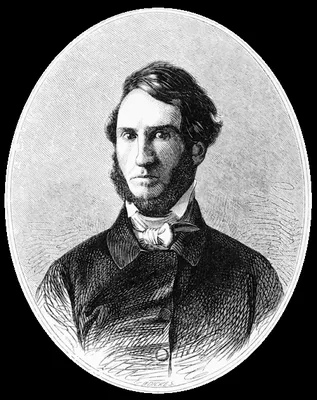
John Stephens
John Lloyd Stephens was an explorer and writer instrumental in rediscovering Maya civilization and a key figure in building the Panama Railroad.
John Lloyd Stephens (1805-1852) was an American explorer, writer, and diplomat, most notably credited with the rediscovery of Maya civilization across Middle America. Born in New Jersey and educated in New York, he pursued law before embarking on extensive travels through Europe, Egypt, and the Levant, later documenting these experiences in popular books.
His diplomatic and exploratory work took him to Central America, where, alongside architect Frederick Catherwood, he meticulously documented numerous Maya ruins, including Copán, Palenque, and Uxmal. Their findings, supported by Catherwood's detailed illustrations, were crucial in establishing the Maya as the builders of these ancient cities, countering prevailing theories of foreign origins. Stephens's published accounts of these journeys significantly contributed to public awareness and scholarly interest in the Maya.
Beyond his archaeological pursuits, Stephens was a significant figure in infrastructure development, co-founding the Panama Railroad Company. He was a driving force behind its construction across the Isthmus of Panama, a project vital for transcontinental travel, especially during the California Gold Rush. Despite sustaining severe injuries during his work on the railroad, he remained dedicated until his death from malaria in 1852.
Rediscovery of Maya Civilization
John Lloyd Stephens played a pivotal role in bringing the ancient Maya civilization to the attention of the wider world. Commissioned as a Special Ambassador to Central America, he, along with artist Frederick Catherwood, embarked on expeditions that led to the documentation of remarkable ruined cities. Their initial encounter at Copán, where they spent two weeks mapping the site, was followed by explorations of significant locations such as Palenque, Quiriguá, and Uxmal. Stephens meticulously recorded architectural details and surmised the existence of a sophisticated, long-vanished people. While Stephens initially struggled to attribute the constructions to the native Maya, Catherwood's observations and the subsequent evidence gathered strongly supported this conclusion. Their detailed accounts and Catherwood's compelling illustrations proved that the Maya were responsible for some of the most impressive artistic and intellectual achievements of pre-Columbian America, challenging earlier theories of external builders.
Literary and Diplomatic Contributions
Stephens's career spanned exploration, writing, and diplomacy. After receiving a classical education and studying law, he undertook extensive travels. His journeys through Europe, Egypt, and the Levant resulted in several well-received books, establishing his reputation as a writer. His later diplomatic appointment to Central America provided the opportunity for his most impactful work: the exploration of Maya ruins. The books he authored based on these expeditions, such as 'Incidents of Travel in Central America, Chiapas, and Yucatán' and 'Incidents of Travel in Yucatán,' were not only popular but also profoundly influenced subsequent scholarship and inspired contemporaries like Edgar Allan Poe. Stephens also engaged in domestic politics, serving as a delegate to a state constitutional convention where he advocated for conciliation courts.
Pioneering Panama Railroad
In addition to his work on Maya civilization, John Lloyd Stephens was a key figure in the development of critical infrastructure. He was one of the founders of the Panama Railroad Company in 1849. This ambitious project aimed to create a vital transportation link across the Isthmus of Panama, facilitating passage between the Atlantic and Pacific oceans, particularly in response to the surge of travelers during the California Gold Rush. Stephens was deeply involved in the logistical arrangements and spent time in Panama overseeing the railroad's construction. Despite suffering severe injuries from a fall during his work in the region, he remained the driving force behind the project until his death. The railroad was eventually completed in 1855, significantly contributing to the later construction of the Panama Canal.
Books by John Stephens
2 free public domain books · Read online or download