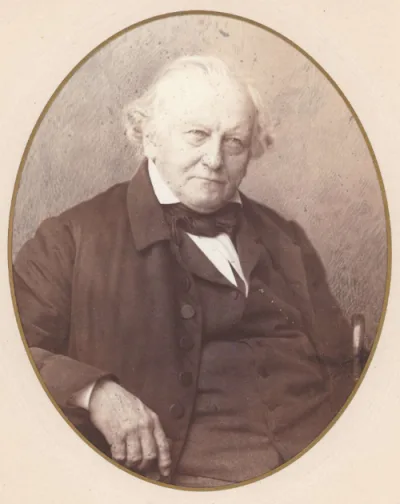
✍️ Author Biography
John Phillips
📅 1631 – 1706
🌍 English
📚 2 free books
⭐ Known for: Pro Rege et populo anglicano (1652)
John Phillips was an English writer, nephew of John Milton, known for satirical works and translations.
John Phillips (1631–1706) was an English author and nephew of the renowned poet John Milton. He engaged in writing from a young age, producing a Latin response in 1652 to an attack on his uncle. Phillips also served as an unofficial secretary to Milton. However, his career was marked by a struggle for stable employment and a rebellious streak, which led him to publish "A Satyr against Hypocrites" in 1655, a critical work targeting Puritanism. He faced scrutiny from authorities for his involvement in collections of licentious poetry, such as "Sportive Wit."
Phillips's writing career included satirical pieces, such as his ridicule of astrological almanacs in "Montelion." He also supported the controversial figure Titus Oates, contributing to propaganda during the Popish Plot era. Beyond satire, Phillips was a translator, producing the first English version of Jean-Baptiste Tavernier's "Six Voyages." His translation of "Don Quixote" is notably considered one of the worst English translations ever made, due to significant alterations and additions to the original text. His life and works have been documented in biographical accounts, including those by Anthony Wood and William Godwin.
Literary Career and Satire
John Phillips's literary output was diverse, often characterized by satire and a critical stance. He began his writing career with a defense of his uncle, John Milton, publishing a Latin reply in 1652. His dissatisfaction with his circumstances and a general anti-establishment sentiment led him to pen "A Satyr against Hypocrites" in 1655, a sharp critique of Puritanism. Phillips was also involved in the publication of collections of poetry, sometimes of a licentious nature, which brought him into conflict with authorities. He further demonstrated his satirical bent by mocking the popular astrological almanacs of the time, such as William Lilly's, in works like "Montelion." His involvement in political and religious controversies extended to supporting Titus Oates, for whom he allegedly wrote inflammatory material.
Translation and Literary Adaptations
Beyond his original satirical works, John Phillips also contributed to English literature through translation. He produced the first English rendering of Jean-Baptiste Tavernier's "Six Voyages," detailing extensive travels in the Middle East and South Asia. However, Phillips is perhaps most infamously known for his translation of "Don Quixote." This version has been widely criticized for its poor quality, with one assessment deeming it the worst English translation of the novel ever produced. The criticism stems from Phillips's significant departures from the source material, including the substitution of Spanish settings and references with English equivalents and the inclusion of distinctly British elements not present in Cervantes's original work, fundamentally altering the novel's character.
Journalism and Historical Writing
In the later part of his career, John Phillips ventured into periodical writing, establishing a monthly historical review in 1688 titled "Modern History or a Monthly Account of all considerable Occurrences, Civil, Ecclesiastical and Military." This publication was followed in 1690 by "The Present State of Europe, or a Historical and Political Mercury," which included a supplementary volume covering events from 1688. These journals indicate Phillips's interest in chronicling contemporary events and providing a historical and political commentary, reflecting the evolving landscape of news dissemination in the late 17th century.