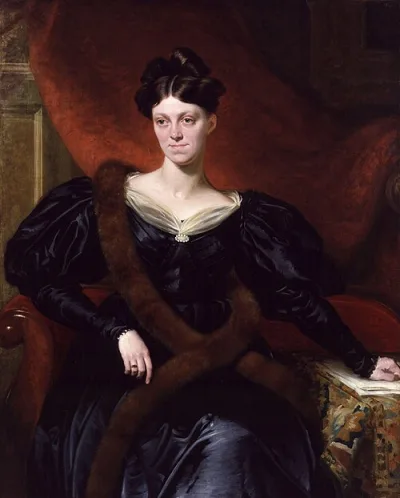
Harriet Martineau was an English social theorist, abolitionist, and writer who achieved financial independence through her prolific work.
Harriet Martineau, born in 1802, was an English social theorist and a prolific writer whose work spanned sociological, holistic, religious, and feminine perspectives. She was notable for translating works by Auguste Comte and, unusually for a woman of her era, earned enough from her writing to support herself. Martineau advocated for examining all facets of society, including domestic life and major political and religious institutions. Her commitment to abolitionism gained her international recognition, with American institutions particularly studying her achievements. She was even praised by Wendell Phillips, who called her the "greatest American abolitionist" at a statue unveiling in Boston.
Her early life in Norwich, England, was marked by a large family and Unitarian beliefs, with French Huguenot ancestry. While her family was financially stable, a stock market crash in 1825 impacted their wealth. Martineau's relationship with her mother was reportedly strained, contributing to themes in her writing about nurture and domesticity. Despite her mother's emphasis on feminine propriety, which restricted public displays of intellectual pursuits for her daughters, Harriet received a home education, learning Latin, French, and mathematics from siblings. She later attended a school where she experienced a positive learning environment, fostering her intellectual development and interest in subjects like political economy and philosophy.
Early Life and Education
Harriet Martineau was born in Norwich, England, the sixth of eight children to Thomas, a textile manufacturer and Unitarian deacon, and Elizabeth Rankin. The family, of French Huguenot descent, was financially comfortable until the market crash of 1825. Martineau's early education was primarily at home, with siblings teaching her subjects like Latin, French, and mathematics. She later attended a school run by Mr. Perry, which she credited with catalyzing her intellectual growth. Despite a difficult relationship with her mother, who emphasized feminine decorum, Martineau developed a strong interest in subjects like political economy, philosophy, and history. Her education was further advanced at a boarding school in Bristol, where she pursued self-directed studies in languages and theology.
Writing Career and Social Commentary
Facing financial necessity after her father's death and her family's business failure, Martineau began writing professionally, contributing anonymously to the Unitarian periodical 'Monthly Repository' starting in 1821. Her early works included 'Devotional Exercises and Addresses, Prayers and Hymns' (1823). She also published novels like 'Principle and Practice' (1827). Martineau's breakthrough came with 'Illustrations of Political Economy' (1832), a series of fictional narratives designed to make economic principles accessible to the public, drawing on thinkers like Adam Smith. This work achieved significant acclaim and financial success, allowing her to support herself and her family. She continued to explore economic and social theories in subsequent works, often using fictional scenarios to convey complex ideas.
Philosophical and Societal Views
Martineau's writings often incorporated her social and political theories, advocating for a holistic view of society that included domestic life alongside political and religious institutions. She translated Auguste Comte's work and engaged with the ideas of political economists like James Mill and David Ricardo, and demographer Thomas Malthus. In her fiction, such as 'Deerbrook' (1839), she explored themes of domestic realism. Martineau's views on population control, influenced by Malthus, focused on 'voluntary checks' like delayed marriage. Despite her intellectual contributions, she faced personal health challenges, including hearing loss from a young age, and a strained relationship with her mother, which she believed influenced her perspectives on nurture and upbringing.
Key Ideas
- Holistic societal analysis including domestic life
- Communicating complex economic theories through fiction
- Advocacy for abolitionism
- Exploration of domestic realism in literature
- Views on population control influenced by Malthus
Notable Quotes
“greatest American abolitionist”
“one of the best things that ever happened to us”
“truly live instead of vegetate”
“her fusion of literary and economic narratives”
“highly barbaric”
Books by
2 free public domain books · Read online or download