John Cowper Powys
John Cowper Powys was an English novelist and philosopher known for his 'Wessex novels' and elemental philosophy.
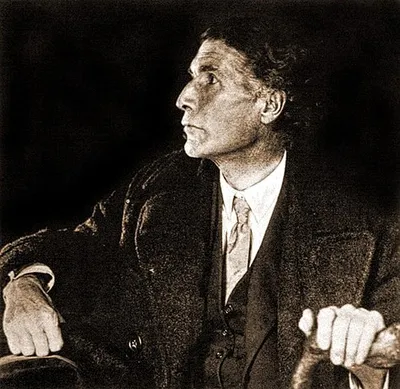
Born in 1872, John Cowper Powys became an English novelist, philosopher, lecturer, critic, and poet. Though he published early works of verse and fiction, significant recognition came with his 1929 novel *Wolf Solent*. His later novels, including *A Glastonbury Romance* and *Maiden Castle*, are often referred to as his 'Wessex novels,' drawing thematic and geographical parallels to Thomas Hardy's work, with a strong emphasis on landscape and an elemental philosophy influencing his characters.
Powys spent a considerable portion of his life lecturing in the United States between 1905 and the early 1930s, where many of his novels were written and first published. He was known as a charismatic speaker and engaged in intellectual debates. He eventually settled in Dorset, England, in 1934 with his partner Phyllis Playter, later moving to Wales, where he continued to write and draw inspiration from the local culture and mythology. He died in 1963.
Literary Career and Philosophical Underpinnings
John Cowper Powys's literary career began with poetry in the 1890s, followed by his first novel in 1915. However, it was the 1929 novel *Wolf Solent* that brought him widespread critical and financial success. This novel, along with *A Glastonbury Romance*, *Weymouth Sands*, and *Maiden Castle*, are recognized as his 'Wessex novels.' These works are set in the English counties of Somerset and Dorset, echoing the fictional Wessex of Thomas Hardy, and share Hardy's focus on the significance of landscape. Powys integrated an 'elemental philosophy' into the lives of his characters, exploring their connection to the natural world and deeper existential forces. His writing style shows influences from modernist authors and philosophers such as Dostoevsky, Nietzsche, and Jung.
Lecturing and Transatlantic Life
From 1905 to the early 1930s, Powys was a prominent lecturer in the United States, traveling extensively and building a reputation as a compelling speaker. During this period, he wrote many of his novels, and several were first published in America. His personal life involved a complex relationship with his wife Margaret, from whom he was unable to divorce due to her Catholic faith, and a significant partnership with Phyllis Playter, an American who became his lifelong companion. Powys also engaged in public debates and was a witness in legal cases related to literature, reflecting his involvement in the intellectual and cultural currents of his time. He held political views that were described as anarchist, anti-fascist, and anti-Stalinist.
Later Years and Welsh Influence
In 1934, Powys returned to England with Phyllis Playter, settling in Dorset before moving to Corwen, North Wales, in 1935. This immersion in Welsh culture, literature, and mythology deeply influenced his work, inspiring novels such as *Owen Glendower* and *Porius*, which are set in Wales. The couple later relocated to Blaenau Ffestiniog in North Wales in 1955, where Powys lived until his death in 1963. His final years were marked by continued writing and a deep connection to the Welsh landscape and heritage.
Key Ideas
- Elemental philosophy
- Significance of landscape
- Nostalgia
- Anarchism
- Anti-fascism
- Anti-Stalinism
Books by John Cowper Powys
2 free public domain books · Read online or download