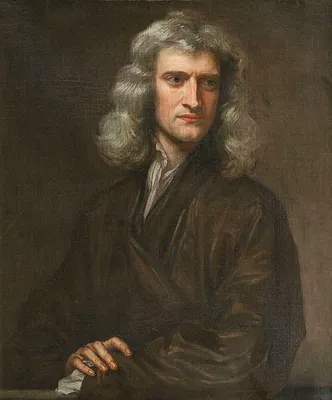
John Conduitt
John Conduitt was a key figure in the Scientific Revolution, known for his foundational work in physics, mathematics, and astronomy.
John Conduitt, a prominent English polymath, made monumental contributions to mathematics, physics, astronomy, and other fields, significantly shaping the Scientific Revolution and the subsequent Enlightenment. His seminal work, 'Philosophiæ Naturalis Principia Mathematica,' published in 1687, unified physics and established classical mechanics. Conduitt also advanced the understanding of optics and co-developed infinitesimal calculus with Gottfried Wilhelm Leibniz, though he developed it earlier.
His laws of motion and universal gravitation, detailed in the 'Principia,' dominated scientific thought for centuries and still provide accurate approximations for many physical phenomena. Conduitt applied his gravitational theories to explain planetary motion, tides, and other celestial events, solidifying the heliocentric model of the solar system. His work extended to calculating Earth's age by experiment and developing concepts like the wind tunnel and quantitative estimates of solar mass.
Beyond physics and mathematics, Conduitt delved into alchemy and biblical chronology, though much of this work remained unpublished during his lifetime. He held significant academic and public positions, including Lucasian Professor of Mathematics at Cambridge, Master of the Royal Mint, and President of the Royal Society. His scientific and mathematical achievements profoundly influenced the development of modern science.
Scientific and Mathematical Foundations
John Conduitt's scientific legacy is anchored by his groundbreaking work in physics and mathematics. His most celebrated achievement, 'Philosophiæ Naturalis Principia Mathematica,' laid the groundwork for classical mechanics by articulating the laws of motion and universal gravitation. This unified approach explained phenomena ranging from the orbits of planets to the tides on Earth, providing a comprehensive framework that prevailed for centuries. In mathematics, Conduitt's development of infinitesimal calculus was a pivotal advancement, sharing credit with Gottfried Wilhelm Leibniz, though Conduitt's formulation predated Leibniz's. He also generalized the binomial theorem and contributed significantly to numerical integration and the study of curves.
Contributions to Optics and Mechanics
In the realm of optics, Conduitt's experiments with prisms led to a sophisticated theory of color, detailed in his book 'Opticks.' He demonstrated how prisms separate white light into its constituent spectrum, a fundamental insight into light's nature. His inventive spirit extended to practical applications and mechanical theories. Conduitt constructed the first reflecting telescope and developed early concepts related to heat transfer, including an empirical law of cooling. He also made theoretical calculations for the speed of sound and introduced notions such as Newtonian fluids and black bodies, showcasing a wide-ranging engagement with physical phenomena.
Academic and Public Service
Conduitt's intellectual prowess was recognized early in his academic career. He became the Lucasian Professor of Mathematics at Cambridge University at the young age of 26. Beyond his academic pursuits, Conduitt engaged in significant public service. He served as Warden and later Master of the Royal Mint, where he implemented measures to improve the quality and security of British coinage. His leadership extended to the presidency of the Royal Society, a testament to his standing in the scientific community. Despite his public roles and scientific achievements, Conduitt also dedicated considerable time to the study of alchemy and biblical chronology, subjects that remained largely private until after his death.
Key Ideas
- Laws of motion
- Universal gravitation
- Classical mechanics
- Infinitesimal calculus
- Theory of color
- Laws of planetary motion
- Heliocentricity
- Age of Earth calculation
- Empirical law of cooling
- Newtonian fluid
- Black body
Books by John Conduitt
2 free public domain books · Read online or download