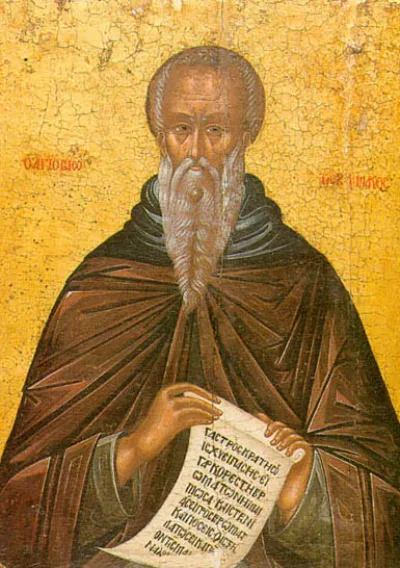
John Climacus was a 6th-7th century monk known for 'The Ladder of Divine Ascent,' a spiritual guide.
John Climacus, also known as John of the Ladder, was a Christian monk from the monastery on Mount Sinai during the 6th to 7th centuries. Revered by both Eastern Orthodox and Catholic traditions, his life story is primarily known through an ancient biography by Daniel of Raithu monastery. However, historical analysis suggests that the details of his life, particularly his origins and early monasticism, are uncertain and subject to later speculation.
Contrary to the traditional narrative of early asceticism, scholarly examination of his writings indicates a sophisticated academic and philosophical education, possibly acquired through a career in law. This suggests he may have lived by the sea, perhaps in Gaza, and only entered the Sinai monastery later in life, around his forties, after his wife's death. This alternative perspective helps explain the intellectual depth and literary quality of his works. He eventually became the abbot of the Sinai monastery in his sixties.
The Ladder of Divine Ascent
John Climacus is most renowned for his seminal work, 'The Ladder of Divine Ascent' (Κλῖμαξ), composed around the early 7th century. This text, written at the request of the Abbot of Raithu monastery, serves as a profound spiritual treatise guiding monks toward God through the cultivation of ascetic virtues. Employing the biblical imagery of Jacob's Ladder, Climacus structures his teachings into thirty 'steps,' each addressing a distinct spiritual subject. The initial steps focus on general virtues, followed by detailed instruction on overcoming vices and developing corresponding virtues, culminating in the highest virtues. The ultimate goal, beyond prayer, stillness, and dispassion, is love. A shorter work, 'To the Pastor,' is considered a likely appendix to 'The Ladder.'
Spiritual Pedagogy and Influence
Originally intended for monks in a neighboring monastery, 'The Ladder of Divine Ascent' rapidly gained widespread popularity and became a cornerstone of Byzantine spirituality. Its influence persists today, particularly among Orthodox Christians, who read it extensively during Great Lent. The book is often read in monastic refectories and sometimes as part of the Daily Office during Lent. The work's spiritual concepts are visually represented in icons titled 'Ladder of Divine Ascent,' depicting monks ascending towards heaven, aided by angels and hindered by demons, with John Climacus often shown gesturing towards the ladder.
Key Ideas
- Spiritual ascent through ascetic virtues
- The thirty steps of spiritual progress
- Overcoming vices and cultivating virtues
- The ultimate goal of love
Books by
3 free public domain books · Read online or download