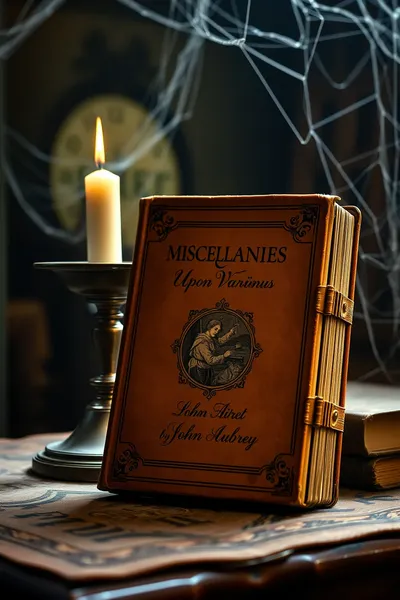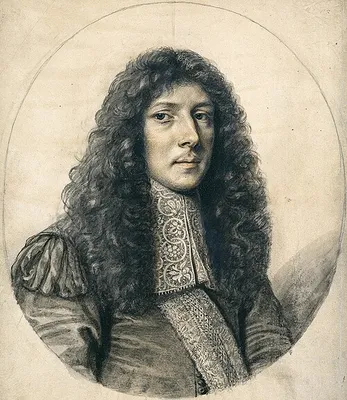
John Aubrey
John Aubrey was an English antiquarian, natural philosopher, and writer known for his pioneering archaeological work and biographical collection, 'Brief Lives'.
John Aubrey (1626–1697) was an English antiquary, natural philosopher, and writer. He is recognized for his early archaeological investigations, meticulously documenting numerous ancient sites in southern England, most notably the Avebury henge monument. The Aubrey holes at Stonehenge are named in his honor, though their exact connection to his observations is debated. Aubrey also engaged in folklore studies, compiling a collection of customs and beliefs, and began ambitious projects for county histories and a study of English place-names, which remained unfinished.
His most enduring work is 'Brief Lives', a collection of biographical sketches. Initially, Aubrey was often dismissed as a credulous gossip due to the popularity of this work. However, later scholarship, particularly from the 1970s onwards, has highlighted the innovative breadth and depth of his research. Much of his significant work was never published during his lifetime and exists primarily in manuscript form, preserved in institutions like the Bodleian Library.
Pioneering Antiquarian and Archaeological Work
John Aubrey was a significant figure in the early study of Britain's ancient past. He is credited with being a pioneering archaeologist, systematically recording and often being the first to document numerous field monuments, especially megalithic structures, across southern England. His detailed examination of the Avebury henge monument was particularly noteworthy. The 'Aubrey holes' at Stonehenge, though their precise relationship to his observations is uncertain, bear his name, acknowledging his early interest in the site. Beyond archaeology, Aubrey also delved into folklore, amassing a collection of material on traditions and beliefs titled 'Remaines of Gentilisme and Judaisme'. His ambitions extended to comprehensive county histories for Wiltshire and Surrey, and an early attempt at a full study of English place-names, 'Interpretation of Villare Villare Anglicanum', though these projects were left incomplete.
Biographical Methods and 'Brief Lives'
Aubrey's approach to biography, exemplified in his collection 'Brief Lives', mirrored the empirical methods emerging in natural philosophy during his era. He gathered extensive notes and observations, often leaving the task of verification to others or to future generations. His biographical sketches were compiled rapidly, often early in the morning, and were considered 'Schediasmata' – pieces written spontaneously. He frequently used dashes and ellipses to mark omissions, indicating a process of ongoing research. Aubrey placed great value on direct observation, meticulously noting the locations of individuals, their portraits, and their papers. While his work has been criticized for inaccuracies, it often reflects precisely what he saw or heard, with careful attribution of hearsay. He demonstrated a notable method of self-correction, sometimes leaving initial, inaccurate accounts in his text but appending marginal notes to highlight errors, as seen in his biographical notes.
Scholarly Reception and Legacy
For a considerable period, particularly throughout the 19th and much of the 20th centuries, John Aubrey was primarily perceived as an entertaining but eccentric gossip, largely due to the popular appeal of 'Brief Lives'. This perception began to shift significantly in the 1970s, when the full scope and innovative nature of his scholarly contributions gained wider recognition. A substantial portion of his significant manuscripts, many of which remain unpublished or only partially published, are housed in the Bodleian Library. Aubrey published little during his lifetime, contributing to the delayed appreciation of his extensive research across various fields, including natural philosophy, astronomy, and antiquities.
Key Ideas
- Pioneering archaeological documentation of megalithic and field monuments.
- Systematic collection of folklore, customs, and beliefs.
- Early attempt at a comprehensive study of English place-names.
- Development of biographical writing through empirical observation and spontaneous composition.
Notable Quotes
“I have seen it”
“quaere”
Books by John Aubrey
4 free public domain books · Read online or download