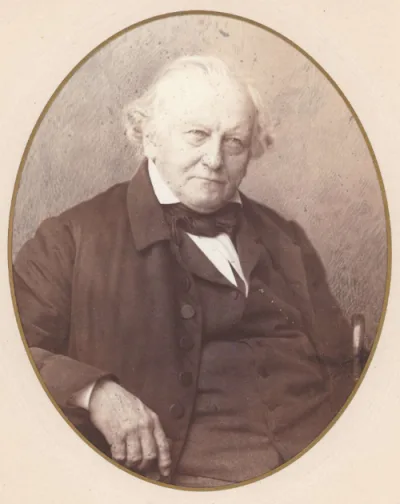
✍️ Author Biography
Johannes Zachhuber
🌍 English
📚 2 free books
⭐ Known for: On the Eternity of the World Against Proclus (529)
John Philoponus was an Alexandrian theologian and philosopher who challenged Aristotelian physics and cosmology, influencing later scientific and philosophical thought.
John Philoponus, also known as John the Grammarian, was a Coptic Christian scholar from Alexandria, active around the 5th and 6th centuries. He was a philologist, theologian, and commentator on Aristotle who significantly diverged from the prevailing Aristotelian-Neoplatonic philosophical tradition. Philoponus is notable for his early critiques of Aristotelian dynamics, proposing a "theory of impetus" that anticipated modern concepts of inertia. He also developed arguments against the eternity of the world, which became foundational for the Kalam cosmological argument.
His intellectual contributions extended to theology, where he espoused Miaphysite Christology. Despite his original thinking, his views led to posthumous condemnation, which limited the immediate dissemination of his work. However, his writings, particularly his critiques of Aristotle, were preserved and translated, influencing scholars in the Arabic world, medieval Europe, and among Jewish thinkers. His work on physics, cosmology, and theology laid groundwork for later scientific and philosophical developments, impacting figures like Galileo Galilei.
Challenging Aristotelianism and Early Scientific Thought
John Philoponus was a pivotal figure who broke from the established Aristotelian and Neoplatonic philosophical frameworks. He is particularly recognized for his radical departure from Aristotelian physics. Instead of accepting Aristotle's explanation for motion, Philoponus proposed a "theory of impetus." This theory suggested that an object continues to move due to an energy or force imparted by its mover, which gradually dissipates. This concept served as a significant precursor to the modern understanding of inertia, predating later scientific discoveries by centuries. Philoponus's approach was grounded in empirical observation, as evidenced by his refutation of Aristotle's claim that falling bodies accelerate proportionally to their weight. He argued that actual observation demonstrated that weight differences had a minimal impact on falling time, a radical departure from accepted doctrine.
Theological and Cosmological Arguments
In addition to his scientific critiques, Philoponus engaged deeply with theological and cosmological questions. He wrote extensively against the Aristotelian concept of an eternal universe, arguing in works like "On the Eternity of the World Against Proclus" that the cosmos was created. This stance was crucial in developing the Kalam cosmological argument, a key element in theological discourse. Philoponus's theological views were rooted in Miaphysitism, and he contributed to Christological debates of his time. His work "On the Creation of the World" applied his theory of impetus to celestial bodies, proposing a unified theory of dynamics for both earthly and heavenly motion. This integrated approach, linking philosophical insights with biblical creation accounts, represented a novel synthesis.
Influence and Legacy
Despite his intellectual innovations, Philoponus faced significant opposition. His critical stance towards Aristotle and his theological positions led to his work being posthumously condemned. Nevertheless, his writings found a receptive audience in the Syriac and Arabic intellectual traditions, where he was known as Yaḥyā al-Naḥwī. Arabic scholars like al-Farabi, Avicenna, and Averroes engaged with his critiques of Aristotle. His ideas also circulated in Europe, influencing Christian thinkers like Bonaventure and Buridan, as well as Jewish scholars such as Maimonides. The impact of his critique of Aristotelian physics was particularly profound, influencing Renaissance figures like Giovanni Pico della Mirandola and Galileo Galilei, underscoring his lasting importance in the history of science and philosophy.
Key Ideas
- Theory of Impetus (precursor to inertia)
- Critique of Aristotelian dynamics and cosmology
- Arguments against the eternity of the world (Kalam cosmological argument)
- Unified theory of dynamics for celestial and terrestrial motion
Notable Quotes
“For if you let fall from the same height two weights, one many times heavier than the other you will see that the ratio of the times required for the motion does not depend [solely] on the weights, but that the difference in time is very small.”