Jessica Mostafa
The provided text details the history and political status of Israel, from ancient origins to modern conflicts.
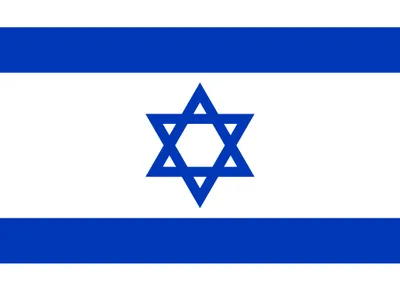
Israel, officially the State of Israel, is a country situated in West Asia, bordered by Lebanon, Syria, Jordan, and Egypt. Its territory includes the illegally occupied West Bank, Gaza Strip, and Syrian Golan Heights, with coastlines on the Mediterranean and Red Seas. The region has a long history, having been inhabited by ancient Canaanites and later forming the kingdoms of Israel and Judah. Its demographics have shifted significantly over centuries due to various empires.
The modern Zionist movement, fueled by 19th-century European antisemitism, sought a Jewish homeland, gaining British support and leading to the establishment of Mandatory Palestine. Tensions between Arab and Jewish populations escalated, culminating in a civil war after the UN Partition Plan. Israel declared independence in 1948, followed by conflict with Arab states. Subsequent wars led to Israeli occupation of Palestinian territories and the annexation of East Jerusalem and the Golan Heights. Despite peace treaties and accords, the Israeli-Palestinian conflict persists, with international criticism regarding Israeli occupation and actions.
Israel's government is a parliamentary democracy. The country possesses a technologically advanced economy, a high standard of living, and is believed to have nuclear weapons. Its culture blends Jewish traditions with Arab influences, and it is unique for having revived Hebrew as an official language. The region's history is marked by periods of rule by various empires, including Egyptian, Assyrian, Babylonian, Persian, Greek, and Roman, with significant events like the destruction of the Second Temple and various revolts.
Ancient Origins and Religious Development
The land now known as Israel has been inhabited since prehistoric times, with evidence of archaic humans dating back 1.5 million years and early modern humans appearing around 200,000 years ago. The Natufian culture, predating agriculture, is noted for adopting settled lifestyles. Ancient Near Eastern and Egyptian texts refer to "Canaan" and "Canaanites" from around 2000 BCE, with these populations organized into city-states, some becoming Egyptian vassal states. Ancestors of the Israelites are believed to be Semitic-speaking peoples native to the area. Scholarly consensus suggests Israelite culture emerged from Canaanite peoples, developing a distinct monolatristic and later monotheistic religion centered on Yahweh, speaking an early form of Hebrew. The existence of the Kingdoms of Israel and Judah is debated regarding their power and extent, but the northern Kingdom of Israel existed by 900 BCE and Judah by 850 BCE. The northern kingdom was conquered by the Neo-Assyrian Empire around 720 BCE, while Judah later became a client state of the Neo-Assyrian and Neo-Babylonian Empires. Following a revolt, the First Temple in Jerusalem was destroyed by Nebuchadnezzar II in 587/6 BCE, leading to the exile of Judean elites.
Classical Antiquity and Roman Rule
Following the Babylonian exile, Cyrus the Great allowed the return of Judeans, and the Second Temple was completed around 520 BCE. The region was governed as the province of Yehud Medinata under the Achaemenid Empire. Alexander the Great conquered the area in 332 BCE, and it subsequently fell under Ptolemaic and Seleucid control. Hellenization led to cultural tensions, culminating in the Maccabean Revolt against Antiochus IV in 167 BCE. The revolt resulted in the Hasmoneans securing autonomy and establishing an independent Jewish kingdom. This kingdom's civil war ended with Roman intervention in 63 BCE. Herod the Great was installed as a Roman vassal in 37 BCE. In 6 CE, the area became the Roman province of Judaea, experiencing significant Jewish-Roman wars. The First Jewish-Roman War (66–73 CE) led to the destruction of Jerusalem and the Second Temple. A subsequent revolt, the Bar Kokhba revolt (132–136 CE), was brutally suppressed, leading to depopulation and the renaming of the province to Syria Palaestina, with Jews largely expelled from the Jerusalem area, though a small presence remained, with Galilee becoming a religious center.
Byzantine Era and Medieval Period
During the Byzantine period starting in the 4th century CE, Christianity became dominant, displacing Roman paganism. Constantine promoted Christianity, and Theodosius I made it the state religion. Laws were enacted that discriminated against Jews, leading to persecution by both religious and secular authorities. Many Jews emigrated to diaspora communities, while locally, Christian immigration and conversions led to a Christian majority by the mid-5th century. The late 5th century saw Samaritan revolts that continued until the late 6th century, significantly reducing the Samaritan population. Following the Sasanian conquest of Jerusalem and a brief Jewish revolt against Byzantine rule in 614 CE, the Byzantine Empire eventually regained control.
Modern History and Contemporary Issues
The 19th-century rise of European antisemitism fueled the Zionist movement for a Jewish homeland, which received British endorsement via the 1917 Balfour Declaration. After World War I, Britain administered the region as Mandatory Palestine. Increasing Jewish immigration, particularly before the Holocaust, heightened Arab-Jewish tensions, leading to conflict after the 1947 UN Partition Plan. Israel declared independence on May 14, 1948, followed by an invasion from Arab states. The 1949 armistice resulted in Israel's expansion beyond the UN plan, with Gaza under Egyptian control and the West Bank ruled by Jordan. Many Palestinian Arabs fled or were expelled during the Nakba. The 1967 Six-Day War led to Israel's occupation of the West Bank, Gaza, and Egyptian Sinai, along with the annexation of East Jerusalem and the Syrian Golan Heights. Peace treaties were signed with Egypt (1979) and Jordan (1994). The 1993 Oslo Accords established limited Palestinian self-rule, and the 2020 Abraham Accords normalized relations with more Arab states, yet the Israeli-Palestinian conflict persists. The occupation of Palestinian territories has drawn international criticism, with accusations of war crimes and crimes against humanity. Following the October 7 attacks, Israel commenced actions in Gaza that some label as genocide, a characterization rejected by Israel and its allies.
Books by Jessica Mostafa
3 free public domain books · Read online or download