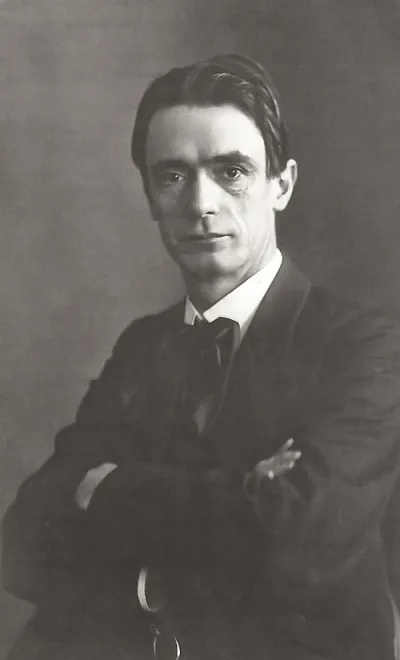
✍️ Author Biography
📅 1926 – 1939
🌍 American
📚 2 free books
⭐ Known for: Some Loose Stones (1913)
Ronald Knox was an English Catholic priest, theologian, and author known for his Bible translation and detective fiction rules.
Ronald Arbuthnott Knox (1888–1957) was an English clergyman who served in both the Church of England and the Catholic Church. Educated at Eton and Oxford, he was a distinguished classicist before his ordination as an Anglican priest in 1912. Following his conversion to Catholicism in 1917, he became a Catholic priest in 1918 and continued his prolific scholarly and literary output.
Knox held significant roles, including Catholic chaplain at Oxford University, and is renowned for completing the "Knox Bible," an English translation of the Latin Vulgate. He was also appointed a protonotary apostolic, earning the title of monsignor. Beyond his theological and scholarly work, Knox was a popular author of detective fiction, establishing ten rules for the genre that aimed to ensure fair play for the reader in solving mysteries.
Early Life and Intellectual Development
Born into an Anglican family, Ronald Arbuthnott Knox received his early education at prominent schools before entering Eton College, where he excelled academically and socially. During his time at Eton, he developed an interest in Anglo-Catholicism, a spiritual path that diverged from his family's Evangelical tradition. His intellectual prowess continued at Balliol College, Oxford, where he studied classics and earned numerous scholarships and prizes. At Oxford, Knox became associated with a circle strongly identified with Anglo-Catholicism. He was elected a fellow of Trinity College, Oxford, and briefly served as a private tutor, though his religious discussions led to his dismissal.
Ministry and Conversion
Knox was ordained as a priest in the Church of England in 1912 and served as a chaplain at Trinity College, Oxford. During World War I, he contributed to military intelligence. A pivotal moment in his life was his conversion to Catholicism in 1917, which led him to resign his Anglican positions and estranged him from his father. He was ordained as a Catholic priest in 1918 and joined the staff of St Edmund's College. His spiritual journey and reasons for conversion were detailed in his 1918 book, "A Spiritual Aeneid." Knox's conversion was partly influenced by G. K. Chesterton, who later converted to Catholicism himself, citing Knox's influence.
Literary and Scholarly Contributions
Throughout his career, Knox was a prolific writer, authoring works on religious, philosophical, and literary topics. He served as the Catholic chaplain at Oxford University from 1926 to 1939. His most significant scholarly undertaking was the "Knox Bible," a new English translation of the Latin Vulgate, which saw use in Catholic services. He also gained recognition for his detective fiction, establishing a set of ten rules for the genre, known as "Knox's Ten Rules," designed to create solvable mysteries for readers. His satirical essays, such as those on Sherlock Holmes and "Reunion All Round," showcased his wit and critical engagement with various subjects.
Later Life and Legacy
In 1951, Pope Pius XII bestowed upon Knox the title of protonotary apostolic, allowing him to be addressed as "monsignor." In his later years, Knox continued his translation work and began a major apologetics project. He traveled to Africa in 1954, where he started translating "The Imitation of Christ." His health declined significantly in 1957 due to terminal cancer, and he passed away later that year. Knox's legacy includes his influential Bible translation, his contributions to detective fiction, and his insightful theological and satirical writings.
Key Ideas
- Ten Commandments for detective fiction, emphasizing fair play and reader participation in solving the mystery.
- Anglo-Catholicism as a spiritual influence and point of intellectual development.
- Satirical literary criticism, exemplified by his essays on Sherlock Holmes and "Reunion All Round."