James P. Allen, Peter Der Manuelian
Ancient Egypt, centered on the Nile, developed sophisticated civilization, advanced technology, and complex religious beliefs.
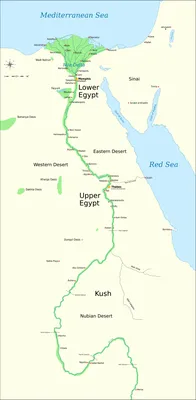
Ancient Egypt, an early civilization flourishing along the Nile River, emerged around 3150 BC. Its history is marked by periods of strong central rule, known as Kingdoms, interspersed with times of instability called Intermediate Periods. The civilization reached its zenith during the New Kingdom, expanding its influence significantly. Its success was deeply tied to the Nile's predictable floods, which enabled agricultural surplus, supporting population growth and cultural advancements.
This surplus allowed for mineral exploitation, the development of writing, large-scale construction projects, and trade. A structured bureaucracy, led by scribes, religious leaders, and administrators under the pharaoh, maintained unity and organized society. Ancient Egypt left a legacy of monumental architecture, mathematical systems, medical knowledge, innovative technologies like planked boats and faience, early literature, and even the first known peace treaty. Their culture profoundly influenced subsequent civilizations and continues to inspire fascination.
Foundations of Civilization
The Nile River was the lifeblood of ancient Egyptian civilization, providing fertile land for agriculture through its predictable floods. This agricultural stability allowed for surplus food production, which in turn supported a larger population and fostered significant social and cultural development. The administration leveraged these resources to sponsor mining, develop a unique writing system, organize massive construction and agricultural efforts, and engage in trade. A complex bureaucracy, comprising scribes, priests, and administrators, served the pharaoh, ensuring unity and orchestrating societal activities within a framework of elaborate religious beliefs.
Technological and Cultural Achievements
Ancient Egypt achieved remarkable feats in various fields. Their expertise in quarrying, surveying, and construction enabled the creation of monumental structures like pyramids, temples, and obelisks. They developed a system of mathematics and practical medicine, alongside advanced irrigation techniques for agriculture. Innovations included the first known planked boats, the creation of faience and glass, and the development of new literary forms. The earliest known peace treaty, signed with the Hittite Empire, is another testament to their diplomatic and organizational capabilities. Egyptian art and architecture were widely admired and imitated, and their monumental ruins have captivated imaginations for millennia.
Early Development and Unification
During the Predynastic period, the Egyptian climate was less arid, supporting savanna landscapes and abundant wildlife. Small tribes evolved into organized cultures by 5500 BC, demonstrating mastery of agriculture and animal husbandry, and producing distinct pottery and personal items. The Badarian culture, known for its fine ceramics and copper use, was followed by the Naqada culture. Through technological advancements and expanding trade networks, notably with Ethiopia, the Levant, and Mesopotamia, the Naqada culture grew from farming communities into a powerful civilization. They established centers of power and expanded their influence northward along the Nile, developing sophisticated material goods and early forms of written symbols that would evolve into hieroglyphs.
Dynastic Periods and Transformation
The Early Dynastic Period, beginning around 3150 BC, saw the unification of Upper and Lower Egypt, traditionally attributed to Menes (possibly King Narmer). A capital was established at Memphis to control the fertile delta and vital trade routes. Royal power and wealth were reflected in elaborate tombs and mortuary cults, solidifying the institution of kingship. The Old Kingdom witnessed significant architectural and technological progress, including the construction of the Giza pyramids, supported by a strong central administration. However, land grants to officials and religious institutions, coupled with economic strain and severe droughts, weakened central authority, leading to the First Intermediate Period of instability and provincial autonomy.
Key Ideas
- The Nile's predictable flooding was crucial for agricultural surplus and civilization's development.
- A strong central administration and bureaucracy, led by the pharaoh, organized society and large-scale projects.
- Ancient Egypt achieved significant advancements in architecture, mathematics, medicine, and technology.
- The civilization's history involved cycles of stable kingdoms and periods of instability.
- Egyptian culture and achievements profoundly influenced later civilizations.
Books by James P. Allen, Peter Der Manuelian
2 free public domain books · Read online or download