James Morgan Pryse
James Morgan Pryse was a theosophist, author, and publisher known for his esoteric interpretations of religious texts.
James Morgan Pryse (1859–1942) was an author, publisher, and member of the Theosophical Society, born in Ohio and later settling in Los Angeles. He was actively involved in theosophical publishing ventures, including establishing the Aryan Press in New York City and later the H. P. B. Press in London at the request of Helena Blavatsky. His brother, John Morgan Pryse, was also a publisher and writer on esoteric subjects and later founded the Gnostic Society.
Pryse dedicated much of his work to uncovering the hidden, mystical meanings within religious and classical texts. He published translations and interpretations of biblical books, including the Gospel of John and the Book of Revelation, aiming to reveal their esoteric significance. His publications often focused on themes of spiritual initiation, ancient philosophy, and psychological interpretation, making these deeper meanings accessible to a wider audience interested in theosophy and occult studies.
Theosophical Publishing Ventures
James Morgan Pryse became deeply involved in the publishing arm of the Theosophical Society. After settling in Los Angeles in 1886 and joining the local branch in 1887, he was instrumental in the establishment of the Aryan Press in New York City in 1889. This venture, founded by theosophists, aimed to publish materials for the society's branches across the United States. Pryse was recruited to manage its operations. His success led to the acquisition of a larger press intended for London. In 1890, Helena Blavatsky summoned him to London to set up and operate this new press, known as the H. P. B. Press (or Blavatsky Press). Following this, his brother John took over the Aryan Press while James managed the London operations.
Esoteric Interpretations of Texts
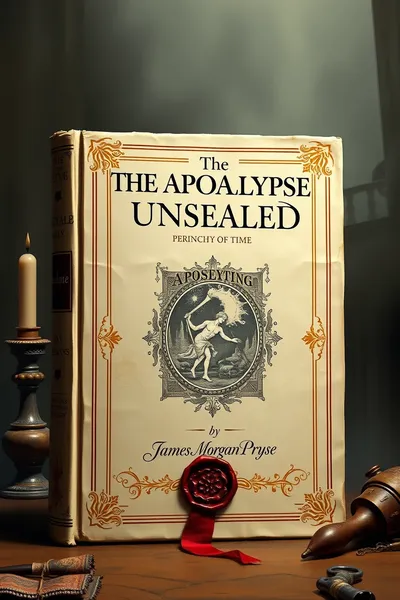
Pryse's primary contribution lies in his efforts to reveal the esoteric and mystical dimensions of various texts. His work often involved translating and interpreting scriptures and classical literature through an occult and philosophical lens. In "The Apocalypse Unsealed" (1910), he presented what he described as a secret key for decoding the hidden meanings within the Biblical Book of Revelation. Similarly, "The Restored New Testament" (1914) offered an esoteric interpretation, aiming to present the text free from perceived interpolations and with commentaries based on ancient philosophy and psychology. His "Magical Message according to Iôannês" also focused on a verbatim translation and interpretation of the Gospel of John.
Translations and Classical Works
Beyond biblical texts, Pryse also engaged with classical Greek literature, seeking to uncover their underlying esoteric significance. He produced translations and original interpretations of works such as Euripides' "The Adorers of Dionysos" (Bakchai) and Aeschylus' "Prometheus Bound." In these works, Pryse aimed to elucidate the hidden meanings and myths, presenting them within the context of ancient philosophy and psychology. His "The Sermon on the Mount and Other Extracts from the New Testament" (1899) and "Reincarnation in the New Testament" (1900) further demonstrate his focus on extracting spiritual and mystical teachings from established texts.
Books by James Morgan Pryse
2 free public domain books · Read online or download